

- Home
- Sheltered housing lighting
Tamlite LED lighting in Stevenage sheltered housing.
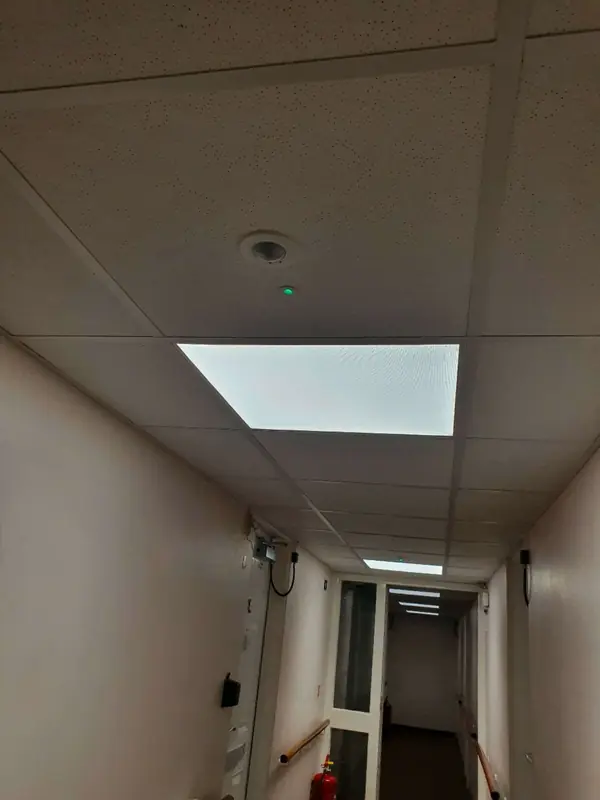
More than 270 LED fittings on presence sensors in six sheltered schemes for Stevenage Borough Council, fitted around the heating and ceiling works.
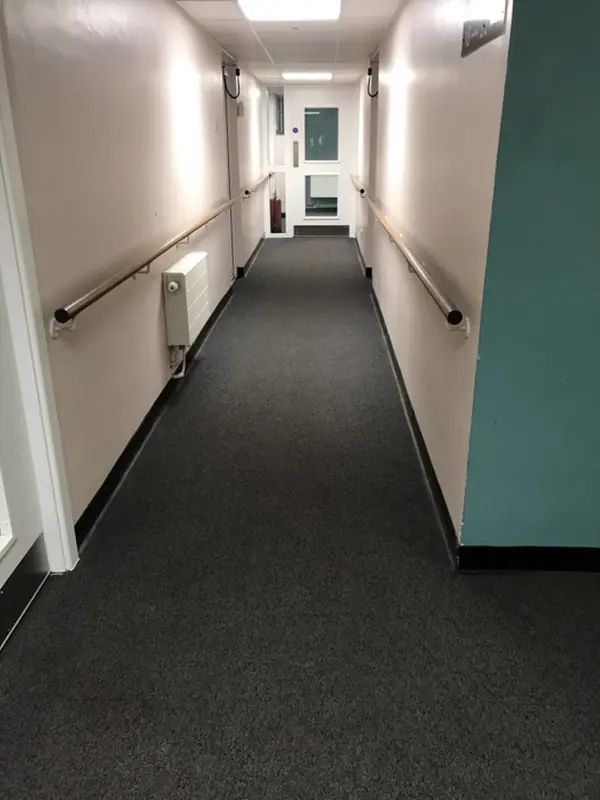
Stevenage Borough Council’s sheltered housing blocks had their communal heating replaced from 2020, with Mulalley as main contractor, and later had ceiling and fire-stopping works with Wates. While the ceilings were open, we replaced the corridor lighting in six schemes with Tamlite LED fittings on presence sensors: more than 270 fittings in all, more than 150 of them with three-hour emergency packs.
The four schemes
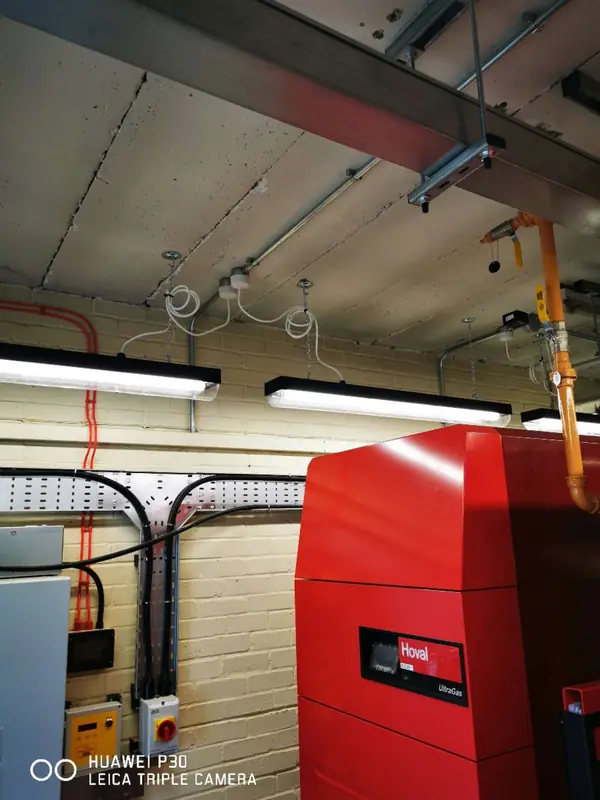
- Grosvenor Court, Filey Close: 76 panels (37 emergency) and 76 sensors on the ground and first floors, installed late January to 4 February 2020, plus the boiler-room lighting and, later, external lighting.
- Pinewoods Court: 50 panels (24 emergency), February 2020, plus the boiler-room electrics.
- Pitt Court, Park View: 44 panels (27 emergency), 1 to 4 February 2021, with the plant room rewired.
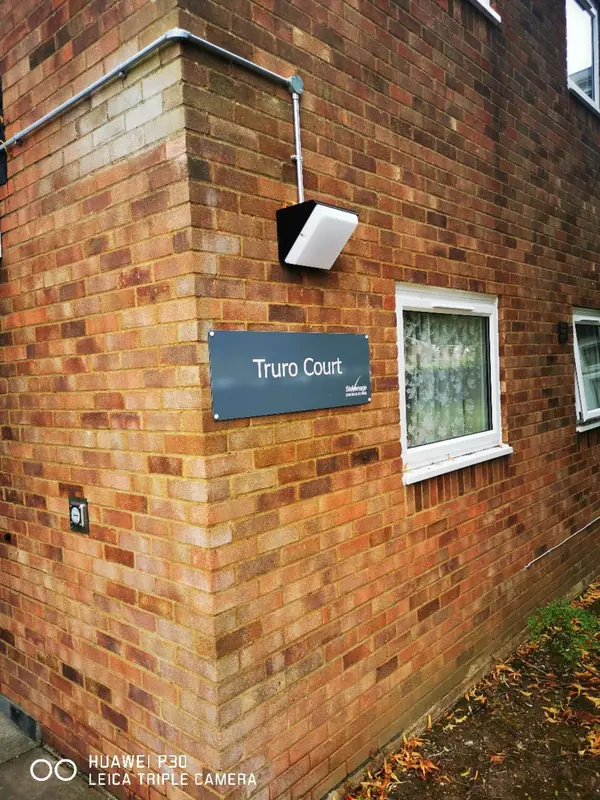
- Truro Court, Canterbury Way (35 flats): 34 panels (19 emergency) and 34 sensors in August 2021. At Truro we also fitted the door entry with a fire service switch, the plant-room electrics, external lighting and lightning protection.
- Norman Court, York Road: in 2021 we re-hung 57 existing fittings on chains so the grid ceiling could come down for the heating works, then renewed the lighting to a Tamlite design: 70 fittings (45 emergency, with self-test), 56 presence sensors and illuminated exit signs.
- Silkin Court, Campkin Mead: for Wates, after a survey in November 2022, we took the corridor lighting out for the ceiling and fire-stopping works, kept the building lit with about ten weeks of temporary lighting, then fitted Tamlite Solar S bulkheads with microwave sensors and self-testing emergency packs. Earlier, for Mulalley, we had fitted 45 LED bollards along the paths outside.
How the lighting works
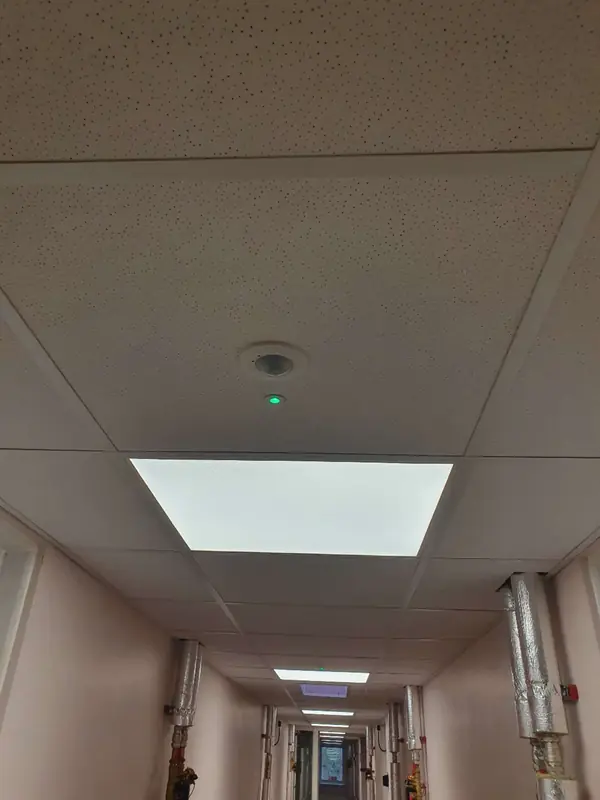
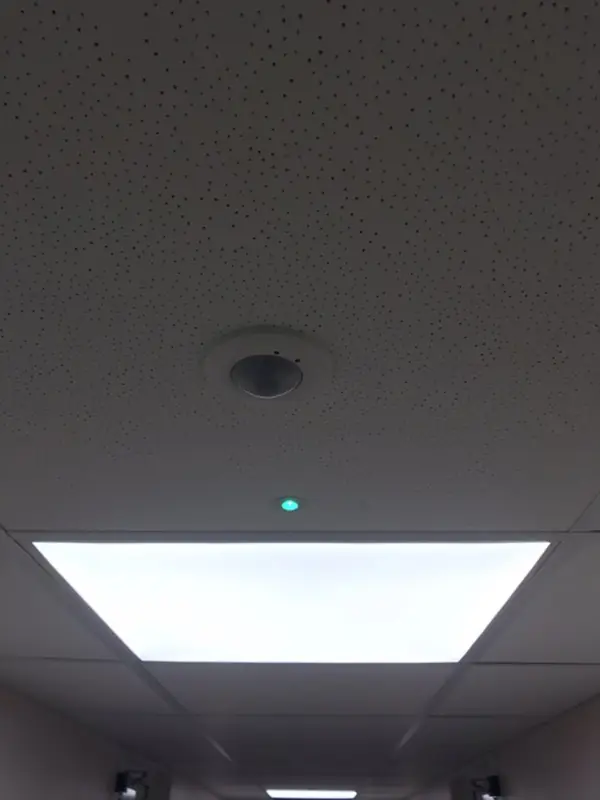
The council’s specification, which names Tamlite “as used at previous sheltered scheme blocks”, set the same profile in every scheme. Each panel rests at 10% brightness, comes up to 100% as soon as its sensor sees someone, and drops back to 10% five minutes after the corridor is empty. Residents never walk into a dark corridor, and the lights are not burning at full power all night. The sensors also measure daylight, so panels near windows hold back when the corridor is already bright.
The emergency panels are the same fitting with a three-hour battery pack, so the corridors look uniform and there are no separate bulkheads on the walls.
Fitting it around the heating works
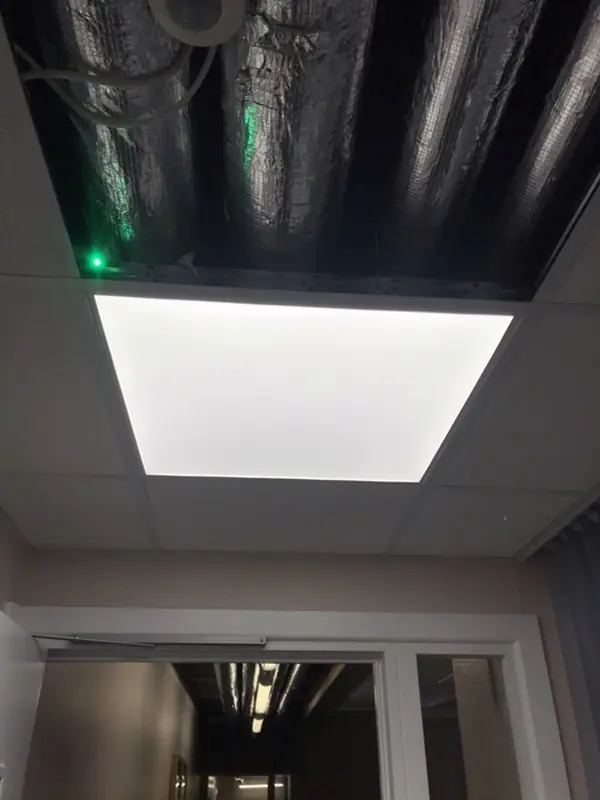
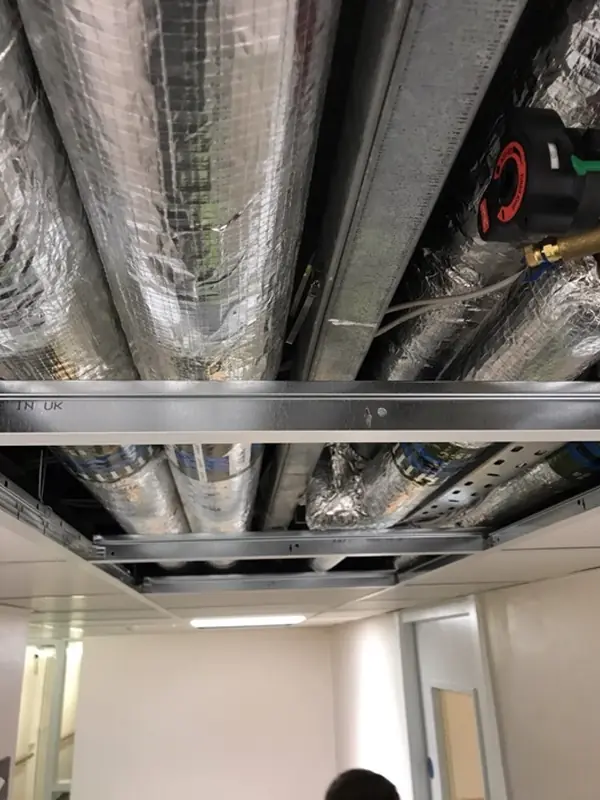
The new heating pipes ran through the same ceiling voids, so the lighting was sequenced with the heating engineers. We put in temporary 110V lighting so the corridors were never dark while the ceilings were down, fitted fire hoods over the panels where the ceiling formed a fire barrier, then fitted and commissioned the panels once the pipework was in. Residents were living in the schemes throughout, so every day ended with the corridors safe, lit and clear.
The kit
- Tamlite Modled 600 × 600 LED panels (31 W, about 3,000 lumens), and the Modled LG version at Truro Court and Norman Court.
- Tamlite Solar S bulkheads with microwave sensors at Silkin Court, and TBX battens in plant and store rooms.
- Three-hour emergency packs in more than half of the fittings, with automatic self-test in the later schemes, and illuminated exit signs.
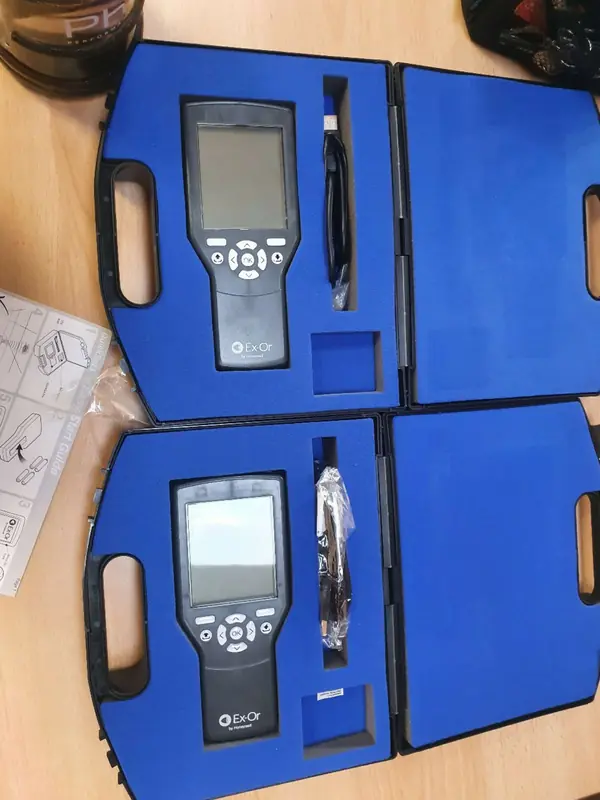
- Tamlite V103HD presence and daylight sensors, one per panel, with DALI/DSI dimming.
- A V30P handheld programmer left with the council at each block, so its own team can change the settings.
- Lighting layouts and lighting reports produced with Tamlite for each block before ordering.
Handover
Each scheme was handed over with an electrical installation certificate, an emergency lighting certificate and log, as-installed lighting layouts, and dated photo audits from every day on site. If you look after sheltered housing, see our emergency lighting work in Stevenage and our emergency lighting service.
Questions we’re asked
Why use presence sensors in a sheltered housing corridor?
The lights stay on at a low level all the time and come up to full brightness as soon as someone walks in, so nobody walks into the dark, and the energy use is much lower than lights at full power around the clock.
What brightness do the lights rest at?
10%. They rise to 100% when the sensor sees someone and drop back to 10% five minutes after the corridor is empty. The council's team can change this with the handheld programmer.
Can you replace the lighting while the heating is being replaced?
Yes. That is how every scheme was done: temporary lighting while the ceilings were open, then the new fittings once the pipework or ceiling works were finished.
Are the emergency lights separate fittings?
No. More than half of the fittings have a three-hour emergency battery built in, so they look the same as the rest. In the later schemes they test themselves automatically.
Which sheltered schemes did you do?
Grosvenor Court and Pinewoods Court in 2020, Pitt Court and Truro Court in 2021, then Norman Court, and Silkin Court for Wates.
More Stevenage case studies
- All 280+ Stevenage blocks – the full list, street by street
- Minehead Way – door entry and data cabling, 2026
- Communal electrical upgrades – boards, containment and lighting in 178 blocks
- Emergency lighting – 41-block retrofit, then every block since
- Door entry and flat handsets – entrance panels, fobs and a handset in every flat
- LD1 fire alarms in high-rise blocks – 452 flats in seven towers
- Designplan lighting – 1,985 Designplan fittings fitted, counted from our orders
- Zelos bollards at Silkin Court – 46 path bollards, featured by Designplan
- SHDF extractor fans – 440 homes for Wates
Written by SEGplc from our orders, job records, photo audits and certificates. Last updated 31 October 2026.
Need it done by a date?
Tell us the deadline. We’ll tell you honestly whether we can hit it — and we usually can.