

Emergency lighting in St Albans and Herts, tested and certified.
If the mains fails and the building is occupied, people must be able to see the way out. SEG designs, installs and tests emergency lighting to BS 5266 for offices, schools, care and sheltered housing, HMOs and blocks of flats.
Electrical, fire alarms, emergency lighting, CCTV, access control, data networks and more, under one contract. Upload yours and we will see if we can beat it on price or cover. If we can't, we will tell you. It takes about five minutes.
Who it’s for
- Landlords and managing agents of blocks and HMOs where a fire risk assessment calls for escape-route lighting.
- Businesses with staff or the public on site: offices, retail, warehouses, gyms, surgeries and places of worship.
- Housing providers with communal areas, stairwells and corridors that need a documented test regime.
What’s included
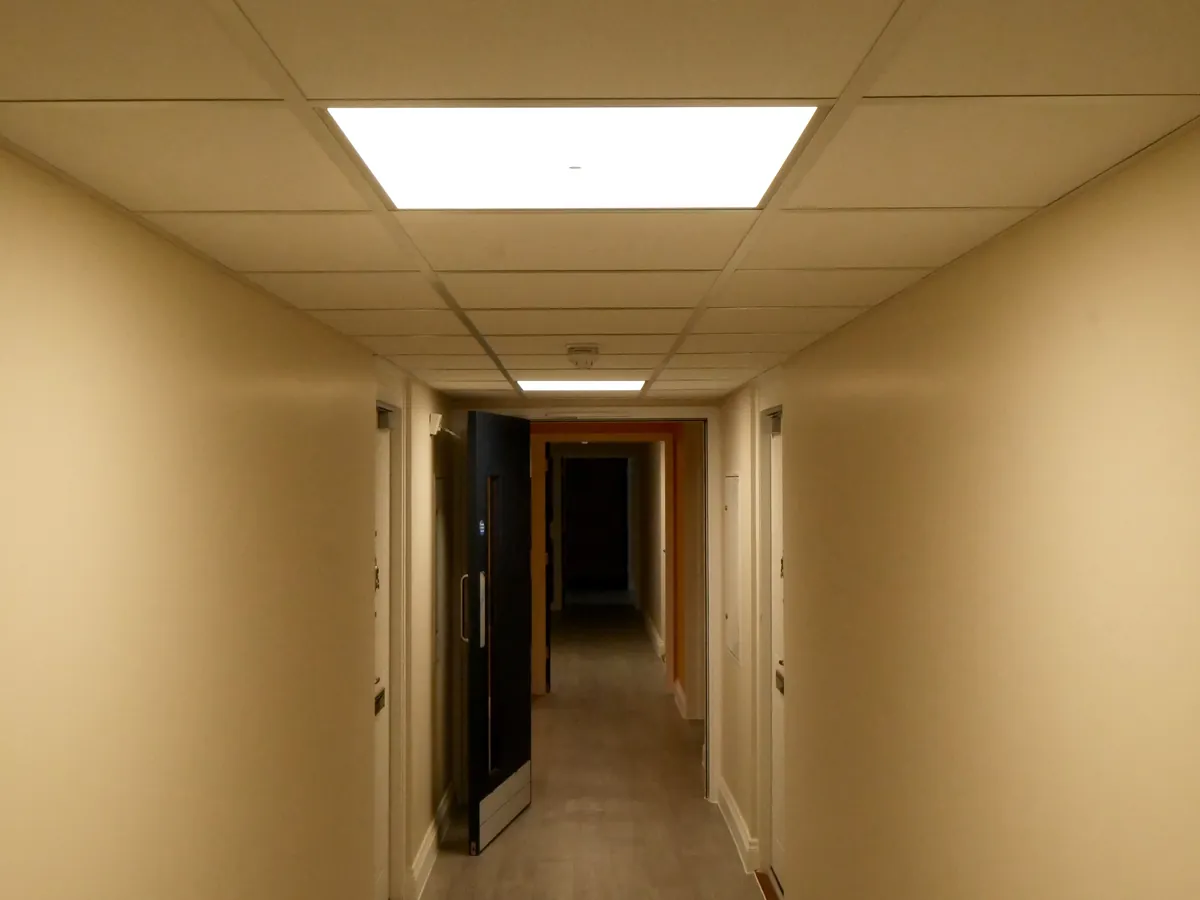
- Survey of escape routes, exits, change-of-level points and open areas, matched to your fire risk assessment
- Supply and installation of maintained and non-maintained luminaires, exit signs and, where needed, central-battery systems
- Commissioning with a certificate and an as-installed drawing
- Monthly flick tests and the full-duration annual test, logged in a logbook or on our platform
- Replacement of failed lamps, batteries and drivers by the same engineers who installed the system
How it works
We walk the escape routes against your fire risk assessment and agree what is required.
Fittings are installed and wired by our own electricians, with minimal disruption to the building.
Commissioning, certificate and drawings are issued before we leave.
Scheduled monthly and annual tests, with defects fixed on the next visit.
Emergency lighting: the detail
Compliant Backup Lighting for Safety & Peace of Mind
What is Emergency Lighting?
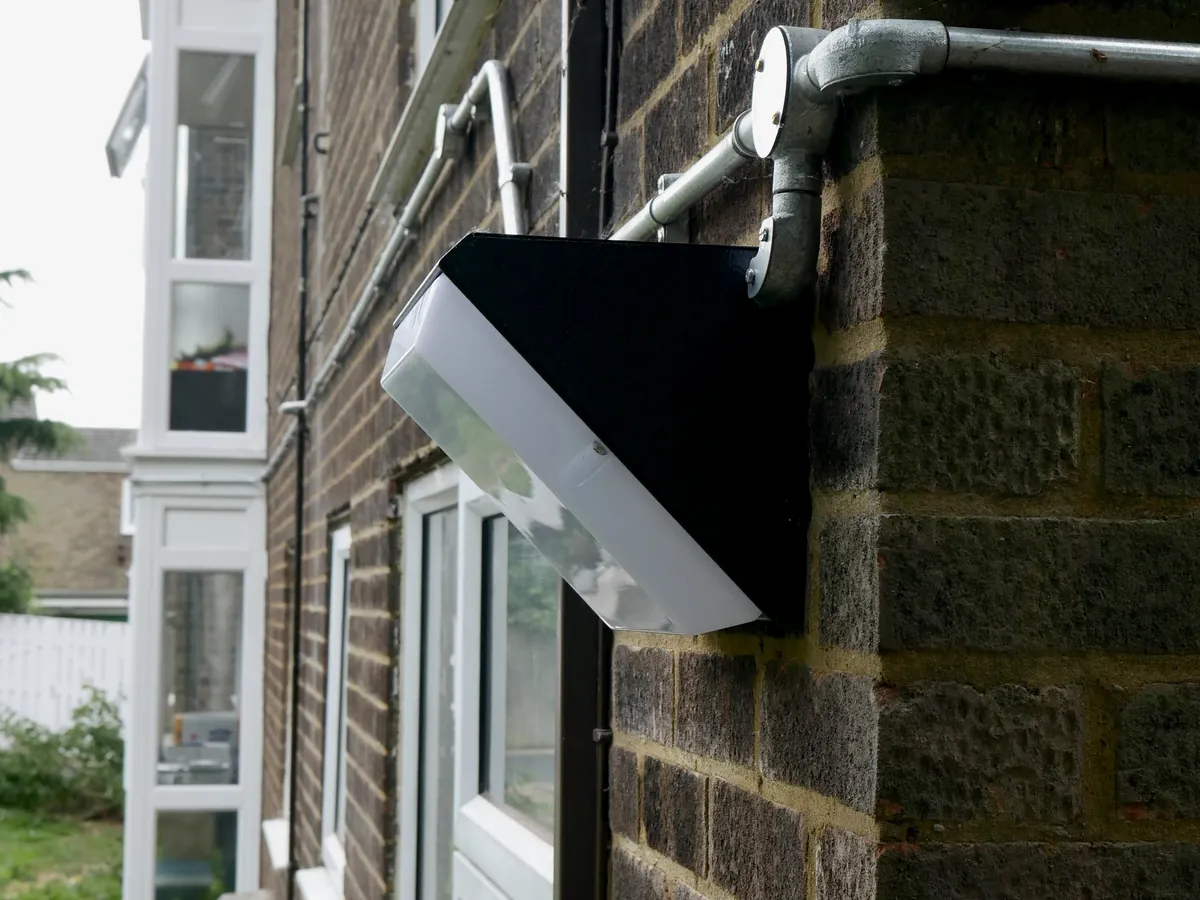
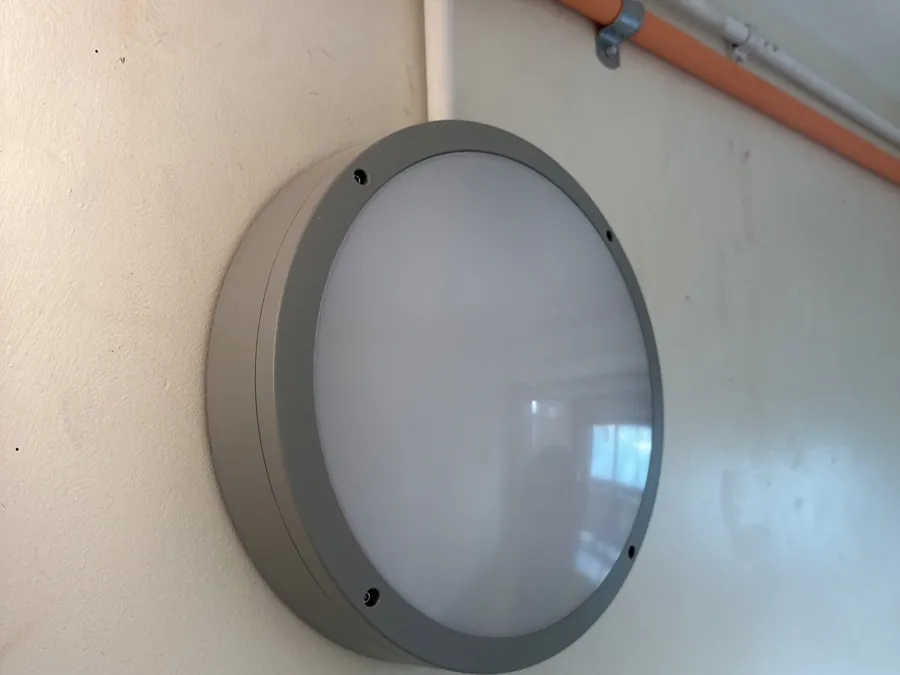
Emergency lighting in St Albans and Hertfordshire provides vital illumination during power outages, fires, or other emergencies. These systems are battery-backed and automatically activate when mains power fails, helping building occupants evacuate safely and ensuring compliance with safety regulations.
Typically, a small green LED indicates which fittings are emergency-rated, allowing for easy identification during inspections. Emergency lighting is a legal requirement for most residential blocks, commercial buildings, and public spaces, ensuring that your property is safe and compliant.
Why is Emergency Lighting Important?
emergency, the system automatically activates to provide light, helping residents, employees, or visitors exit safely. Emergency lighting also assists first responders in navigating the building during a crisis.
It is essential to test your emergency lighting regularly. If the system fails to activate, the building can be plunged into darkness, creating a significant safety risk. Regular emergency lighting testing ensures that your system functions when needed most, providing peace of mind for both occupants and building owners.
Emergency Lighting at The Specialist Electrical Group Ltd
At SEGplc, we offer professional emergency lighting in Hertfordshire, including installation, testing, and maintenance. When testing emergency lighting, our team will turn off the building’s main power supply and inspect each light to ensure it operates as required during an emergency. We have worked with leading companies like Osborne Property Services and Morgan Sindall to install and test emergency lighting systems in properties across Slough, Camden, and Hemel Hempstead.
How Often Should You Service Your Emergency Lighting?
ull emergency lighting service in Hertfordshire is required annually, though some properties may benefit from servicing every six months. This service involves a trained engineer checking that your system is fully compliant. The engineer will turn off the main power supply for 3 hours and ensure that the emergency lights remain operational throughout this period.
If any emergency lights fail during testing, the battery backup or lighting unit may need to be replaced. It is important to carry out repairs promptly to ensure that your system is always ready for use in an emergency.
Current Emergency Lighting Standards & Requirements
The current emergency lighting standards in the UK, as outlined in BS 5266-1, specify that all properties, including offices, hotels, hospitals, and nightclubs, must have emergency lighting systems in place. Regular testing is required to ensure that these units operate safely when needed.
Under BS 5266-1, properties must also have an emergency lighting certificate, which can be obtained after testing the system. It’s important to keep all emergency lighting certificates, repair logs, and compliance documents up to date, ensuring that you can prove your system’s compliance if necessary.
Testing Your Emergency Lighting
Given the critical importance of emergency lighting in Hertfordshire, it’s recommended that you contact a trained electrical contractor, like SEGplc, if your emergency lighting units are not functioning as expected. Our experienced engineers will conduct thorough tests, pinpoint any flaws, and provide advice on necessary repairs to ensure that your system is fully compliant and ready to function when needed most.
Why Choose SEGplc for Emergency Lighting in Hertfordshire?
For over 20 years, SEGplc has been providing reliable electrical services with a personal, customer-focused approach. Whether you need emergency lighting in Hertfordshire for a home, office, or public space, we’re here to offer a tailored solution that meets your specific needs. We pride ourselves on our local knowledge, high-quality installations, and ongoing maintenance services.
Our team is fully accredited by reputable bodies such as NICEIC, and we are committed to ensuring that all installations and maintenance comply with the latest safety standards. As a trusted local provider, SEGplc is dedicated to helping you maintain a safe and compliant environment for your property.
Book Your Emergency Lighting Service in Hertfordshire Today
Ensure the safety of your property and its occupants with emergency lighting in Hertfordshire from SEGplc. Contact us today for a free, no-obligation quote, and let our experts provide you with a reliable and compliant emergency lighting system.
Call 0345 3 822 833 or enquire online to arrange a site visit or request a quote.
Emergency lighting testing: what the standard expects
Emergency lighting is the lighting that comes on when the mains fails, so people can see the way out. In the UK it is designed and tested to BS 5266-1, which was fully revised in 2025. In most non-domestic buildings, and the shared parts of blocks of flats, the person responsible for fire safety must make sure escape routes are lit adequately. Your fire risk assessment sets what you need.
- Monthly: a short function test of every fitting, recorded in a logbook.
- Yearly: a full rated-duration test, where the lights run on battery for their full design time. Three hours is common, and the standard expects it for sleeping accommodation.
- Certificate and logbook: kept on site and ready to show a fire officer, insurer or auditor.
The commonest failures are batteries at the end of their life, failed lamps and damaged fittings. We test, report each fitting that fails and quote the replacement. We can install new systems, replace failed fittings and keep the testing going afterwards.
Emergency lighting across Hertfordshire
We are based in Chiswell Green, St Albans, and test and install emergency lighting across Hertfordshire, including St Albans, Hemel Hempstead, Watford, Harpenden, Hatfield, Welwyn Garden City, Stevenage, Hitchin, Borehamwood, Radlett, Potters Bar. Typical sites are offices, schools, shops, warehouses, places of worship, HMOs and the communal areas of blocks of flats. For an example, see our emergency lighting case study for housing blocks in Stevenage Borough.
Call 0345 3 822 833 or send us the address and what you need, and we will tell you what is practical.
Where we provide this
SEG’s head office and van base is in Chiswell Green, St Albans. We provide this service for homes and businesses across Hertfordshire, Bedfordshire, Buckinghamshire and North and West London, with the closest and most frequent work around St Albans, Harpenden, Hemel Hempstead and Watford.
Questions we’re asked
How often must emergency lighting be tested?
Industry practice under BS 5266-1 is a short functional test each month and a full rated-duration test once a year, both recorded in a logbook. Your fire risk assessment will confirm what applies to your premises.
Do you only test, or can you install as well?
Both. Many customers start with a test and find that failed fittings need replacing. We can quote the replacements from the test results and carry them out ourselves.
Who decides where emergency lights are needed?
The responsible person for the building, usually informed by the fire risk assessment. We design to that assessment and flag anything we think has been missed.
Do I need emergency lighting in a small office or shop?
If staff or customers could be in the building when the power fails, and the way out would not be lit by borrowed light, you almost certainly do. Your fire risk assessment decides, and we can help you read it.
How long should emergency lighting last in a power cut?
The duration is set by the building and its fire risk assessment. Three hours is common, and the standard expects it for sleeping accommodation. A shorter duration is only acceptable where the assessment supports it.
Who is responsible for emergency lighting?
In most non-domestic premises, and the shared parts of multi-occupied residential buildings, it is the responsible person under the Regulatory Reform (Fire Safety) Order 2005. That is usually the employer, owner, landlord or managing agent.
Do you test emergency lighting in Watford, Hemel Hempstead and Welwyn Garden City?
Yes. We work across Hertfordshire from our St Albans head office. Call with the address and the number of fittings and we will tell you what we can do.
What happens if a light fails the test?
We record the failure in the logbook, tell you which fitting and why, and quote the repair or replacement. Many failures are batteries or lamps, and are a quick fix once identified.
Need it done by a date?
Tell us the deadline. We’ll tell you honestly whether we can hit it — and we usually can.