

- Home
- Outdoor step lights
Outdoor step lights.
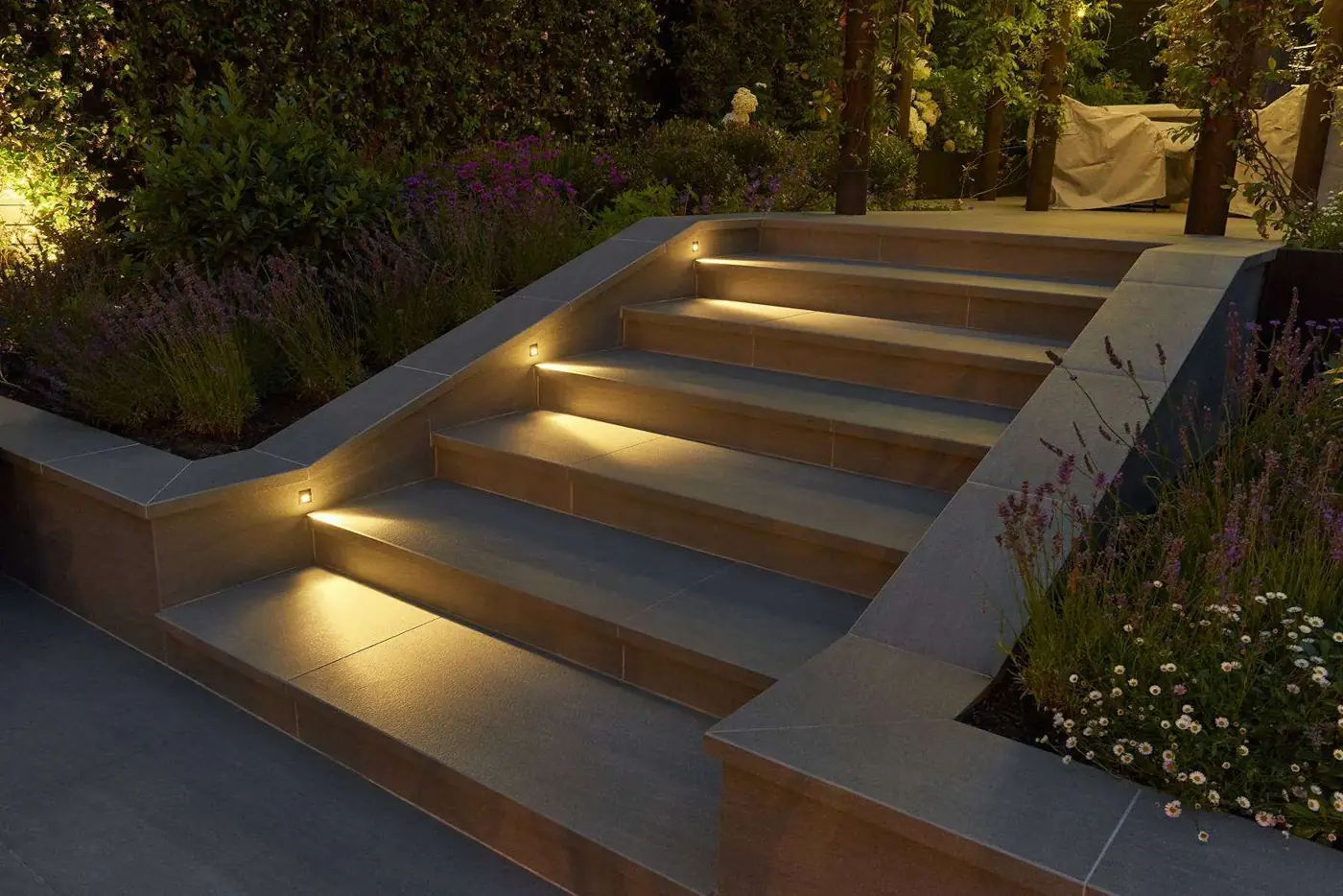
Steps are where people trip in the dark. A recessed light in each riser or the wall beside them makes them safe and looks good.
← All garden and exterior lighting
Types of step light
| Type | Where it goes | Best for |
|---|---|---|
| Riser lights | Set into the face of each step | New steps, stone and block risers |
| Wall step lights | In the wall beside the flight | Steps with a side wall, retrofits |
| Brick lights | Replace a brick in a wall | Brick walls and retaining walls |
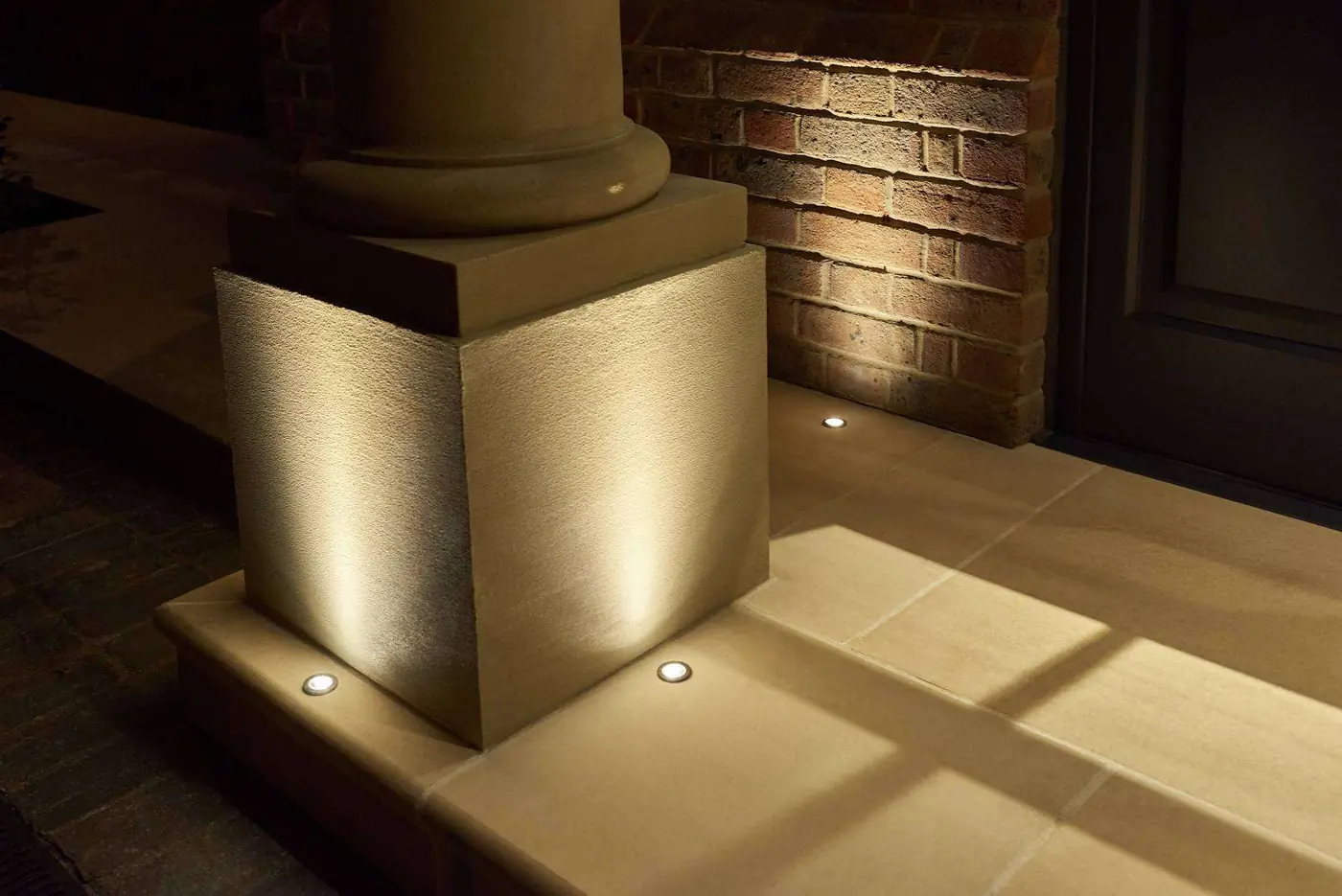
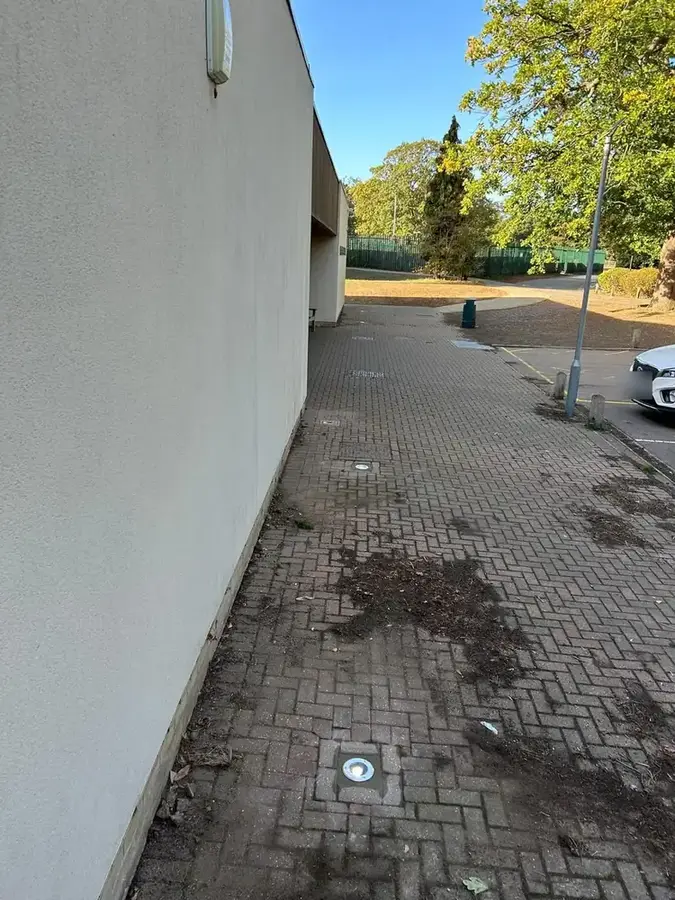
| In-ground markers | In the tread or paving at the edge | Wide shallow steps, terraces |
Getting them right
- Light the tread, not your eyes. Louvred or eyelid fittings throw light down onto the step.
- Rated for outdoors. IP65 or better in walls, IP67 where they sit near the ground and can get wet.
- Plan with the builder. In new steps we leave boxes and ducts in the risers. In existing steps we core the masonry and run cable in the joints.
- Low voltage or mains. Both work. Low voltage suits many small fittings; we put the driver somewhere dry and reachable.
- On with the paths. Step lights usually sit on the same circuit and timer as the path lights.
Photographs: a private residence in Totteridge (a project led by our director Michael Simm and now maintained by SEGplc) and external lighting at a school in Ware.
Questions we’re asked
Can step lights be added to existing steps?
Usually, yes. Wall step lights and brick lights are the easiest retrofit. Riser lights mean coring the step, which we do neatly where the stone allows.
Are step lights bright enough?
They only need to light the tread. A soft, even light is safer than a bright one because it does not dazzle.
Do step lights need a separate circuit?
Often they share the garden lighting circuit. A new outdoor circuit is notifiable under Part P in England, and we certify and notify it.
Written by SEGplc. Last updated 19 October 2026.
Need it done by a date?
Tell us the deadline. We’ll tell you honestly whether we can hit it — and we usually can.