

- Home
- Tree uplighting
Tree uplighting.
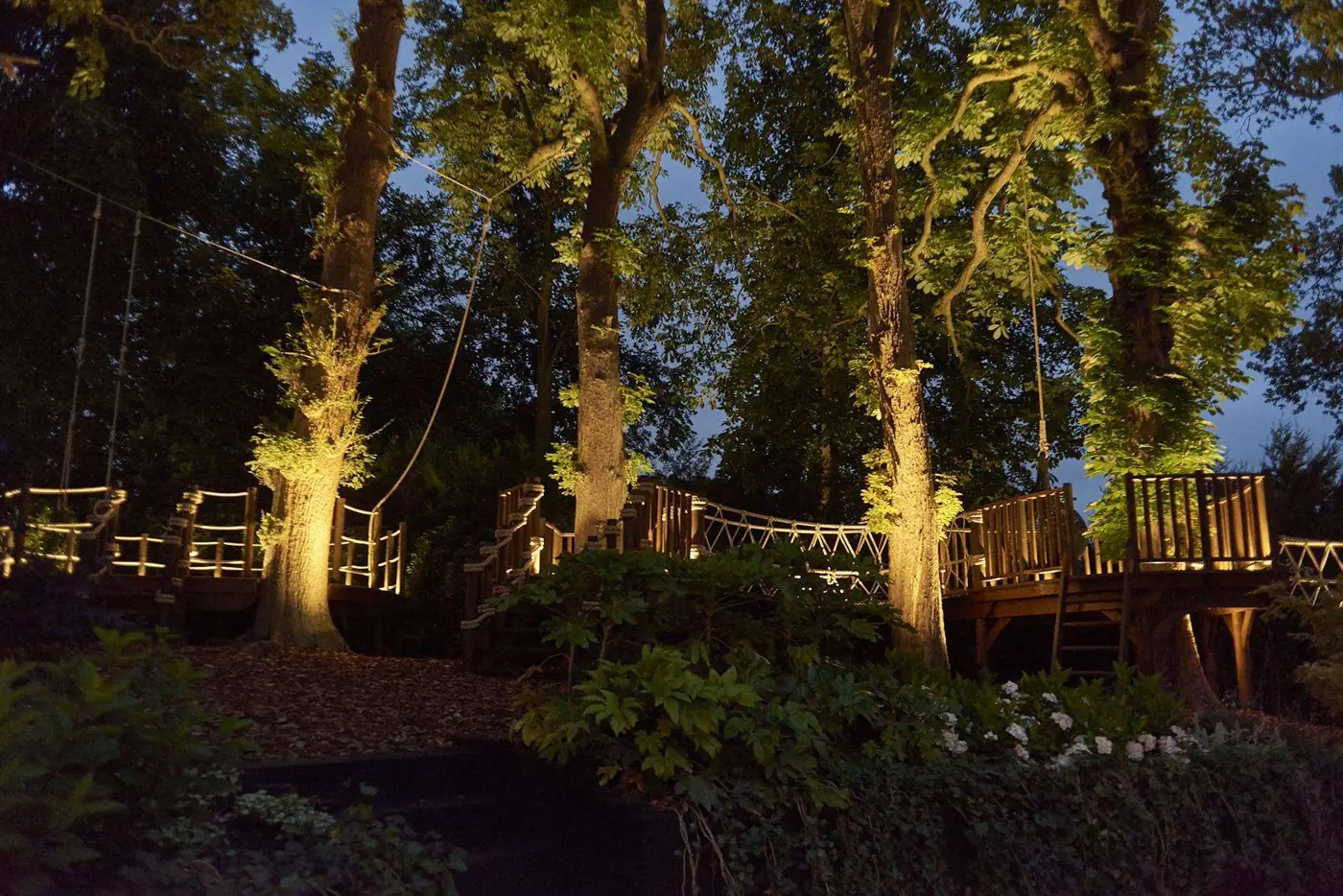
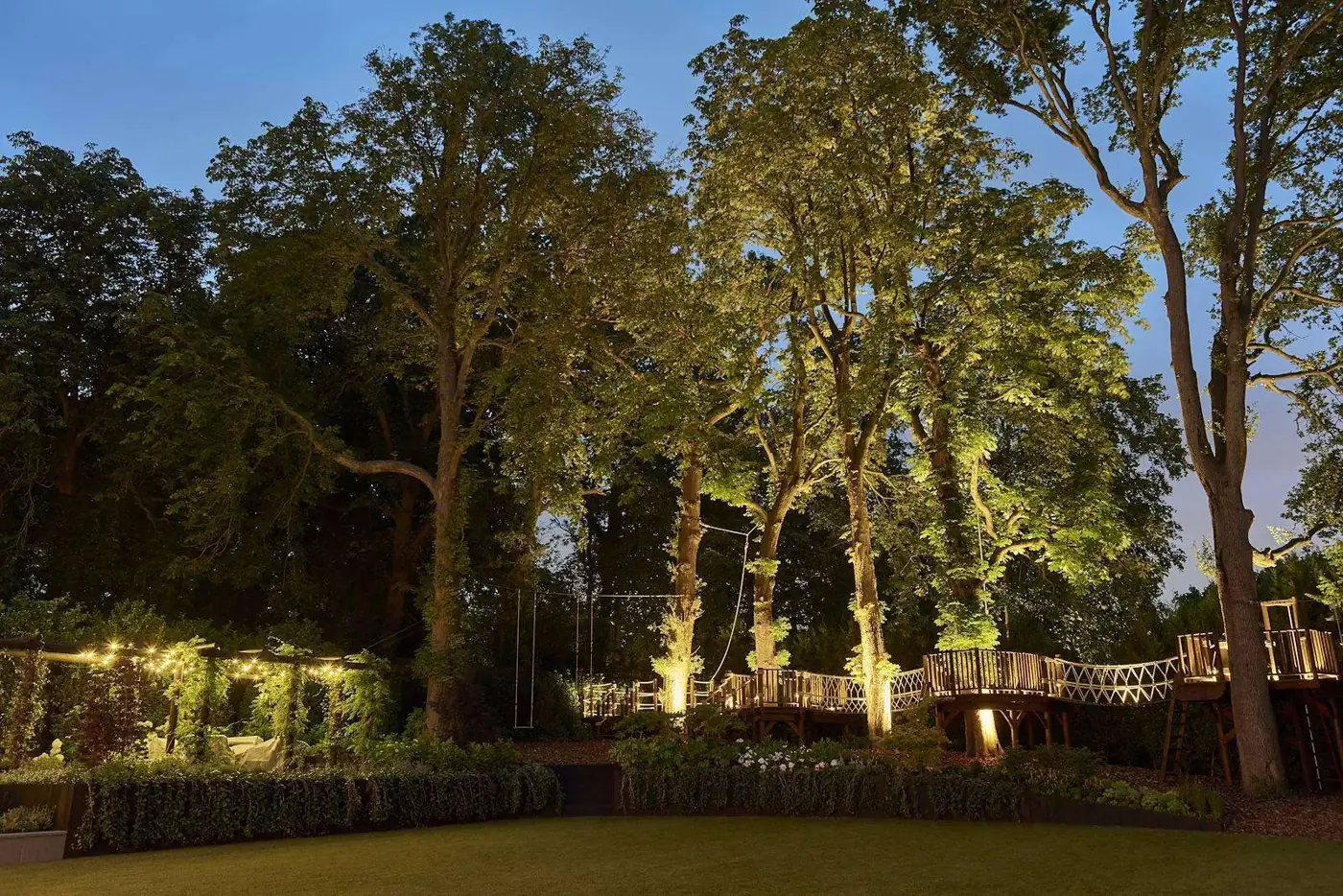
Two or three well-lit trees give a garden depth at night more than anything else. Placement and aiming are everything.
← All garden and exterior lighting
Choosing the trees
Pick trees you can see from the house: one near, one in the middle distance and one at the back gives a sense of depth. Trees with interesting bark or an open canopy, such as birch, oak and acer, light beautifully. Dense evergreens need more light and look flatter.
How we light a tree
- Spike uplighters in the border, so they can be moved as the tree grows. Usually low voltage, easy to reposition.
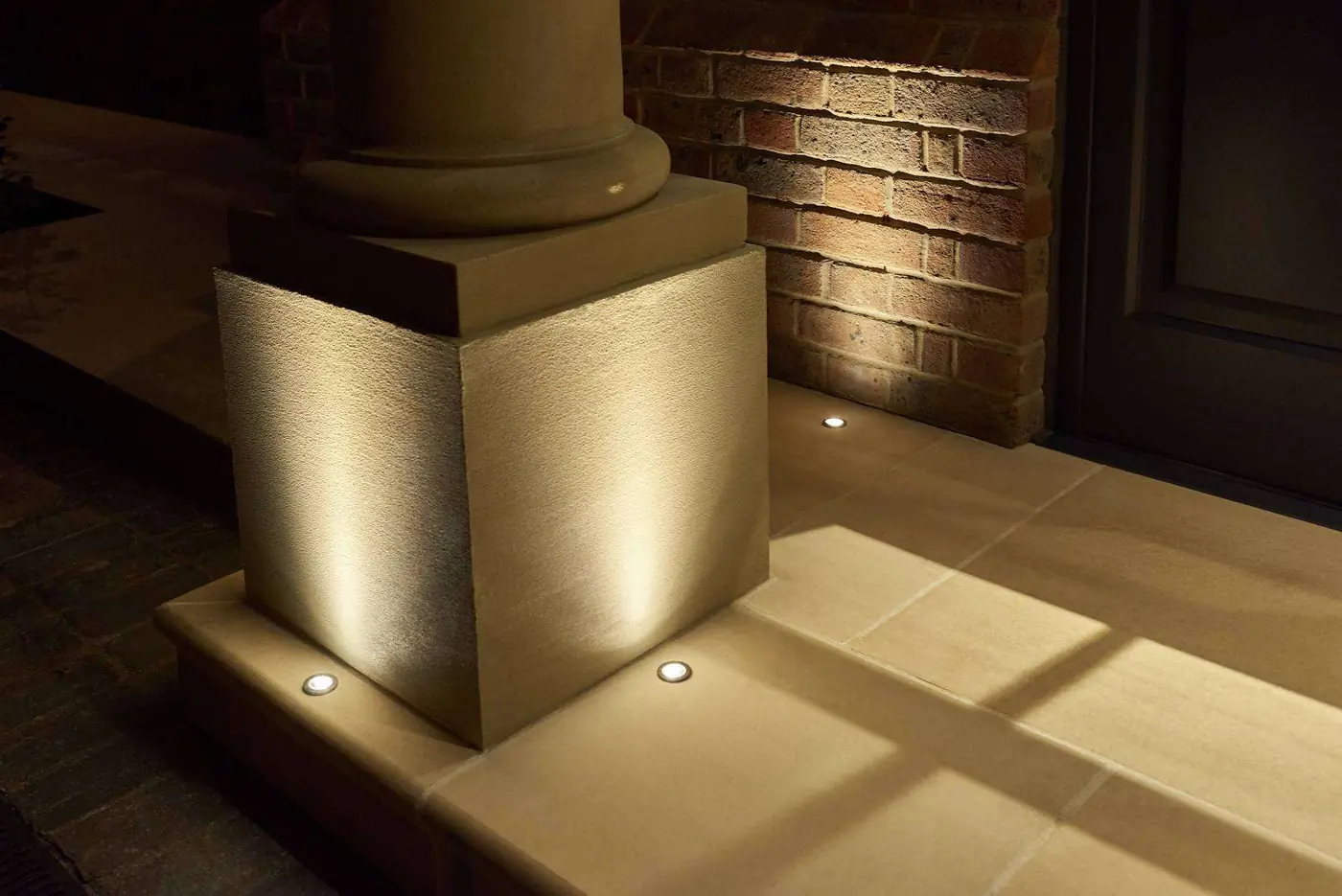
- In-ground uplighters in lawns or paving, rated for walk-over and water (IP67 or IP68).
- Two lights for big trees, from different angles, so the trunk and canopy both read.
- Narrow beams for tall, slim trees; wide beams for broad canopies. We test the aim at night before we fix anything.
- Moonlighting: fittings high in the tree shining down through the branches for a soft, dappled light on the lawn.
From our work: Radlett
A Radlett homeowner’s garden lighting was run from a Rako system, but several fittings had failed. We replaced the mushroom and spike lights, reconnected the tree lighting and checked the circuits. Read the Radlett job.
Photographs: a private residence in Totteridge (a project led by our director Michael Simm and now maintained by SEGplc).
Questions we’re asked
Will uplighting harm the tree?
No. LED uplighters run cool. We keep fittings clear of trunks and roots and use spikes so they can be moved as the tree grows.
How many lights does a tree need?
A small tree often needs one; a large tree usually looks best with two from different angles. We test at night before fixing anything.
Do tree lights need to be mains?
Not usually. Low voltage spike lights suit borders because they are easy to move. Larger in-ground fittings in lawns or paving are often mains on armoured cable.
Written by SEGplc. Last updated 19 October 2026.
Need it done by a date?
Tell us the deadline. We’ll tell you honestly whether we can hit it — and we usually can.