

- Home
- Path lighting
Garden path lighting.
Paths need enough light to walk safely, not to read by. Done well, the path glows and the planting does the rest.
← All garden and exterior lighting
Path light types
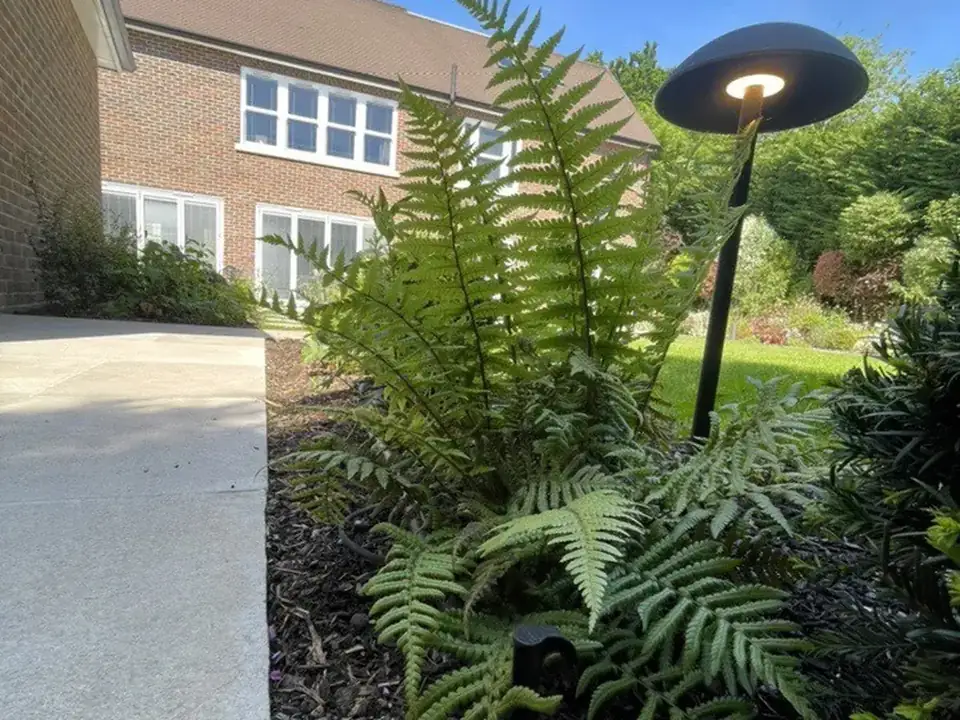
- Mushroom or hooded path lights throw a pool of light down onto the path and the planting beside it.
- Spike lights in the border for paths through planting. Easy to move as the garden grows.
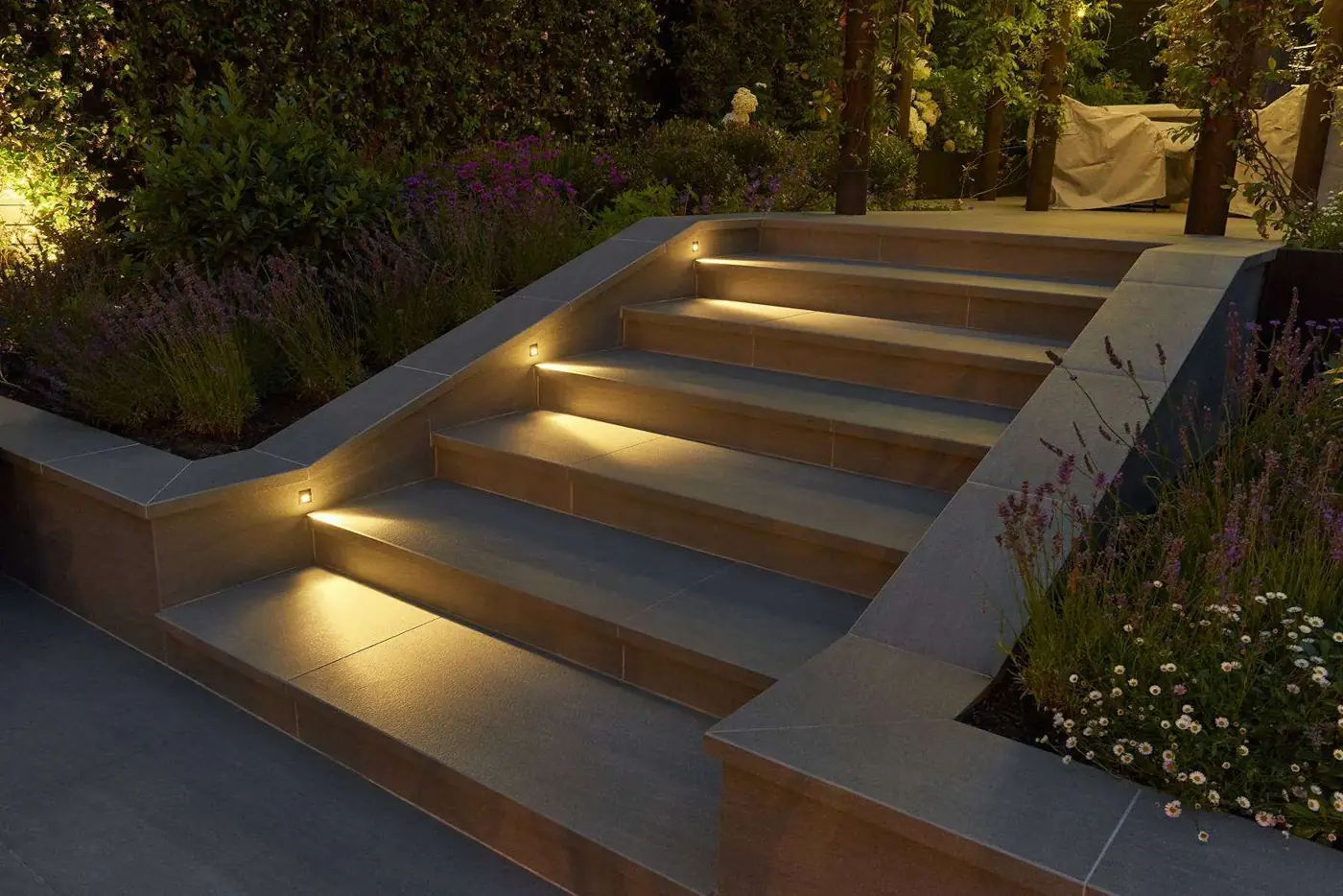
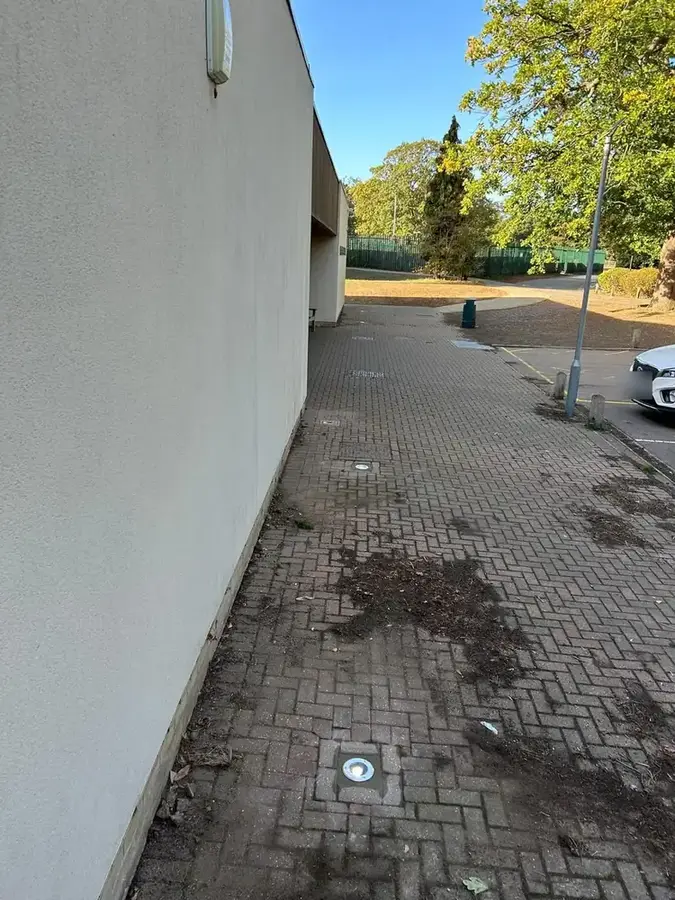
- Recessed ground lights along the edge of paving, rated for walk-over.
- Low bollards for longer drives and more formal paths.
Spacing without the runway look
Path lights in a straight line every metre look like an airport. We stagger them on alternate sides, roughly every 2 to 3 metres depending on the fitting, and leave darker gaps so the path reads as a route through the garden.
From our work: a school path in Ware
At a school in Ware we replaced failed in-ground path lights whose bodies had filled with water, fitting new sealed units in sleeves and checking the circuit. Water getting into cheap or badly sealed fittings is the most common path lighting fault we see. See the Ware job.
Photographs: a private residence in Totteridge (a project led by our director Michael Simm and now maintained by SEGplc), our garden lighting repair in Radlett and external lighting at a school in Ware.
Questions we’re asked
How far apart should path lights be?
Usually 2 to 3 metres, staggered on alternate sides. The right spacing depends on the fitting’s spread, so we test before fixing.
Why do my path lights keep failing?
Usually water. In-ground fittings need to be rated IP67 or IP68, sealed properly and installed with drainage below. Damaged cable joints are the next most common cause.
Are solar path lights any good?
They are fine as decoration, but in a UK winter they are dim and short-lived. Wired lights are reliable all year.
Written by SEGplc. Last updated 19 October 2026.
Need it done by a date?
Tell us the deadline. We’ll tell you honestly whether we can hit it — and we usually can.