

- Home
- Electrical certificates explained
Electrical Installation Certificate or Minor Works certificate: which one for which job?
New circuits, a new fuse board and rewires come with an Electrical Installation Certificate. Smaller changes to an existing circuit come with a Minor Works certificate. Here is the paperwork for each job, and where the EICR and Part P fit in.
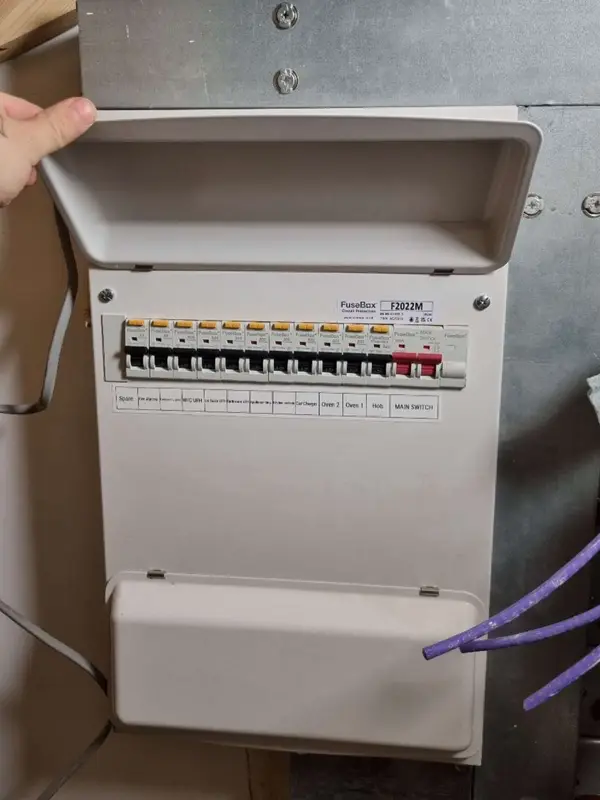
Been asked for a landlord or “electrical safety” certificate? That is a different question: see electrical safety certificate: which one do you need?
The short answer
New circuits, a new fuse board and rewires come with an Electrical Installation Certificate (EIC). A smaller addition or alteration to a circuit you already have comes with a Minor Electrical Installation Works Certificate, usually called a Minor Works certificate. Both are filled in by the electrician who did the work, and both are records that the work was inspected and tested.
Two other documents get mixed up with them. An EICR is a report on the condition of wiring that is already there, not a certificate for new work. A Building Regulations compliance certificate is a separate document for certain jobs in homes in England, under Part P of the Building Regulations.
Job by job: the paperwork you should get
| The job | The paperwork you should get |
|---|---|
| A full or partial rewire | An Electrical Installation Certificate, with its schedules of inspections and test results. In a home in England, a Building Regulations compliance certificate as well, because new circuits are notifiable. |
| A new fuse board (consumer unit) | An Electrical Installation Certificate and, in a home in England, a Building Regulations compliance certificate. A Minor Works certificate is not the right form for this job. |
| A new circuit, for example for a cooker, an electric shower, an EV charger or a garden room | An Electrical Installation Certificate and, in a home in England, a Building Regulations compliance certificate. |
| An extra socket or light added to an existing circuit | A Minor Works certificate. No Building Regulations certificate, unless the work is in the space around a bath or shower. |
| A light switch moved, or a socket moved on the same circuit | A Minor Works certificate. |
| A socket, switch or light fitting replaced | A Minor Works certificate can be used for this. Replacements are not notifiable. |
| A light, fan or other point added or altered in the space around a bath or shower | A Minor Works certificate and, in a home in England, a Building Regulations compliance certificate. If it needs a new circuit, an Electrical Installation Certificate instead. |
| A check of the wiring you already have, for example before buying, for a tenancy, or because the wiring is old | An EICR (Electrical Installation Condition Report). No Building Regulations certificate, because nothing has been installed. |
If one visit covers several of these, expect more than one document. A Minor Works certificate covers one circuit, so work on two existing circuits means two certificates.
The Electrical Installation Certificate (EIC)
The EIC is the certificate for new work: a new installation, or an addition or alteration that brings in one or more new circuits. That covers a rewire, a new circuit, and a replacement fuse board.
What to look for on it:
- Who is responsible. It is signed for the design, the construction, and the inspection and testing. On a house job that is often the same electrician or firm.
- The schedules. An EIC is only valid with its schedule of inspections and its schedule of test results. If you have been given one page with no test results, ask for the rest.
- The next inspection. It recommends when the wiring should next be inspected.
The original goes to the person who ordered the work, and the electrician keeps a copy. If you ordered the work but do not own the property, pass the certificate to the owner.
The Minor Works certificate
Its full name is the Minor Electrical Installation Works Certificate. It is for an addition or alteration to an existing circuit that does not need a new circuit. The examples given with the form itself are extra sockets or lighting points on an existing circuit, and moving a light switch. It can also be used when a socket, switch or light fitting is replaced.
It is a shorter form than an EIC, but the work still has to be inspected and tested, and the readings are written on it. It should not be used for a new circuit or for replacing a fuse board. You should get one certificate for each circuit that was worked on. See our small electrical jobs page for the kind of work it covers.
The EICR: a report, not a certificate for new work
An Electrical Installation Condition Report (EICR) is an inspection and test of wiring that is already in use. It ends with a result of Satisfactory or Unsatisfactory and a list of coded observations. It tells you what condition the installation is in on the day. It does not certify that a particular job was installed correctly, so it is not what an electrician should hand you in place of an EIC or Minor Works certificate after new work.
More on EICRs: what an EICR checks, EICR codes explained and EICR testing. For the landlord rules and prices see electrical safety certificate: which one do you need?
The Building Regulations compliance certificate (Part P)
Part P of the Building Regulations covers electrical work in homes in England, including gardens and outbuildings. Some of that work is “notifiable”, which means building control has to be told about it. Wales, Scotland and Northern Ireland have their own rules.
What is notifiable
Since April 2013, three kinds of work in a home in England:
- Installing a new circuit.
- Replacing a consumer unit (fuse board).
- Any addition or alteration to an existing circuit in a special location. That means the space around a bath or shower (out to 0.6 metres from the edge of the bath or shower tray, and up to 2.25 metres above the floor), or a room with a swimming pool or a sauna heater.
Everything else is not notifiable: additions and alterations outside those spaces, and replacements, repairs and maintenance anywhere. Work in a kitchen or a garden is only notifiable if it is one of the three kinds above, such as a new circuit. Work that is not notifiable must still be done safely, tested and given the right certificate.
Who sends it, and how long it takes
There are three routes, and which one applies depends on who does the work.
- A registered electrician. An electrician registered with a competent person scheme, such as NICEIC, certifies their own work. The electrician or their scheme must give the occupier the Building Regulations compliance certificate, and tell building control, within 30 days of the work being finished. This is the usual route, and there is no building control charge.
- A registered third-party certifier. An installer who is not registered can appoint one before starting, and must tell them within five days of finishing. The certifier inspects and tests the work, and their scheme sends the compliance certificate within 30 days of a satisfactory report.
- Building control. If neither applies, building control must be told before the work starts. They decide what inspection and testing is needed, charge a fee, and issue a completion certificate when they are satisfied.
The compliance certificate is separate from the EIC or Minor Works certificate. For notifiable work you should end up with both. If it has not arrived after 30 days, ask the electrician, then the scheme they are registered with.
Who can issue each one
| Document | Who issues it |
|---|---|
| Electrical Installation Certificate | The electrician or firm that designed, installed, inspected and tested the work. |
| Minor Works certificate | The electrician who did and tested the work. |
| EICR | An electrician who is competent in inspection and testing. They do not need to have done any of the original work. |
| Building Regulations compliance certificate | The registered electrician or the competent person scheme they belong to. Where building control inspected the work, the document is a completion certificate from building control. |
An EIC or Minor Works certificate is signed by the people responsible for the work, so an electrician who was not involved cannot write one for it afterwards. Before you book, ask which scheme the electrician is registered with and check them on that scheme’s own register: see how to choose an electrician. If a builder is arranging the electrics, see hiring your own electrician for an extension.
How long to keep them, and why
Keep them for as long as you own the property, then hand them to the next owner. An EIC or Minor Works certificate has no expiry date. It records that the work met the wiring regulations on the day it was issued.
- Later work and inspections. The guidance printed with the certificates says to keep them in a safe place and show them to anyone who inspects the wiring or works on it later. They tell the next electrician what was done and what the test readings were.
- Selling. The Law Society property information form (TA6) asks whether the property has been rewired or had electrical installation work since 1 January 2005. If it has, it asks for one of three documents: the signed BS 7671 certificate, the installer’s Building Regulations compliance certificate or the building control completion certificate. See do I need an EICR to sell my house?
- Letting. Government guidance says a newly built or completely rewired home should have an EIC, and the landlord then does not need a further report for five years after it was issued. The other landlord rules are on our electrical safety certificate page.
- Insurance. We cannot speak for insurers, and policies differ. If you are ever asked how the electrical work was done, the certificate is your record that it was inspected and tested.
Keep the paper copies with the house papers and save a scan or photo of each page as well.
If a certificate is lost, or was never given
- Ask the electrician or firm that did the work. They should have kept a copy of the EIC or Minor Works certificate, and of any EICR, and can send you a duplicate.
- For the Building Regulations compliance certificate, go to the scheme. For work notified through NICEIC, a duplicate can be bought from the Check My Notification website. For other schemes, contact the scheme the electrician was registered with. Building control at your council is also told about notified work.
- If the certificate was never given, ask the electrician for it in writing. If it still does not come, contact the scheme they are registered with.
- If the electrician cannot be traced, or the work was never certified, another electrician cannot issue an EIC or Minor Works certificate for it. What they can do is an EICR. It inspects and tests the installation as it stands, including that work, and tells you whether it is safe.
- If notifiable work was never notified, an EICR does not replace the Building Regulations certificate. The council’s building control team can be asked for a regularisation certificate, which is approval after the event. It is only available from the council, it covers work done after 11 November 1985, and they may ask for work to be opened up or altered first. If you are selling, ask your solicitor what the buyer will accept.
What you get from us
SEG is NICEIC approved. We issue the Electrical Installation Certificate or Minor Works certificate on the day, and the NICEIC notification follows automatically for notifiable work. Certificates, test results and photographs are stored against the job in our own system, so you can ask us for a copy years later. See electrical installations, fuse board replacement and kitchen and bathroom electrics.
This page is based on the model certificates and their notes in BS 7671, published by the IET, on Approved Document P (2013 edition) and other guidance on gov.uk, and on advice for householders from NICEIC and Electrical Safety First. It covers homes in England.
Questions we’re asked
What is the difference between an Electrical Installation Certificate and a Minor Works certificate?
An Electrical Installation Certificate is for a rewire, a new circuit or a new fuse board. A Minor Works certificate is for an addition or alteration to an existing circuit, such as an extra socket or a moved light switch.
Do I get an Electrical Installation Certificate for a new fuse board?
Yes. Replacing a fuse board (consumer unit) should come with an Electrical Installation Certificate. A Minor Works certificate is not the right form for it. In a home in England the work is also notifiable, so you should receive a Building Regulations compliance certificate as well.
Is an EICR the same as an Electrical Installation Certificate?
No. An EICR is a report on the condition of wiring that is already there. An Electrical Installation Certificate is issued by the electrician who has just installed new work, and confirms that work was designed, built, inspected and tested to the wiring regulations.
Do I need a certificate for an extra socket or a new light fitting?
You should be given a Minor Works certificate for an extra socket or light on an existing circuit, and one can also be used when a fitting is replaced. In England this work is not notifiable under Part P unless it is an addition or alteration in the space around a bath or shower.
How long does a Part P certificate take to arrive?
When a registered electrician does notifiable work in a home in England, the Building Regulations compliance certificate must be given to the occupier within 30 days of the work being finished. If it has not arrived by then, ask the electrician, then their scheme.
Does an Electrical Installation Certificate expire?
No. It records that the work met the wiring regulations on the day it was issued, and it recommends when the wiring should next be inspected. Keep it for as long as you own the property and pass it to the next owner.
I have lost my electrical certificate. Can I get a copy?
Ask the electrician or firm that did the work, who should have kept a copy. For a Building Regulations compliance certificate, go to the scheme the electrician was registered with. For work notified through NICEIC, a duplicate can be bought from the Check My Notification website.
Can another electrician certify work that was never certified?
Not with an Electrical Installation Certificate or Minor Works certificate, which are signed by the people responsible for the work. Another electrician can carry out an EICR, which tests the installation as it stands. For notifiable work that was never notified, the council's building control team can be asked for a regularisation certificate.
Written by SEGplc. Last updated 15 November 2026.
Need it done by a date?
Tell us the deadline. We’ll tell you honestly whether we can hit it — and we usually can.