

- Home
- Electrical safety certificate
Electrical safety certificate: which one do you need, and what it costs.
An EICR for the wiring you have, an EIC or Minor Works certificate for work just done, and a Part P certificate for notifiable jobs. Which applies to landlords, sellers, buyers and homeowners, and the prices.
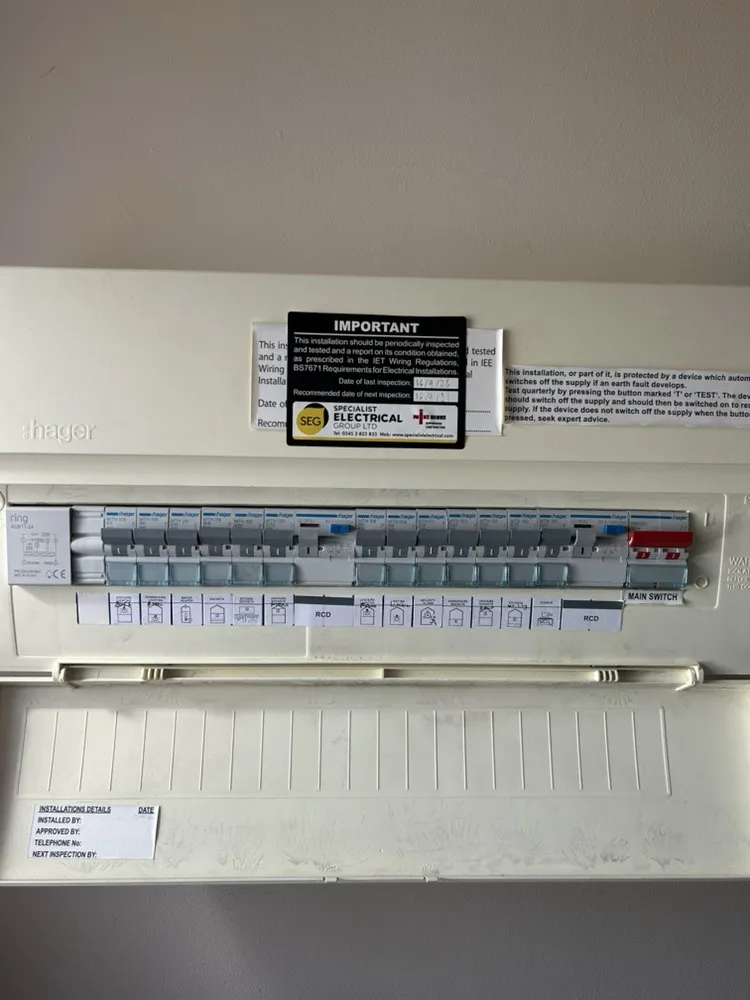
“Electrical safety certificate” is not the name of any one document. Depending on who is asking, it means an inspection report on the wiring you already have, or a certificate for work that has just been done. This page tells you which one you need, what it costs and who can issue it.
The four documents people mean
| Document | What it is | When you need it |
|---|---|---|
| EICR (Electrical Installation Condition Report) | An inspection and test of the existing wiring, fuse board, sockets and lights, with a Satisfactory or Unsatisfactory result and coded observations (C1, C2, C3, FI). | Landlords every five years; social landlords; HMO licences; buying or selling (optional); any home or business that wants to know the wiring is safe. See EICR testing. |
| EIC (Electrical Installation Certificate) | The certificate for a new installation or a new circuit: a rewire, a new consumer unit, a new cooker circuit, an EV charger. | Issued by the electrician who did the work. You should get one at the end of every job that adds a circuit; keep it with the house papers. |
| Minor Works Certificate (MEIWC) | The certificate for an addition or alteration that does not add a new circuit: extra sockets, a replaced light fitting, a moved switch. | Issued by the electrician who did the work. Smaller than an EIC but still a test record. |
| Building Regulations compliance certificate (Part P) | Confirmation that notifiable work (a new circuit, a new consumer unit, work in a bathroom) was done by a registered competent person and notified to building control. | Arrives by post or email from the scheme (NICEIC for our work) a few weeks after the job. Solicitors ask for it when you sell. |
A Satisfactory EICR is what most people mean by a landlord certificate, a safety certificate or an electrical safety check. An EIC or Minor Works certificate is what you get after work. If someone asks you for “the electrical certificate”, the safest answer is: an EICR for the installation, plus the EIC or Minor Works certificates and Part P certificates for any work done since.
Landlords: the certificate you must have
In England, private landlords must have the installation inspected and tested at least every five years by a qualified person and give the report to tenants (within 28 days of the inspection, and to new tenants before they move in) and to the council on request. If the report is Unsatisfactory, C1 and C2 items and further investigations must be done within 28 days (sooner if the report says so), and the landlord must get written confirmation of the remedial work. Social landlords came under the same rules from 1 November 2025, with legacy tenancies to be inspected by 1 November 2026. Our EICR remedial works guide covers the codes and deadlines; letting agents have their own page.
Selling or buying a house
There is no legal requirement for an electrical certificate to sell a house in England. The TA6 property information form asks about electrical work since 2005 and whether certificates exist, and a buyer’s solicitor or surveyor often asks for an EICR when the wiring looks old. A recent Satisfactory EICR answers the question for about £156 inc VAT for a one-bedroom home and takes two to four hours; see do I need an EICR to sell my house?.
After new work: what the electrician should give you
Every new circuit should come with an EIC; smaller alterations with a Minor Works certificate; and notifiable work (new circuits, a new consumer unit, anything in a bathroom or outdoors on a new circuit) should be followed by a Part P compliance certificate from the electrician’s scheme. If a builder or electrician cannot produce them, the work was either not tested or not notified, and a later EICR will usually find it. We issue the EIC or Minor Works certificate on the day and the NICEIC notification follows automatically.
What an electrical safety certificate costs
An EIC or Minor Works certificate is part of the job, not a separate charge. An EICR is priced by the size of the installation; our homeowner prices include VAT and landlord prices are plus VAT:
| Property | Homeowner (inc VAT) | Landlord (plus VAT) |
|---|---|---|
| Studio or 1-bed | £156 | £130 |
| 2-bed | £186 | £155 |
| 3-bed | £216 | £180 |
| 4-bed | £258 | £215 |
| 5+ bed | from £318 | from £265 |
| HMO (up to 6 rooms) | from £290 |
Up to ten circuits on one consumer unit; extra circuits and boards are priced on the EICR cost page. Remedials are quoted from our own report.
Who can issue an electrical safety certificate?
A qualified and competent electrician. For landlord EICRs the regulations say a “qualified and competent person”, and councils expect a registered scheme member; for Part P certificates the electrician must be registered with a competent person scheme. SEG is NICEIC approved, our engineers are employed by us and carry the test instruments the forms require, and every certificate is backed by photographs of the board and the readings. Book through Tailor my quote or ring 01727 238 999.
Questions we’re asked
Is an EICR the same as an electrical safety certificate?
In everyday use, yes: when a landlord, agent or buyer asks for an electrical safety certificate they almost always mean a Satisfactory EICR. Strictly an EICR is a report, and the certificates are the EIC and Minor Works certificate issued after work.
How long is an electrical safety certificate valid for?
An EICR states its own next inspection date: five years is usual for rented homes and most houses, sooner if the installation is in poor condition. An EIC or Minor Works certificate does not expire; it records the work on that date.
Do homeowners legally need an EICR?
No. The five-year rule applies to rented homes. Homeowners get one when buying, when the wiring is old, after a fault, or because an insurer or mortgage lender asks.
What does a landlord have to do if the EICR is Unsatisfactory?
Have the C1, C2 and FI items dealt with within 28 days (or sooner if the report says so), get written confirmation from the electrician, and give it to the tenant and, if asked, the council within 28 days.
Can I get a certificate for work another electrician did?
An EIC or Minor Works certificate can only be issued by the person who did and tested the work. What we can do is an EICR of the installation, which tests that work along with everything else and tells you whether it is safe.
What is a Part P certificate?
The Building Regulations compliance certificate your electrician's scheme sends after notifiable work. It proves the work was notified to building control, which solicitors check when you sell.
Written by SEGplc. Last updated 1 November 2026.
Need it done by a date?
Tell us the deadline. We’ll tell you honestly whether we can hit it — and we usually can.