

- Home
- Electric shower installation
Electric shower installation.
A like-for-like replacement, a more powerful shower or a new shower circuit: checked, tested and certified by our own electricians, from St Albans across Hertfordshire.
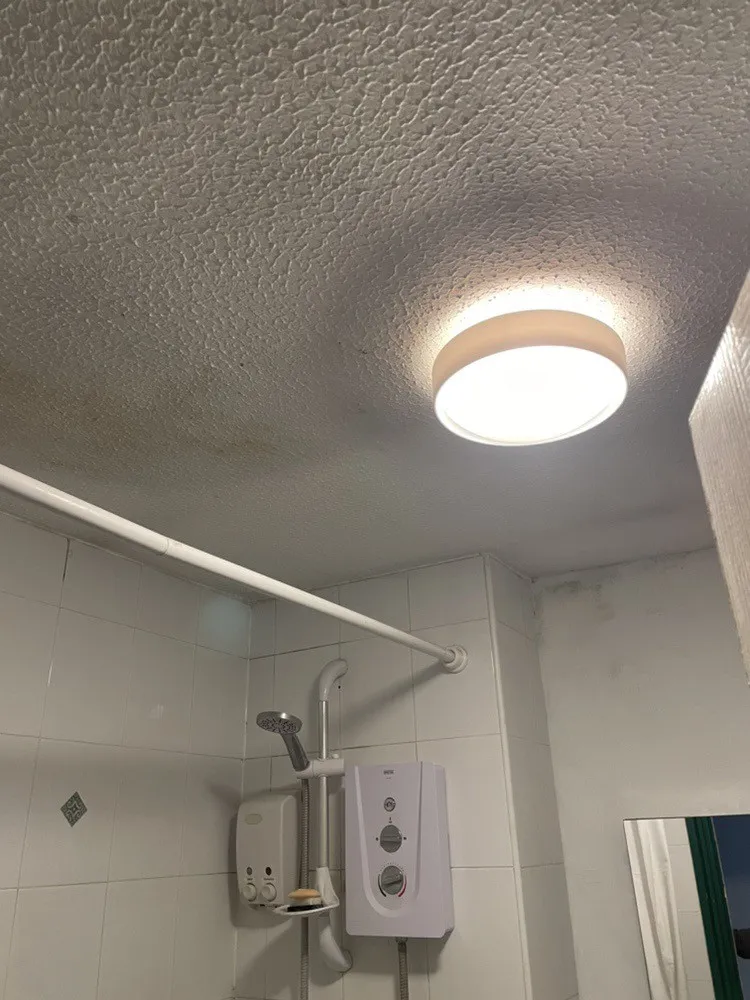
We do the electrical side of an electric shower installation: the circuit from the fuse board, the isolator switch, the connection, the testing and the certificate. A like-for-like replacement can often stay on the circuit you have. A more powerful shower, or a shower where there was none before, usually needs a new or upgraded circuit.
Shower stopped working, running cold or cutting out? See electric shower not working: what to check.
Like for like, or a more powerful shower?
The number that matters is the kW rating on the box or on the label of the shower. Most electric showers are between 7.5 and 10.5 kW. More kW gives a stronger flow of hot water, and it also draws more current: a little over 30 amps for a 7.5 kW shower, and around 45 amps for a 10.5 kW one. Nothing else in most homes draws that much, which is why the rating decides what happens to the circuit.
| Your job | What usually happens to the circuit | Paperwork |
|---|---|---|
| Same kW rating, same place | The existing circuit is inspected and tested. If the cable, breaker, RCD and isolator are sound and suit the shower, it is reused. | Minor Works certificate. Not usually notifiable. |
| A more powerful shower | The new shower draws more current, so the circuit is checked against the new rating. Often the cable, the breaker or both have to be upgraded. | Minor Works or Electrical Installation Certificate, depending on the work. Notified under Part P where it is notifiable. |
| A shower where there was none | A new circuit from the fuse board, with its own breaker, RCD protection and isolator switch. | Electrical Installation Certificate. A new circuit is notified under Part P. |
| Moving the shower to another wall | The cable has to be extended or run again, and so does the pipework. | A certificate for the work. Altering a circuit in the space around a bath or shower is notifiable. |
Even a like-for-like swap is checked first. NICEIC’s guidance to electricians is to look at the breaker, the switch and the cable ends for signs of overheating before any replacement shower goes on, because a shower circuit works harder than any other in the house.
Ratings are usually given at two voltages, 230 V and 240 V, so the same shower can show two kW figures. Send us the make and model, or a photo of the label, and we will work from the right one.
Why the circuit matters
Electrical Safety First says an electric shower must be installed by a registered electrician and be supplied on its own circuit. That circuit has four parts, and each one has to suit the shower.
- The cable. It runs from the fuse board to the shower with nothing else connected to it, and it has to carry the full current for as long as the shower is on without getting hot. The size needed depends on the shower’s rating, how long the run is and how the cable is installed. A cable buried under loft insulation can carry less than the same cable in open air: NICEIC puts the loss at about 20% where extra insulation has been laid over it. That is why we ask about the route.
- The breaker. The breaker in the fuse board protects the cable. It has to suit both the shower and the cable. Fitting a bigger breaker on the old cable is not an upgrade: it takes away the protection the cable relies on.
- RCD protection. An RCD switches the power off very quickly if current leaks to earth, for example through water or a person. Circuits in a bathroom are required to have RCD protection, and shower makers require a 30 mA RCD in their instructions. If your shower circuit has none, that is put right as part of the job.
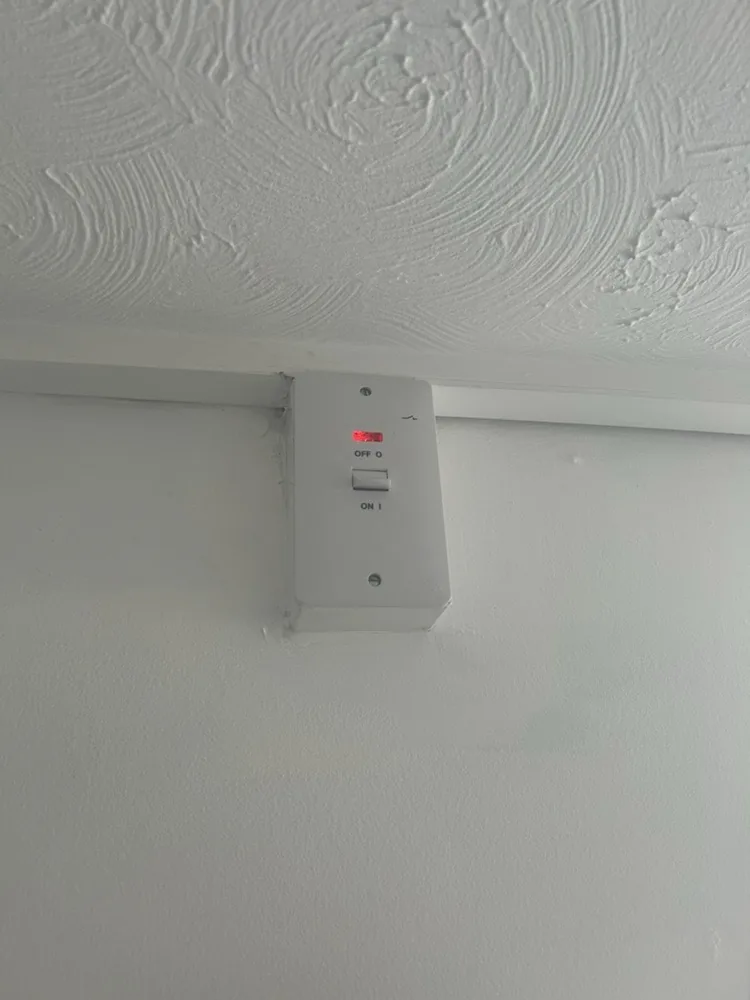
- The isolator switch. A switch that cuts the shower off completely so it can be serviced or replaced safely: usually a ceiling pull-cord in the bathroom, or a wall switch outside it. It carries the whole shower current every time, so it must be rated for the shower and its connections must be tight. A worn or scorched one is replaced with the shower.
Why a more powerful shower often cannot go on the old cable
NICEIC published a worked example for electricians in December 2024. A 7.5 kW shower was fed by a 6 mm² cable that ran under loft insulation, on a 32 amp breaker. The owner wanted a 9 kW shower. NICEIC’s conclusion: neither the cable nor the breaker was suitable for the new shower. The choice was to upgrade the circuit, or to fit a shower of the same rating or lower.
That is one example, not a rule. Some existing circuits will take a bigger shower and some will not, and the only way to know is to check the one in your house. NICEIC warns against a “one size fits all” approach, because an overloaded shower cable is a fire risk.
When the fuse board needs work first
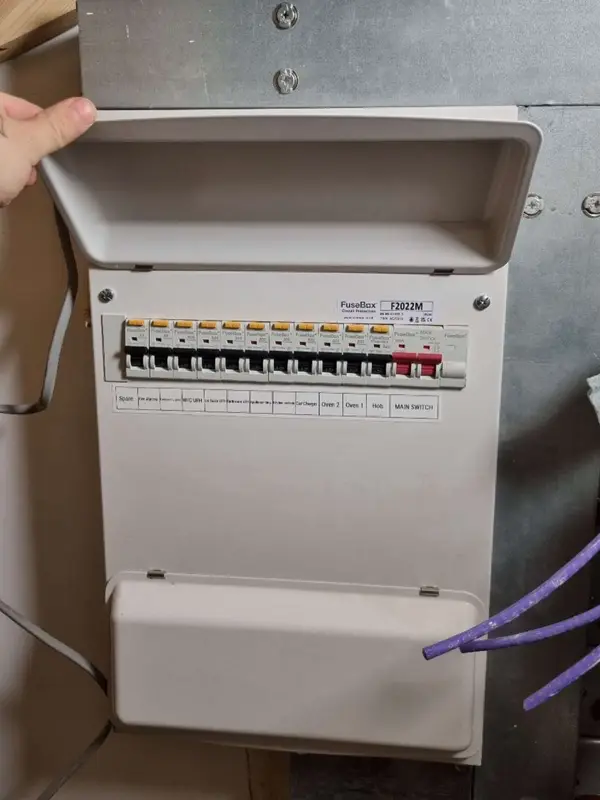
The wiring regulations (BS 7671) say nothing may be added or altered until the electrician has checked that the existing installation can take it. For a shower that means looking at the fuse board and the supply as well as the cable. The usual things that need sorting first:
- No spare way. A new shower circuit needs its own breaker, and a full board has nowhere to put it.
- No RCD protection. Older boards, including those with rewirable fuses, often have none.
- A board in poor condition, with signs of overheating or damage. See does my fuse board need replacing?
- The main fuse. An electric shower is the load most likely to push a home with a 60 amp main fuse over its limit, especially with an EV charger or a second shower. We work out the maximum demand before we add one. See is a 60 amp main fuse enough?
- Earthing and bonding. These have to be adequate before any new circuit is connected.
This does not always mean a new fuse board. Sometimes a small change at the board is enough, and sometimes replacing the fuse board is the right answer. A clear photo of the board usually tells us which, and we say so in the quote.
Do you need an electrician or a plumber?
An electric shower is connected to two things: its own electrical circuit and the cold water main. So most installations have an electrical side and a water side.
| Side | What it covers |
|---|---|
| Electrical | The circuit from the fuse board, the breaker and RCD protection, the isolator switch, the electrical connection at the shower, testing, the certificate and the Part P notification. |
| Water | The cold water feed and its isolating valve, any change to the pipework, and the sealing, tiling or screen around the shower. |
What we do: we are electricians, and we always do the electrical side. On some jobs we do the water side too, so ask when you get in touch. Where the job needs a plumber or your bathroom fitter, we are used to working alongside them. On a housing improvement programme in Welwyn Garden City we have run new shower supplies, and disconnected and reinstated showers for the bathroom fitters. Tell us what you have when you ask for a quote and we will say plainly whether we can do both sides or you need a plumber as well.
Two things to check on the water side before you buy. Electric showers run on mains-pressure cold water, and each model has a minimum water pressure in its instructions. A more powerful model can need more pressure as well as more current.
If your shower has power but the flow is weak, or it leaks, that is usually a plumbing fault. In sheltered housing, 33 of the shower call-outs we attended turned out to need a plumber: what 2,290 repair jobs show.
The certificate, and Part P
- A new circuit comes with an Electrical Installation Certificate (EIC), which records the design, the installation and the test results.
- A replacement or alteration on the existing circuit comes with a Minor Works certificate.
- Part P of the Building Regulations. In England a new circuit is notifiable, and so is any addition or alteration to a circuit in the space around a bath or shower. A like-for-like replacement on a sound circuit is not usually notifiable. Where the work is notifiable, we notify it for you as an NICEIC-approved contractor.
- The Building Regulations compliance certificate then comes to you from NICEIC. The government’s guidance is that you should receive it within 30 days of the work being finished.
Keep all of them with the house papers: a buyer’s solicitor will ask for them when you sell. More in electrical safety certificate: which one you need.
What an electric shower installation costs
We do not publish one price for shower installation, because two jobs with the same shower can be very different. You get a written quote before any work starts. What moves the price:
- Replacement or new circuit. Reusing a sound circuit is the smallest job. A new circuit is the largest part of most quotes.
- The cable route. How far the bathroom is from the fuse board, and what is in between: floors to lift, a loft to cross, finished walls and ceilings.
- The fuse board. Whether there is a spare way and RCD protection, or work is needed first.
- The isolator switch. Whether the existing one can stay.
- Other trades. Whether we are working around a plumber or a bathroom fitter, and on how many visits.
Our work comes with a 12-month workmanship guarantee.
Our shower work
These are from our own job records. Customers are not named.
- Welwyn Garden City, since 2024. We have done the electrics on 218 bathroom upgrades on a housing improvement programme for Novus Property Solutions, with shower circuits as part of the work. One shower circuit we fitted there needed a 40 amp breaker. See kitchen and bathroom electrics and our work in Welwyn Garden City.
- Leighton Buzzard, August 2025. In a retirement flat the shower had stopped and the 45A shower switch on the ceiling would not switch. A loose connection inside it had overheated and burnt it out. Aidan replaced the isolator and the shower was working again within the hour. See sparking socket or burning smell.
- Sheltered and retirement housing, July 2025 to August 2026. About 80 of our responsive repair jobs were showers.
What to send for a quote
These let us quote properly and save a lot of back and forth. None of it needs a cover taken off.
- The kW rating of the shower you want, with the make and model. If you are replacing one, the rating of the old shower too. It is on the box and on the label of the unit.
- A photo of the fuse board with its door open, so we can read the switches and labels. A photo of the electricity meter and main fuse helps as well.
- The cable route. Where the fuse board is, where the bathroom is, which floor each is on, and whether there is a loft above the bathroom.
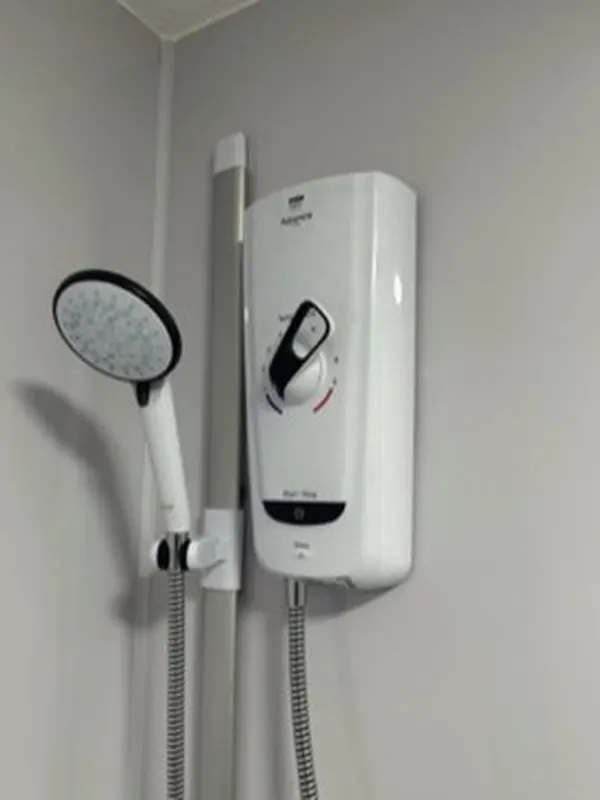
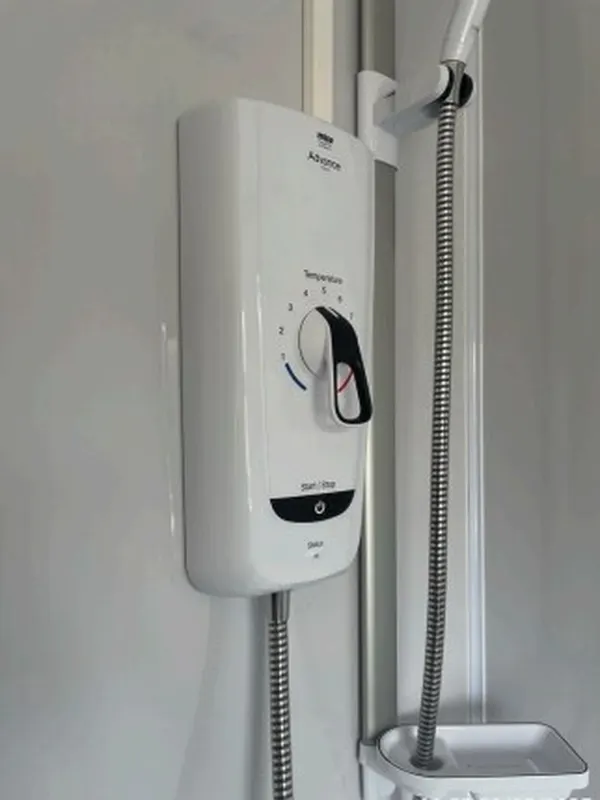
- A photo of the existing shower and its pull-cord or wall switch, if there is one.
- Who is doing the water side, and their dates if a bathroom is being fitted.
- Your postcode. We work from St Albans across Hertfordshire, Bedfordshire, Buckinghamshire and North and West London.
Planning a whole new bathroom? See kitchen and bathroom electrics, first fix to certificate. For other single jobs see small electrical jobs.
Questions we’re asked
Can I fit a more powerful shower on my existing cable?
Only if the cable, the breaker, the RCD and the isolator switch all suit the new rating, and that has to be checked, not assumed. A more powerful shower draws more current. In a worked example published by NICEIC, the cable and 32 amp breaker that fed a 7.5 kW shower were not suitable for a 9 kW one. If your circuit is not suitable, it is upgraded or you choose a shower of the same rating.
Do I need an electrician or a plumber?
Most electric shower installations have both an electrical side and a water side. The electrician does the circuit, the isolator switch, the electrical connection, the testing and the certificate. The cold water feed and any pipework are the water side. We always do the electrical side, and on some jobs we do the water side too. Ask when you get in touch and we will tell you whether your job needs a plumber as well.
How much does electric shower installation cost?
It depends on whether the existing circuit can be reused or a new one is needed, how far the bathroom is from the fuse board, and whether the fuse board needs work first. We do not publish one price because the jobs differ too much. Send us the kW rating, a photo of the fuse board and the cable route, and you get a written quote before any work starts.
Does an electric shower need its own circuit?
Yes. Electrical Safety First says an electric shower must be supplied on its own circuit. It runs from the fuse board to the shower with nothing else on it, with its own breaker, RCD protection and an isolator switch.
What size cable does an electric shower need?
There is no single answer. It depends on the kW rating of the shower, the length of the cable run and how the cable is installed, for example whether it runs under loft insulation. It is worked out for each job, which is why we ask for the rating and the route.
Is fitting an electric shower notifiable under Part P?
In England a new circuit is notifiable, and so is an addition or alteration to a circuit in the space around a bath or shower. A like-for-like replacement on a sound existing circuit is not usually notifiable. Where the work is notifiable, we notify it for you as an NICEIC-approved contractor.
What certificate do I get?
An Electrical Installation Certificate for a new circuit, or a Minor Works certificate for a replacement or alteration on the existing circuit. For notifiable work a Building Regulations compliance certificate follows from NICEIC, and government guidance is that you should receive it within 30 days.
Will I need a new fuse board for an electric shower?
Not always. The fuse board needs work first if there is no spare way for the new circuit, no RCD protection, or it is in poor condition. Sometimes a small change is enough. Send us a clear photo of the board and we will tell you which applies.
Written by SEGplc. Last updated 15 November 2026.
Need it done by a date?
Tell us the deadline. We’ll tell you honestly whether we can hit it — and we usually can.