

- Home
- No power
No power, or only half of it?
What to check first at home or at work, who to call for a power cut, and what it means when half the house or a third of the office goes off.
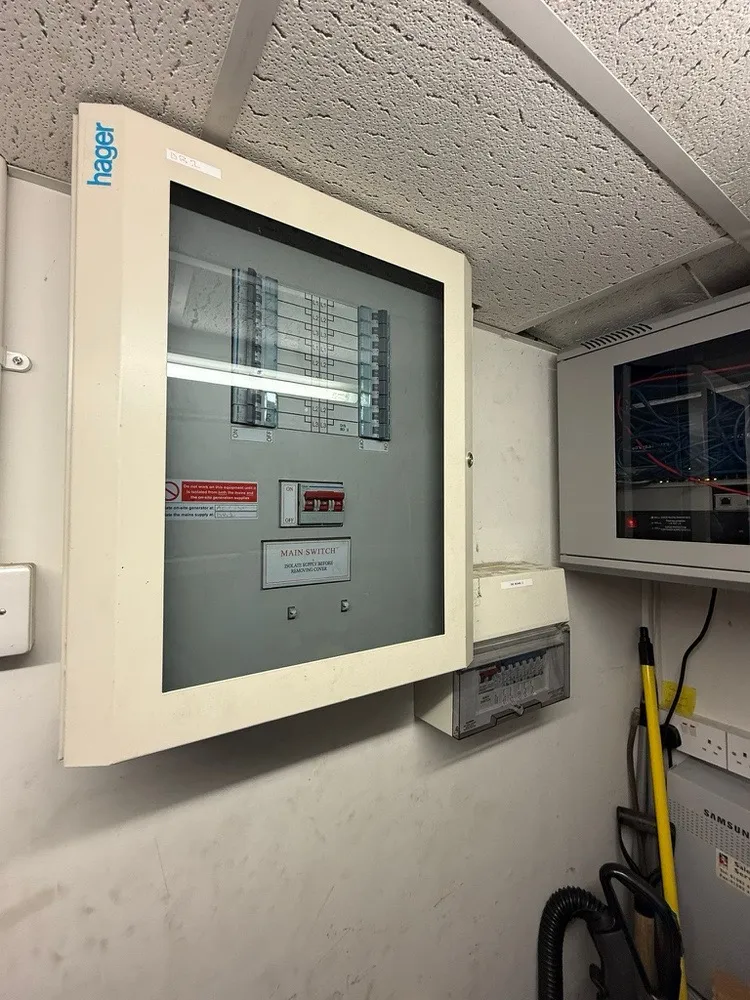
No power at all, or only half of it? Most of the time you can find out in two minutes whose problem it is: the network’s, your energy supplier’s, or something in your own wiring. Work down this list.
The two-minute check
- Is it just you? Look at the street lights and the neighbours. Then check the UK Power Networks power cut map with your postcode, or call 105 (free). UK Power Networks runs the network in St Albans, Hertfordshire and London. If it’s a power cut, they fix it; an electrician can’t.
- Prepayment meter? Check the credit and the emergency credit. We’ve been called to a flat with “no power” where the meter had simply run out.
- Look at the fuse board. Is the main switch or an RCD (the wider switches with a test button) down? Push it back up once. If it trips straight away, see RCD keeps tripping: unplug everything, reset, then plug things back in one at a time to find the culprit.
- Economy 7 or storage heaters? Many homes have a second, off-peak board that’s only live overnight. If that board is dead during the day, it may be working exactly as it should.
- Still dead, or it won’t reset? That’s a fault in the wiring, and it’s time to call an electrician.
Half the house has no power
When some rooms work and others don’t, the cause is nearly always inside the property:
- One RCD has tripped. Older “split-load” boards put half the circuits on each RCD, so one fault takes out half the house. Reset it once; if it trips again, something on that side is faulty.
- One breaker has failed. We’ve found lights dead because an RCBO had failed, and a cooker dead because its breaker had failed, with nothing showing as tripped. Both were replaced the same visit.
- A loose or burnt connection at a socket, a junction box or the board itself. Often there’s a smell, flickering first, or a warm faceplate.
- Water. After heavy rain or a leak, see water coming through a light fitting.
- After a storm, the network can lose one of its phases. Most homes are on a single phase, but if your neighbours’ lights are odd too, check the power cut map.
Offices, shops and industrial units
Most commercial buildings have a three-phase supply: three separate live feeds, with the building’s circuits shared between them. Lose one phase and you lose roughly a third of the building. The signs are some lights and sockets off, and three-phase equipment such as compressors, air conditioning, lifts or machinery refusing to start or humming. UPS units start alarming.
Example: an industrial unit near Dunstable, November 2025
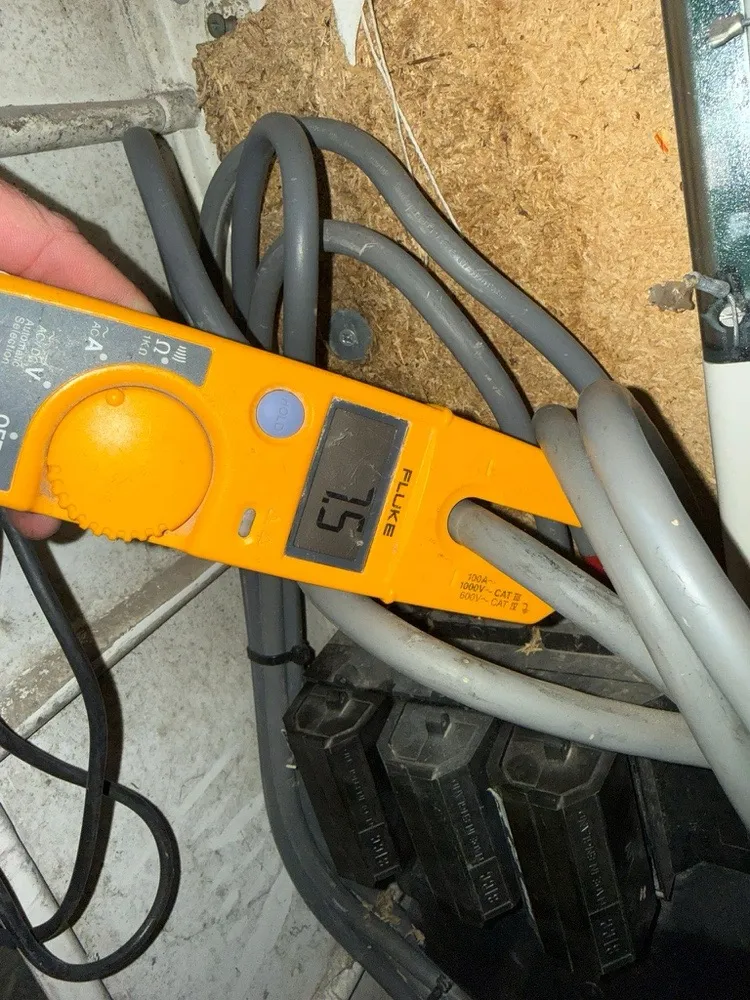
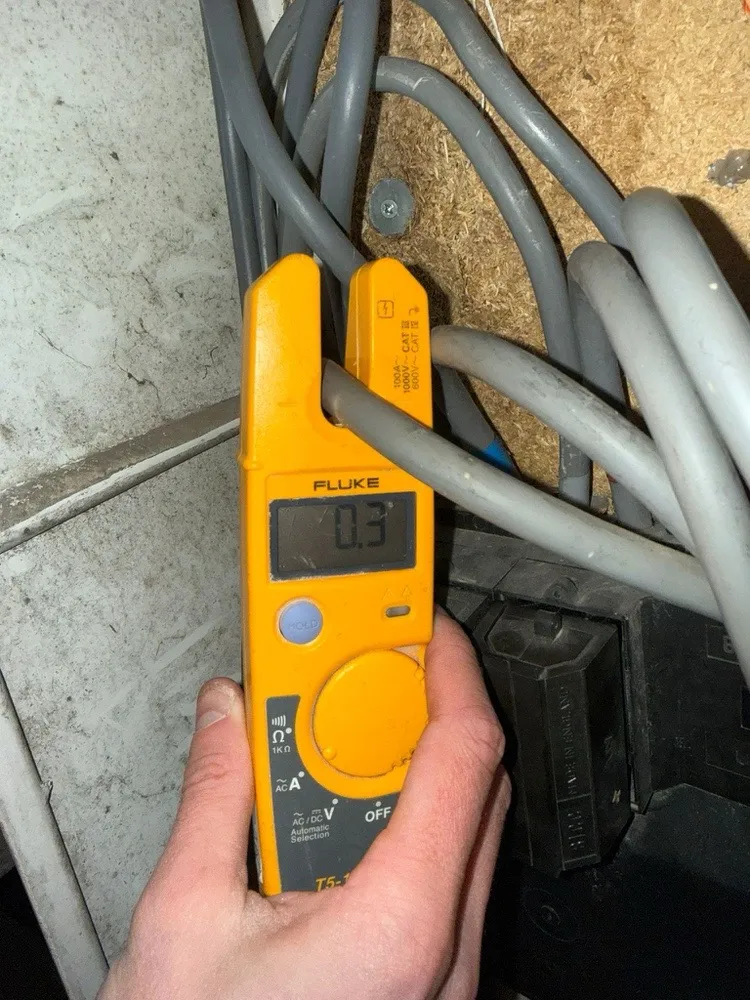
A business on an industrial estate lost power to some of its circuits. Our engineer Aidan tested at the main board: 230V on two phases, nothing on the third. Measuring the load, one phase was carrying 18.1A, another 7.5A and the third nothing. The network operator’s 100A fuse on that phase had blown, most likely because the load wasn’t balanced across the three phases.
Only the network operator can replace that fuse, so we told the manager exactly what to ask for (a new 100A fuse on the dead phase), made the boards safe, and recommended rebalancing the circuits so it doesn’t happen again.
Example: part of a site off, May 2026
At an equestrian business, power was lost to part of the site. We traced it to a damaged cable feeding one of the distribution boards, isolated it so everything else stayed safe and running, and quoted to replace the cable and upgrade the board. See mains and sub-mains.
If your office loses power
- Check the power cut map or call 105 first. If the street is off, it’s the network.
- Note what’s off: which floors, which boards, which equipment. It saves time when we arrive.
- Check the main switch and each distribution board, but don’t reset anything that smells or looks scorched.
- Shut down servers on UPS power before the batteries run out.
- Call us. For businesses on a maintenance contract we already know the building.
Who to call
- The street or area is off: UK Power Networks, 105 (free).
- The big fuse before the meter (the “cut-out”) is blown, damaged or hot: UK Power Networks, 105. Never touch it or try to replace it yourself.
- Meter problems, prepayment credit, Economy 7 timing: your energy supplier.
- Anything after the meter (the fuse board, a tripping RCD, dead circuits, burnt sockets): an electrician. That’s us.
See also emergency electrician in St Albans, plug socket not working and lights flickering.
Questions we’re asked
Why has half my house got no power?
Usually an RCD has tripped (older split-load boards put half the circuits on each RCD), or a single breaker has failed. Reset the RCD once; if it trips again or won't reset, there's a fault on that side and you need an electrician.
How do I check if there's a power cut in St Albans?
Use the UK Power Networks power cut map with your postcode, or call 105 free. UK Power Networks runs the network in St Albans and across Hertfordshire.
My fuse box tripped and won't reset. What do I do?
Switch off and unplug everything on that circuit, then try again. If it still won't reset with nothing plugged in, the fault is in the fixed wiring. Don't keep forcing it; call an electrician.
Half our office has no power. What's happened?
On a three-phase supply, losing one phase takes out roughly a third of the building and stops three-phase equipment. At an industrial unit near Dunstable in November 2025, the network operator's fuse on one phase had blown because the load wasn't balanced.
Who do I call if the main fuse has blown?
The main fuse in the sealed unit before your meter belongs to the network operator. In St Albans and Hertfordshire that's UK Power Networks: call 105. Don't touch it yourself.
How quickly can you get to me?
Monday to Friday, 8am to 5pm, an engineer is on site within one hour in St Albans and the surrounding towns. Phones are answered 7am to 10pm, seven days a week; outside the one-hour hours we'll tell you honestly when we can get to you.
Written by SEGplc. Last updated 21 October 2026.
Need it done by a date?
Tell us the deadline. We’ll tell you honestly whether we can hit it — and we usually can.