

- Home
- Water through a light fitting
Water coming through a light fitting? What to do now.
Rain through the roof, a burst pipe or a leak upstairs: how to stay safe, what to switch off, and what happens next.
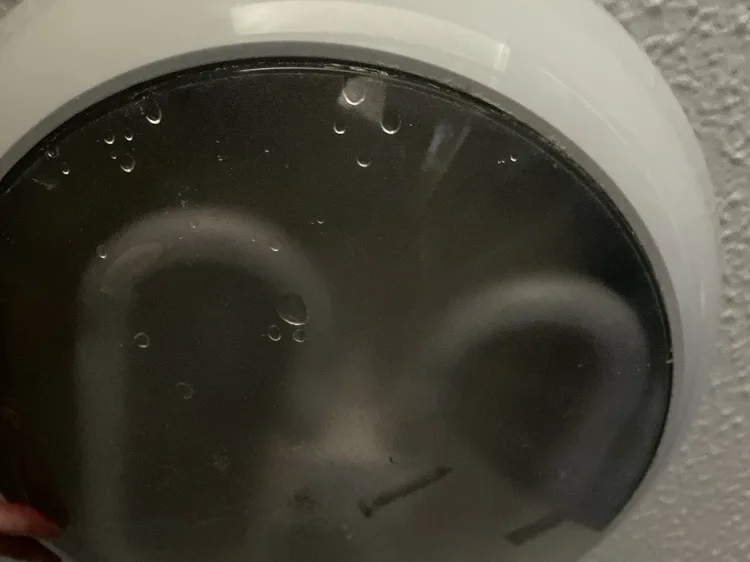
Water dripping through a ceiling light is one of the most common calls we get in heavy rain, and after a burst pipe or an overflowing bath upstairs. The light fitting is where the water shows, because it is a hole in the ceiling. The risk is that the water is now in contact with the lighting circuit.
What to do right now
- Leave the light alone. Don’t switch it on or off, and don’t touch the fitting or the switch.
- Switch off at the fuse board, if it is safe to. If the fuse board is dry and you can reach it without standing in water, switch off the main switch. If the fuse board is wet, or water is running near it, don’t touch it: keep away and call us.
- Slow the water down. If it’s a pipe, turn off the water at the stopcock. If it’s a bath or tank upstairs, turn off the tap or supply. Put a bucket under the drips where you can do it without standing under the light or in pooled water.
- Don’t switch the power back on, even if the drips stop and the light looks dry. Water sits in the ceiling, in junction boxes and inside fittings for days.
- Call an electrician to make it safe, and a plumber or roofer to fix the leak itself. If you rent, tell your landlord or agent straight away.
- Take photos of the ceiling, the water and any damage. Your insurer will want them.
A fuse board that keeps tripping after a leak is usually the RCD doing its job: it has detected current leaking to earth through the water. Don’t keep resetting it; see RCD keeps tripping.
Why the water comes through the light
Water runs along joists, pipes and cables in the ceiling void until it finds a way out, and the light fitting or a smoke alarm is often the first gap it reaches. So the drip may be some distance from the actual leak.
| Where the water comes from | Typical signs |
|---|---|
| Roof, flat roof or gutters in heavy rain | Top-floor ceilings, starts during or after a downpour, stops when the rain does |
| Around a chimney, skylight or roof window | Damp patch near the chimney breast or window, worse in wind-driven rain |
| Bath, shower or toilet above | Ceiling below a bathroom; appears when the bath or shower is used |
| Burst or leaking pipe, or a tank in the loft | Constant flow, whatever the weather; the water meter keeps turning with taps off |
| Flat above (blocks of flats) | Ceiling below another flat; tell the neighbour and the managing agent |
Water in a smoke alarm
Mains smoke alarms sit on the ceiling and are wired in, so water often reaches them too. Moisture in the sensor can set off false alarms, or stop the alarm working when you need it. Mains alarms also have a backup battery, so they can keep sounding or chirping after you switch the power off. That doesn’t mean the power is still on.
We don’t trust a smoke alarm that has had water through it: it is a life-safety device, so we replace it, and check the interlink to the other alarms. Until then, keep at least one working alarm on each floor. See smoke alarm beeping and Aico mains alarms.
What we do when we come out
- Make safe. Isolate the affected circuits so the rest of the house can stay on wherever it is safe: often you keep your sockets, fridge and heating while the lights are off.
- Find where the water has been. Take down the affected light fittings and alarms, and check the junction boxes and cables in the ceiling where we can reach them.
- Test before anything goes back on. We test the circuit’s insulation once it has dried. A light that “works” can still be leaking current through damp.
- Replace what’s damaged. Light fittings, downlights and smoke alarms that have had water through them, and any corroded connections.
- Write it up. You get a short report of what we found, what we isolated and the test results, ready for your insurer.
If the ceiling is still saturated, we leave the affected circuit isolated and come back once it has dried, rather than switching it back on too soon.
Real call-outs: water on the electrics
Since 2024 we have been called out more than 30 times to homes and blocks of flats where water has reached the electrics, mostly for housing associations and the contractors who look after their homes. These photos are from our engineers’ job reports. No names or addresses.
Waltham Abbey, September 2025: water inside a ceiling light
A leak from above had filled the diffuser of a ceiling light in a flat with water (the photo at the top of this page). Our engineer took the light down and made the circuit safe within half an hour of arriving.
Harrow, September 2025: a leak into a lift motor room
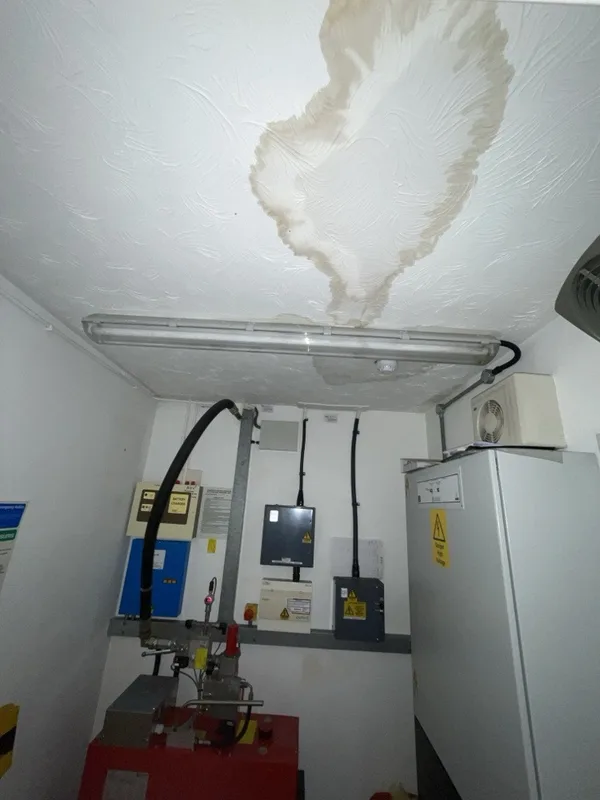
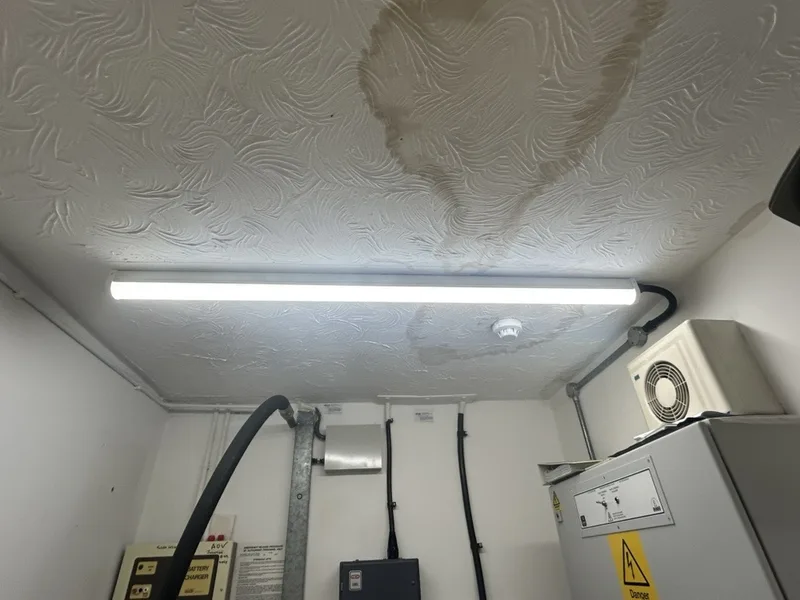
Water came through the ceiling of the lift motor room in a sheltered housing block. We isolated the lift motor room light and two other lights at the fuse boards, made them safe and took them down. Three days later, once it had dried out, we came back and fitted three new LED batten lights.
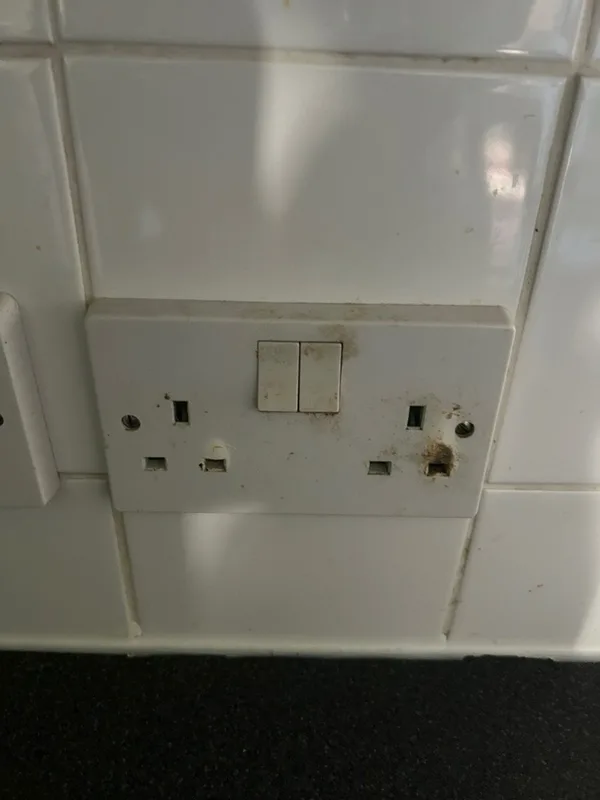
Watford, November 2025: sockets tripping in a kitchen
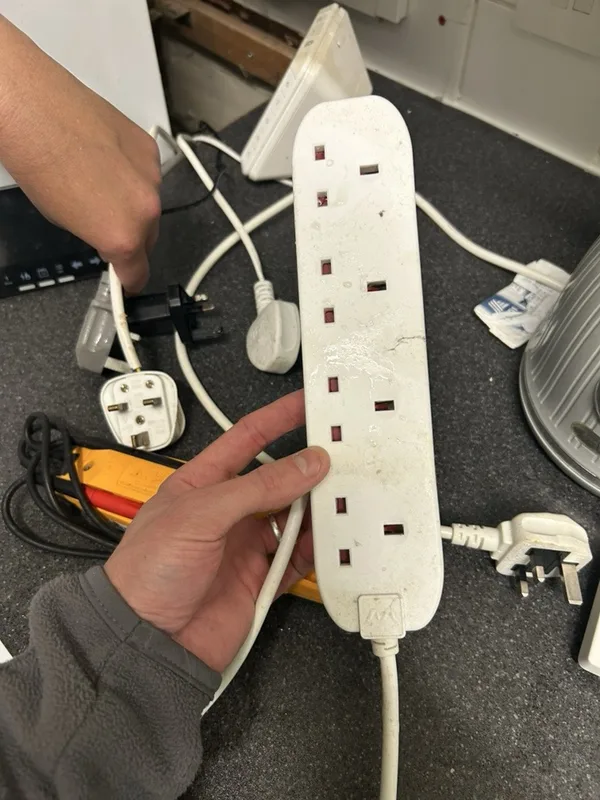
The kitchen sockets kept tripping whenever the fridge was plugged in. The boiler was leaking down behind the fridge and had soaked the extension lead it was plugged into. We dried the appliances out, replaced a socket that had burnt, tested the circuit and reported that a plumber was needed for the boiler.
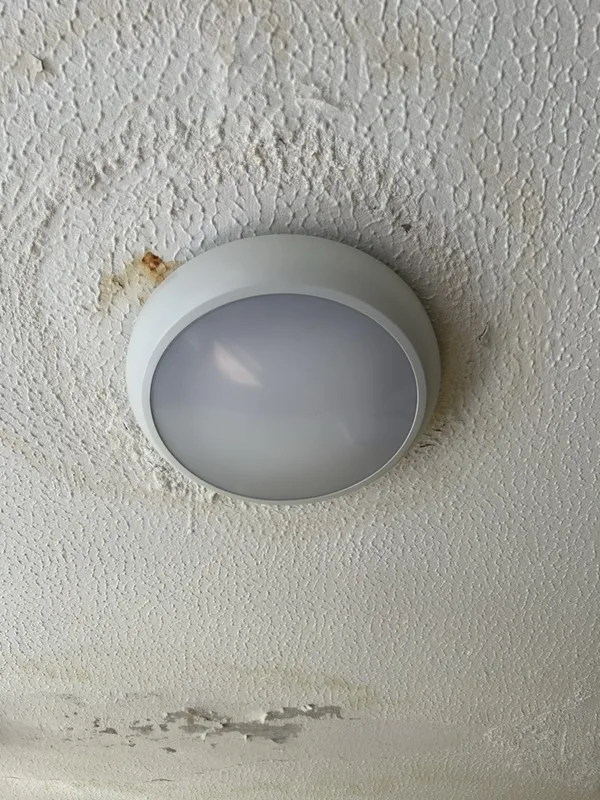
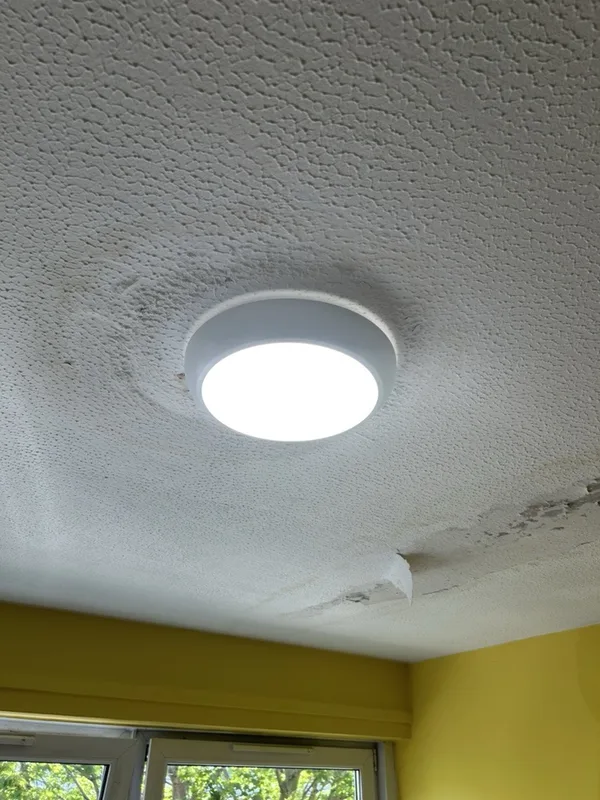
Hackney, August 2025: lights back on after a leak
Two lights in a sheltered housing scheme had been taken down after a leak. Once the ceiling was dry we took both down again to check the connections: one was fine and went back up, the other had water damage and was replaced with a new LED fitting. Then the circuit went back on.
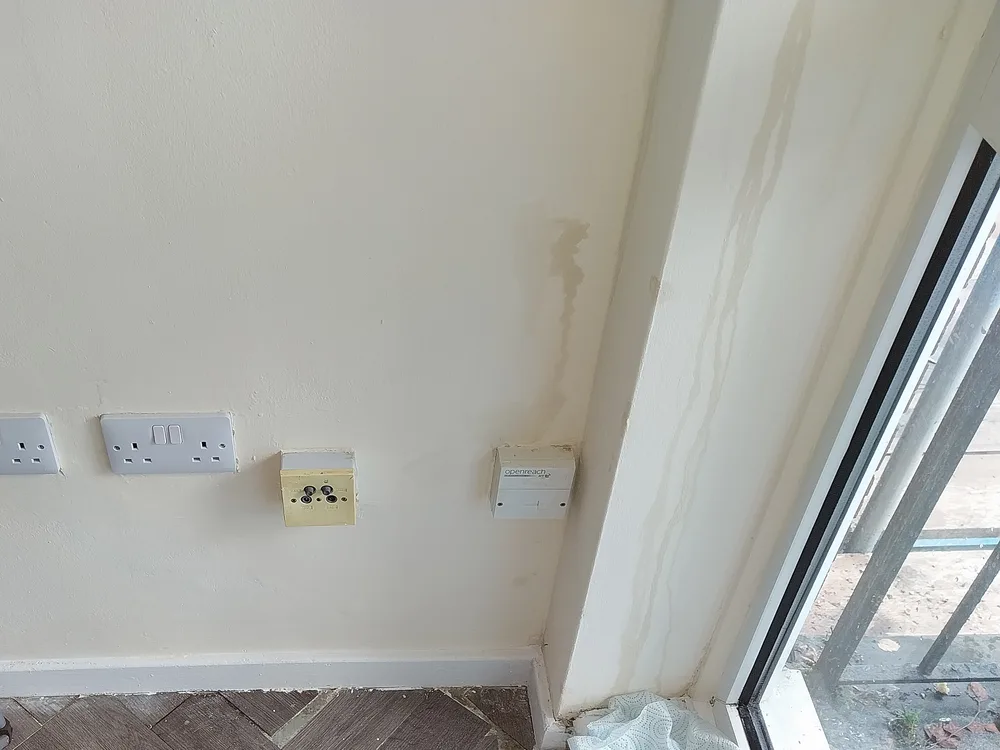
Stevenage, September 2024: water running down beside the sockets
Water was coming in and running down the wall next to a row of sockets in a flat. We were asked to attend within the hour, made the electrics safe, and went back to reinstate them once everything had dried.
Insurance
Many home insurance policies cover sudden water damage, such as a burst pipe (“escape of water”) or storm damage. Cover varies: wear and tear, and gradual leaks, are often excluded. Check your policy, report it to your insurer early, and keep our report and your photos. Landlords: see electricians for landlords.
Questions we’re asked
What should I do if water is coming through my light fitting?
Don't touch the light or its switch. If the fuse board is dry and you can reach it without standing in water, switch off the main switch. Stop the water if you can, then call an electrician to make it safe.
Is it safe to turn the lights back on after a leak?
Not until the circuit has dried out and been tested by an electrician. Water can stay in the ceiling, junction boxes and fittings for days after the drips stop.
Can water in a light fitting cause a fire?
It can. Water can cause short circuits, and over time it corrodes connections, which can then overheat. That's why fittings that have had water through them are checked and often replaced.
Why does my fuse board keep tripping after a leak?
The RCD is detecting current leaking to earth through the water. It is protecting you. Don't keep resetting it; leave that circuit off and get it checked.
Why is my smoke alarm going off after a leak?
Moisture in the sensor can trigger false alarms. Mains alarms also have a backup battery, so they may keep sounding with the power off. An alarm that has had water through it should be replaced.
Will my insurance pay for the electrician?
Often, if the policy covers escape of water or storm damage, but cover varies. Report it early and keep photos and the electrician's report.
Written by SEGplc. Last updated 21 October 2026.
Need it done by a date?
Tell us the deadline. We’ll tell you honestly whether we can hit it — and we usually can.