

- Home
- Light switch not working
Light switch not working? The checks, the usual causes and when to call.
What to try before calling anyone, what we find when we open the switch up, and the dimmer and smart-switch problems that look like a dead switch.
A light switch that does nothing is one of the most common small jobs we get. Most of the time it is not the switch. Here is how to narrow it down safely, and what we find when it is our turn.
Two-minute checks before you call anyone
- Try another bulb. It sounds obvious, but an LED bulb can fail without going black. Swap it for one you know works.
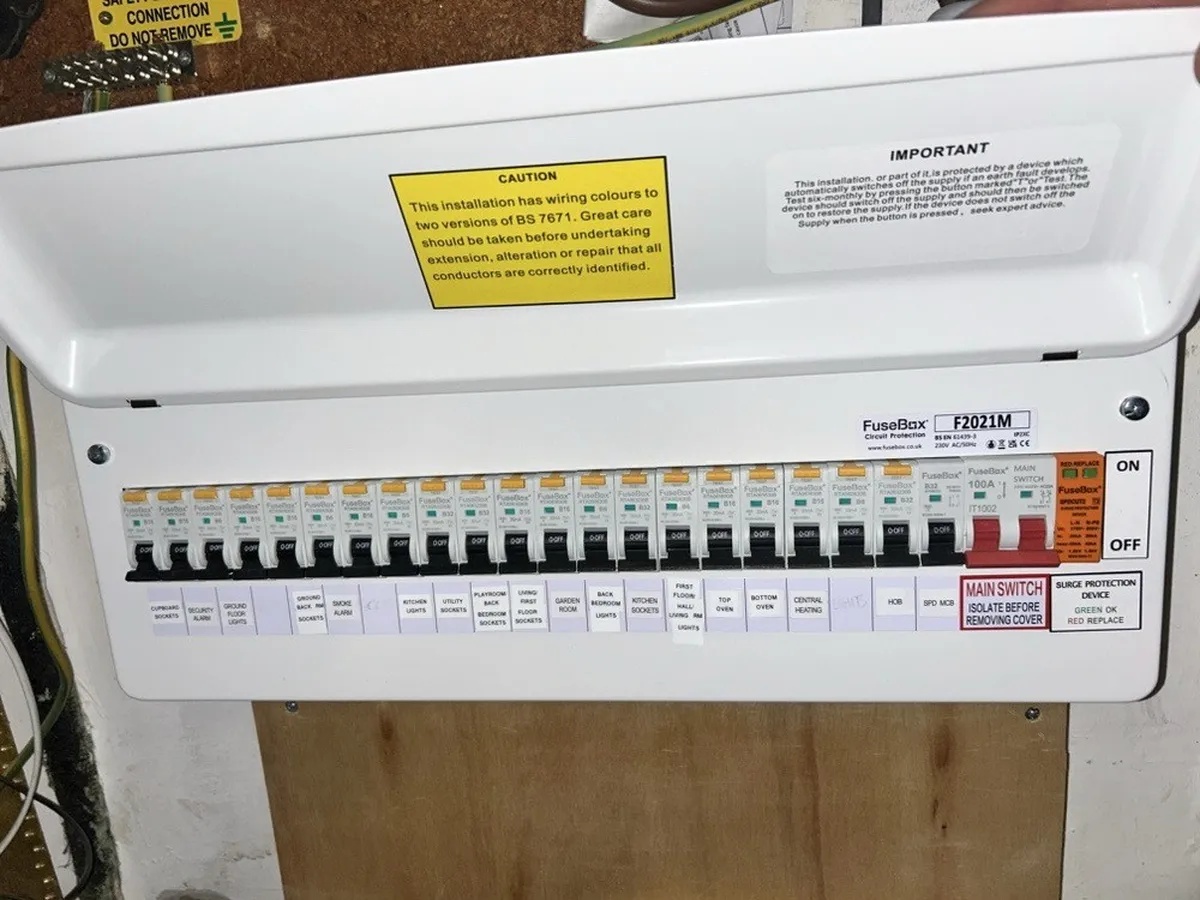
- Check the other lights on the same circuit. If the whole floor’s lights are off, look at the fuse board: a lighting MCB or the RCD may have tripped. Reset it once. If it trips again, stop and see RCD keeps tripping.
- Is it a two-way light? Landing and hall lights are often switched from two places. If one switch works and the other does not, the fault is in the switch or its wiring, not the fitting.
- Smart bulb or smart switch? A smart bulb that has been switched off at the wall will not respond to the app, and a smart switch that has lost Wi-Fi may need its hub restarting.
- Look and smell. A switch that is warm, discoloured, cracked or smells of burning should be left off. See sparking or burning smell.
What it usually is when we open it up
From the switch and socket repairs we do in homes and retirement housing (several hundred a year), the usual findings are:
- Worn switch mechanism: the rocker moves but the contact inside no longer makes. Common on switches that are decades old or used constantly. Replaced in minutes.
- Loose or burnt terminal: a conductor that was never tightened, or has heated and loosened over the years. We re-terminate it or replace the switch and check the rest of the circuit.
- Fault at the ceiling rose or junction box: the switch is fine; the problem is the loop-in connection above the light, often disturbed by a previous job.
- Two-way wiring mistakes: a switch replaced by someone who wired the strappers to the wrong terminals, so the light only works in one combination.
- Fitting or transformer failure: integrated LED fittings and old low-voltage transformers fail while the switch does nothing wrong.
Dimmers, LEDs and smart switches
A dimmer that no longer switches, buzzes or flickers is usually a leading-edge dimmer driving LED lamps it was never designed for, or a dimmer below its minimum load now the lamps draw less. The fix is a trailing-edge LED dimmer matched to the lamps (see lights flickering). Most smart switches need a neutral at the switch, which older houses do not have; we can add one or fit a no-neutral type. Our smart home and lighting control page covers the systems we fit.
Pull-cord switches in bathrooms
Pull cords wear out: the cord frays, the internal mechanism stops latching, or the fitting rotates in the ceiling. They are quick to replace, and if the bathroom has an extractor fan on the same switch we check the fan at the same time (see bathroom extractor fan not working).
When to call an electrician
Call us if the bulb and the fuse board are fine and the light still will not work, if a switch is warm or discoloured, if a breaker trips when you use the switch, or if you simply want it done properly: switch work involves opening live accessories, and in a bathroom it is a special location under Part P. Small jobs are welcome (no job too small), we carry the common switches on the van, and if the switch turns out to be a symptom of older wiring we tell you what we found with photos.
Questions we’re asked
Can I replace a light switch myself?
Replacing a like-for-like switch is not notifiable work in England, but it is live equipment: you must isolate the circuit at the consumer unit and prove it dead, and two-way switches are easy to wire wrongly. If in doubt, it is a short visit for us.
Why does my light switch work sometimes?
An intermittent switch is almost always a worn mechanism or a loose terminal heating and cooling. Either can get worse, and a loose connection is a fire risk, so have it looked at rather than living with it.
The switch is hot. Is that dangerous?
A switch should never be warm. Heat means a poor connection or an overloaded dimmer. Switch it off and leave it off until it has been checked.
Why did the light stop working after a bulb change?
Usually the new lamp is the wrong type (a non-dimmable LED on a dimmer, or the wrong base), or the lamp holder was damaged while the bulb was changed. Try a known-good lamp before assuming the switch has failed.
Does a bathroom light switch have to be a pull cord?
Not necessarily. Switches must be out of reach of the bath or shower zones under BS 7671, which is why pull cords are common, but a wall switch outside the room or a suitable switch outside the zones is also acceptable.
Written by SEGplc. Last updated 1 November 2026.
Need it done by a date?
Tell us the deadline. We’ll tell you honestly whether we can hit it — and we usually can.