

- Home
- Smoke alarm beeping
Smoke or CO alarm beeping? What it means, and what to do.
Chirping every minute, going off for no reason, or a hard-wired alarm that won’t stop: what each sound means and how to sort it safely.
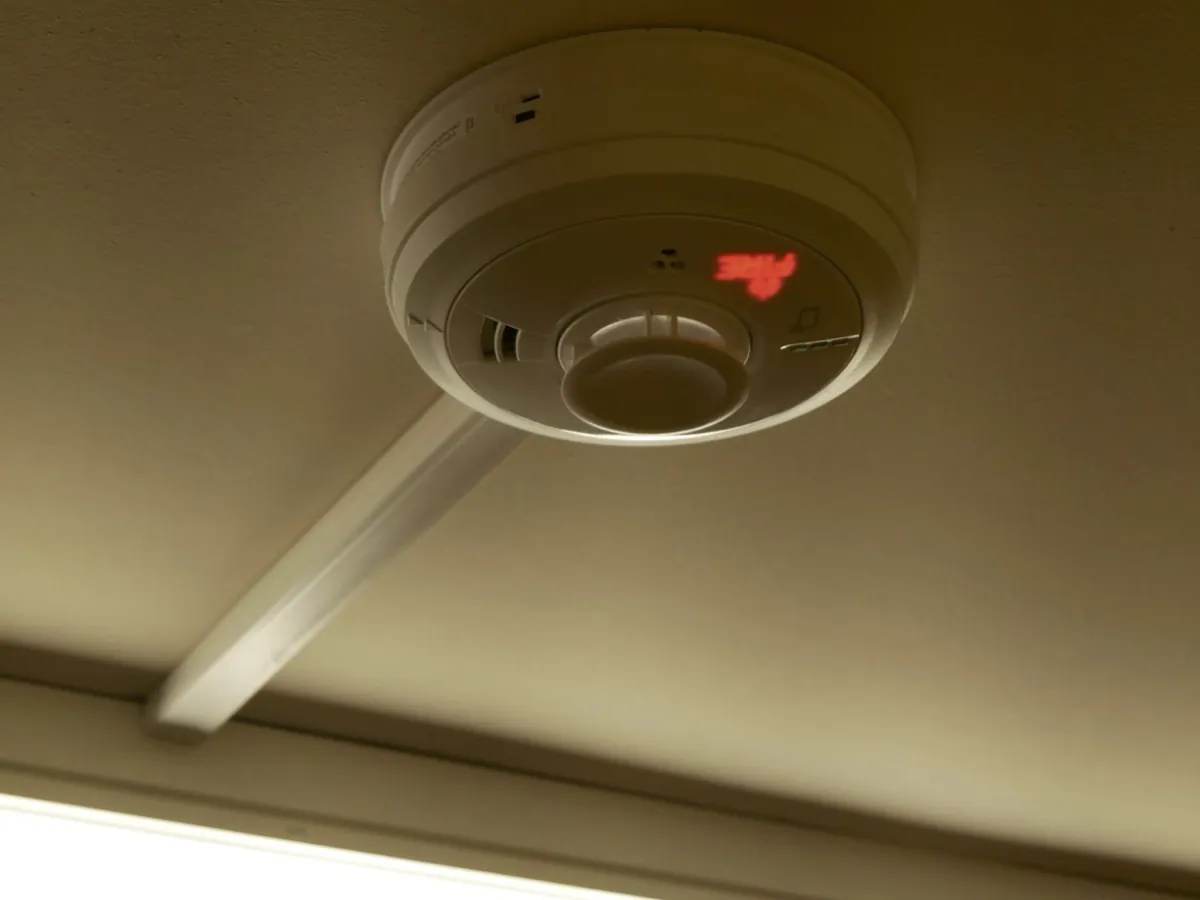
A single chirp every minute or so
A short chirp every 30 to 60 seconds is the alarm telling you something about itself, not that there is a fire. Nearly always it is one of these:
| Sound or sign | Usually means | What to do |
|---|---|---|
| Single chirp every 30–60 seconds | Low battery | Replace the battery if it can be changed; press test |
| Chirping that continues with a new battery | End of life, or a fault | Check the date on the back; replace the alarm |
| Chirping after a power cut | Backup battery charging or low | Give it a day; if it continues, call us |
| Full alarm, no smoke | Dust, insects, steam or cooking fumes | Press the silence button; clean or move the alarm |
| All interlinked alarms sound together | One alarm has triggered the rest | Find the one with the different light; check the room |
Alarms beep differently depending on the make, so check the instructions, or the label on the alarm, for what each pattern means.
Hard-wired (mains) smoke alarms
Mains alarms are wired into the house and linked together, so when one goes off they all do. They still have a battery inside as a backup. If one is chirping:
- Find the right alarm. On interlinked systems, the alarm that started it usually shows a different light. Press its test button and listen.
- Check the backup battery. Some have a battery you can replace; many modern alarms have a sealed battery that lasts the life of the alarm.
- Check the date. If the alarm is around 10 years old, it needs replacing. Alarms are usually swapped onto the same mounting base.
- Don’t open the base or disconnect wires. It is mains wiring. Call us if the base or wiring needs work.
Alarm going off for no reason
- Cooking. A smoke alarm near the kitchen will react to toast and frying. The kitchen itself should have a heat alarm, which ignores fumes.
- Steam. Smoke alarms right outside a bathroom door can be set off by a shower.
- Dust and insects inside the alarm, often after building work. Gently vacuum the vents; if it keeps happening, replace it.
- Age. Older alarms become more sensitive and less reliable.
Carbon monoxide alarms
Carbon monoxide has no smell or colour, and it can come from a faulty boiler, gas fire, wood burner or blocked flue. A CO alarm is the only way to know it is there.
- Continuous alarm: treat it as real. Follow the emergency steps at the top of this page.
- A chirp every minute: usually a low battery or end of life. CO alarms typically last 7 to 10 years; check the date on the alarm.
- Where to fit them: in any room with a fuel-burning appliance, such as a boiler, gas fire or wood burner, following the maker’s instructions on height and distance.
When to replace your alarms
Most smoke and heat alarms should be replaced about every 10 years; the date is on the back or side. If yours are older, chirp after a new battery, or you are rewiring or renovating, it is time to upgrade. We install Aico mains-powered, interlinked alarms, with heat alarms in kitchens and CO alarms where needed, so every alarm sounds when one does.
Landlords and letting agents
In England, the Smoke and Carbon Monoxide Alarm Regulations require private and social landlords to fit a smoke alarm on every storey used as living accommodation, a carbon monoxide alarm in any room with a fixed combustion appliance (except gas cookers), to check they work on the first day of each new tenancy, and to repair or replace them once told they are faulty. See electricians for landlords and fire alarm upgrades.
Smoke and CO alarms: questions we’re asked
Why is my smoke alarm beeping every minute?
A single chirp every 30 to 60 seconds almost always means the battery is low, or the alarm has reached the end of its life. Mains-powered alarms have a backup battery that does the same thing. Check the date on the back: most smoke alarms need replacing after about 10 years.
Why does my hard-wired smoke alarm keep beeping?
Usually its backup battery is low, or the alarm has reached its end-of-life date. On interlinked systems, one faulty alarm can set off the others, so find the one with the different light pattern. Many modern mains alarms have a sealed 10-year battery, which means replacing the whole unit rather than the battery.
How do I stop my smoke alarm chirping?
Replace the battery if it has one you can change, and press the test button to check it. If the alarm has a sealed battery or is past its replacement date, the alarm itself needs replacing. Don’t take the battery out and leave it: you would have no protection.
Why does my smoke alarm go off when I cook or shower?
Smoke alarms near kitchens pick up cooking fumes, and some react to steam from bathrooms. The fix is the right alarm in the right place: a heat alarm in the kitchen, and smoke alarms kept away from bathroom doors.
What should I do if my carbon monoxide alarm goes off?
Treat a continuous alarm as real. Open doors and windows, turn off gas and fuel appliances if you can, get everyone outside, and call the Gas Emergency Service on 0800 111 999. Get medical help if anyone has a headache, dizziness, nausea or breathlessness. Do not use the appliance again until it has been checked.
Why is my carbon monoxide alarm beeping but not going off fully?
A short chirp every minute or so usually means a low battery or the end of the alarm’s life, not carbon monoxide. Check the instructions on the alarm, because the patterns differ by make. If in any doubt, follow the emergency steps above.
What smoke and CO alarms does a landlord need?
In England, private and social landlords must fit a smoke alarm on every storey with living accommodation, and a carbon monoxide alarm in any room with a fixed combustion appliance (other than a gas cooker). They must repair or replace alarms once told they are faulty. Check them at the start of each tenancy.
Sources
- GOV.UK, Smoke and Carbon Monoxide Alarm (Amendment) Regulations 2022: guidance for landlords and tenants
Written by SEGplc. Last updated 19 October 2026.
Need it done by a date?
Tell us the deadline. We’ll tell you honestly whether we can hit it — and we usually can.