

- Home
- Red and black wiring
Red and black wiring: old wiring colours explained
What the old colours mean, how to tell how old your wiring is, and whether it needs replacing.
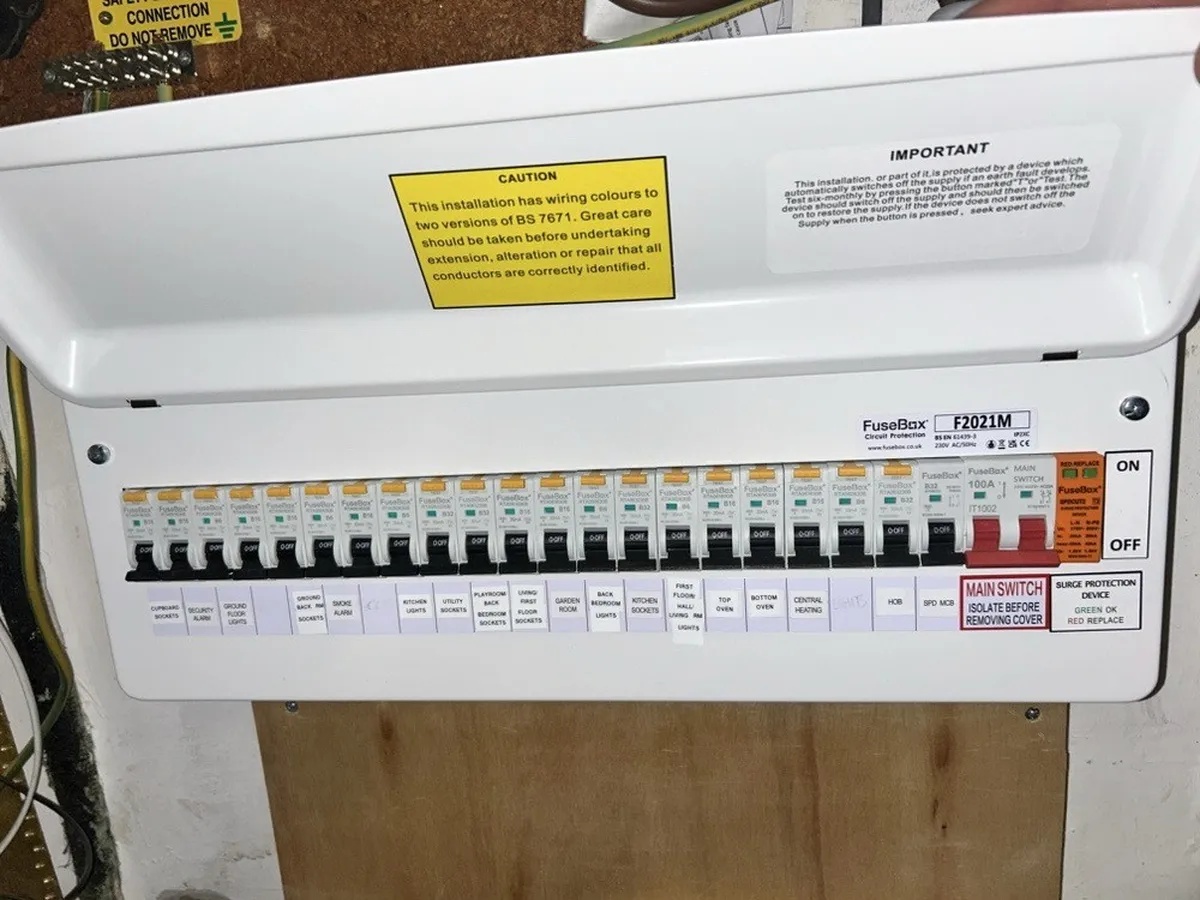
If you open a socket or light switch and see red and black wires, your wiring dates from before 2004 (and often much earlier). It doesn’t automatically mean anything is wrong. Here’s what the colours mean and how to tell whether it needs attention.
Old and new wiring colours
| Old colours (before 2004) | New colours (from 2004) | |
|---|---|---|
| Line (live) | Red | Brown |
| Neutral | Black | Blue |
| Earth | Green and yellow (green before about 1977), or a bare wire with green sleeving | Green and yellow |
The new harmonised colours came in on 31 March 2004, and the old ones couldn’t be used in new work after 31 March 2006. Three-phase colours changed too.
How old is my wiring?
- Red and black PVC (grey or white outer cable): 1960s to 2004. Often still in good condition.
- Rubber or fabric-covered cable, sometimes black and crumbly: pre-1960s. This insulation breaks down with age and needs replacing.
- Lead-sheathed cable: pre-1950s. Needs replacing.
- Lighting circuits with no earth wire: common before the mid-1960s. Metal light fittings and switches can’t be earthed.
Does red and black wiring mean I need a rewire?
Not on its own. Plenty of red and black PVC wiring tests perfectly well. What decides it is the condition, which an EICR (electrical installation condition report) checks: insulation resistance, earthing, RCD protection and the state of the fuse board. Warning signs are a fuse box with rewireable fuses, no RCD, rubber cable, no earth on the lighting, scorch marks, or flickering lights.
Often the answer is a new consumer unit with RCD protection and a few repairs, not a full rewire. See does my house need rewiring?
Mixed old and new colours
Where new cable has been joined to old, the regulations require a warning notice at the fuse board saying the installation has wiring colours to two versions of BS 7671. It’s easy to confuse old black (neutral) with new brown or old red with new brown, so take extra care, and always switch off at the fuse board before touching anything.
We see these faults every week. Since summer 2025 our engineers have attended more than 2,700 repair call-outs in homes and flats across Herts, Beds, Bucks and London, around 630 of them for sockets and switches and over 900 for lighting.
Questions we’re asked
What do red and black wires mean?
In UK wiring before 2004, red is the line (live) and black is the neutral. Today they are brown and blue.
When did UK wiring colours change?
The new colours (brown, blue, green and yellow) were introduced on 31 March 2004. The old red and black couldn't be used in new work after 31 March 2006.
Is red and black wiring safe?
Often, yes. Red and black PVC wiring from the 1960s onwards can still test well. An EICR tells you its condition. Rubber or lead-sheathed cable is a different matter and should be replaced.
Do I need to rewire if I have red and black wires?
Not just because of the colours. Rewiring depends on the condition. Many homes need only a new consumer unit with RCD protection and some repairs.
What is a mixed wiring colours warning notice?
A label at the fuse board saying the installation has old and new cable colours. It is required where new wiring has been added to an older installation.
Written by SEGplc. Last updated 1 November 2026.
Need it done by a date?
Tell us the deadline. We’ll tell you honestly whether we can hit it — and we usually can.