

- Home
- Fixed wire testing
Fixed wire testing in St Albans and Hertfordshire.
Commercial EICRs for offices, shops, schools, warehouses and managed buildings: tested around your working day, explained in plain English, and put right by the same team.
Tell us the type of building, roughly how many distribution boards, and when it is due. Call 0345 3 822 833 or email hello@segplc.com.
What is fixed wire testing?
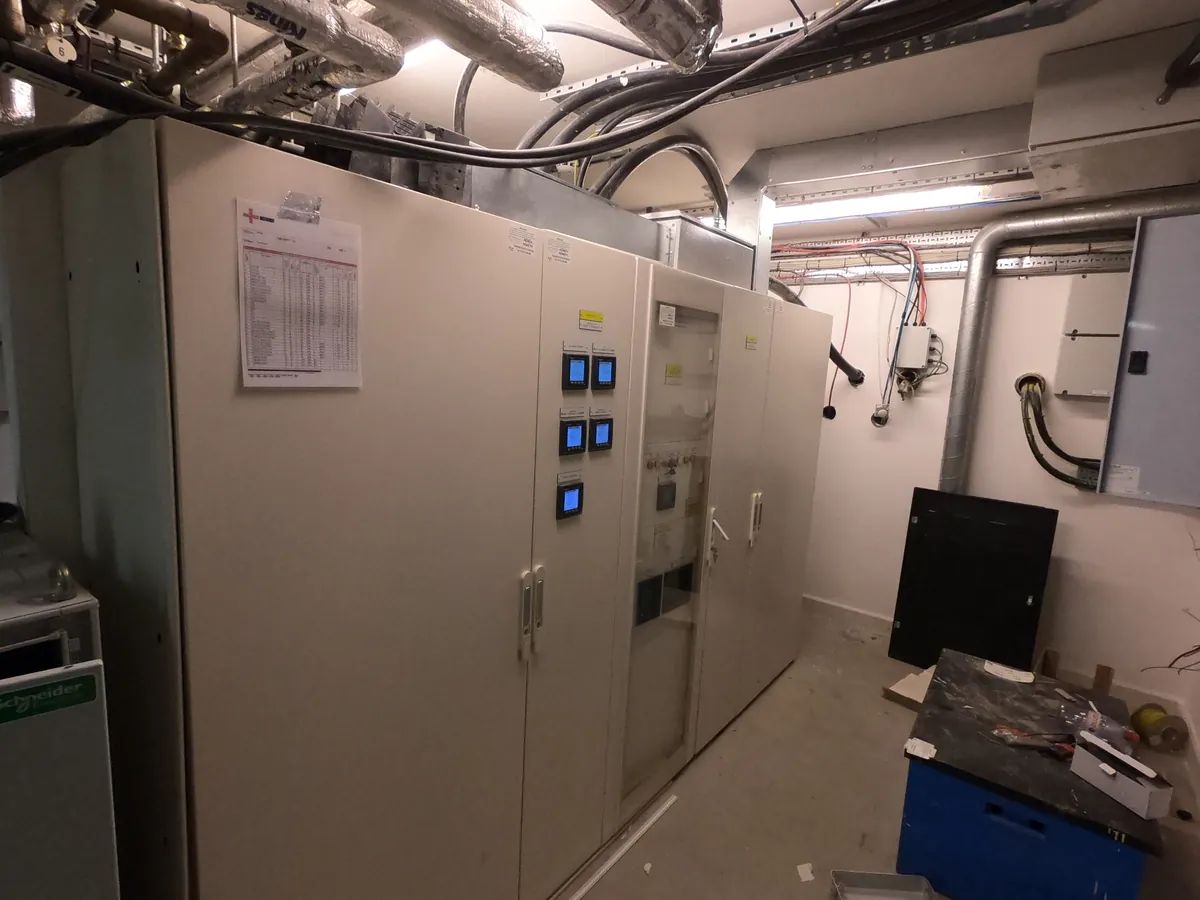
Fixed wire testing is the inspection and testing of a building’s permanent electrical installation: the incoming supply, distribution boards, sub-mains, final circuits, sockets, lighting, earthing and bonding. It is the commercial name for periodic inspection and testing, and the result is an Electrical Installation Condition Report (EICR) that tells you whether the installation is safe to keep using.
We inspect and test to the current edition of the Wiring Regulations, BS 7671:2018+A4:2026. Plug-in equipment is covered separately by PAT testing, and emergency lighting by its own standard, which we can test on the same visit.
Who we test for
- Offices and shops, including multi-tenant buildings and serviced offices
- Warehouses, workshops and industrial units, with three-phase supplies and plant
- Schools and colleges, usually as part of a school maintenance contract and tested in the holidays
- Restaurants, pubs and hotels
- Churches, clubs and community buildings
- Commercial landlords and managing agents: landlord areas, plant rooms and the communal areas of blocks of flats
What the law says
Regulation 4(2) of the Electricity at Work Regulations 1989 requires that, as may be necessary to prevent danger, all systems are maintained so as to prevent that danger, so far as is reasonably practicable. That duty sits with the employer and with whoever controls the building. The Regulations do not name a test or set a date, so the question an inspector or insurer will ask is simple: can you show the installation has been checked? An in-date EICR, with the remedial work signed off, is how you show it.
If you let homes rather than workplaces, the rules are more specific: see EICR testing for the five-year duty on landlords in England.
How often should fixed wire testing be done?
HSE’s guidance is that installations should be tested often enough that there is little chance of deterioration leading to danger. In practice:
- Offices, shops and similar premises are commonly tested around every five years.
- Industrial units, workshops and buildings open to the public are usually tested more often, because the wiring works harder and is more likely to be damaged.
- After a change: a change of use or tenant, an extension, flood or fire damage, or a building that has stood empty.
These intervals come from IET guidance and are recommendations, not legal deadlines. The inspector sets the next date on your report, and can shorten it if the installation is in poor condition. Check your insurance policy and lease too, as either may set its own interval.
What we inspect and test
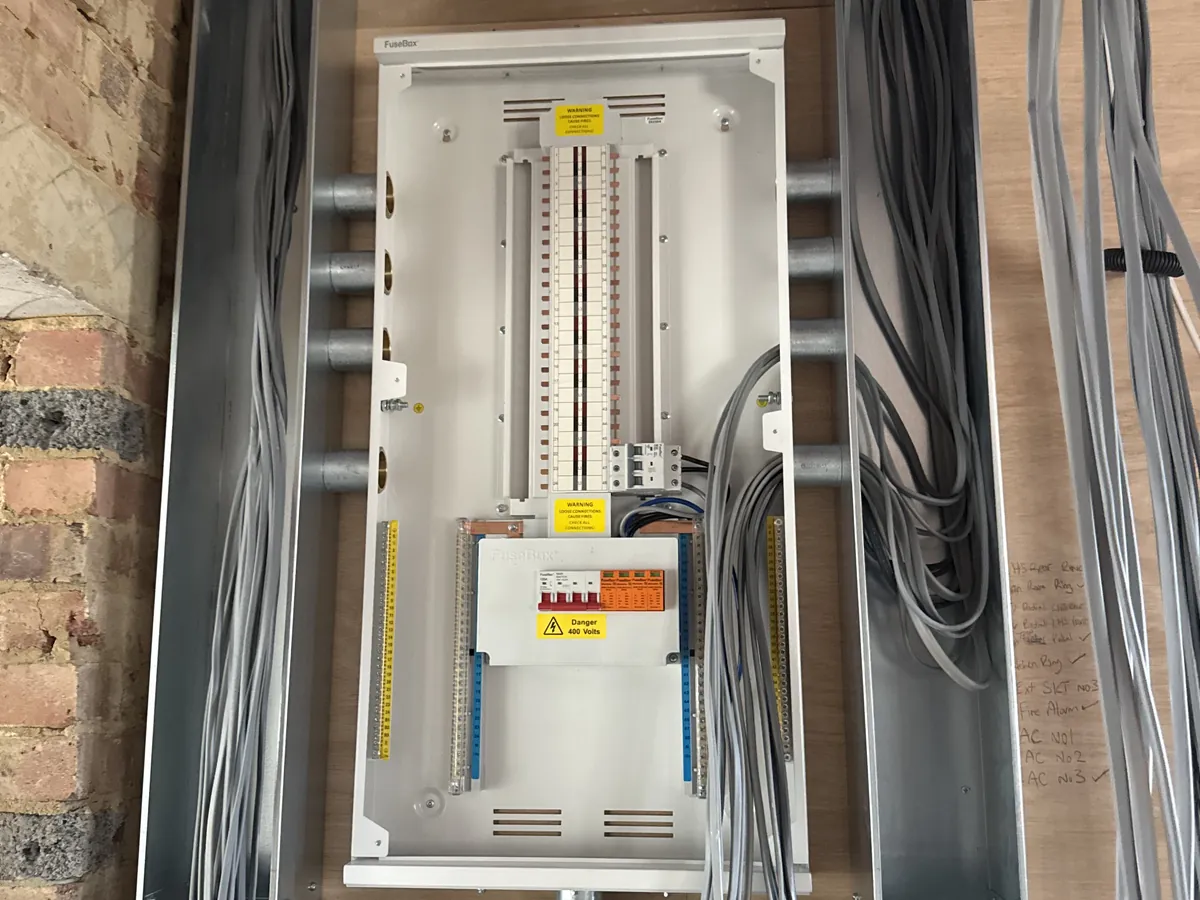
- Distribution boards and sub-mains: condition, protective devices, labelling and board schedules
- Earthing and bonding to the incoming supply, gas, water and structural steel
- Every circuit tested (or an agreed sample on very large sites) for continuity, insulation resistance, polarity, earth fault loop impedance and RCD operation
- Sockets, switches, lighting and fixed equipment for damage, overheating and alterations
- Containment and cabling in plant rooms, ceiling voids and risers, where we can reach them safely
- Photographs of the boards and of every observation, so you can see exactly what we found
Keeping your business running
Testing means switching circuits off, so the planning matters as much as the testing. Before we start we agree:
- The order of work, board by board, so the interruption to each area is short
- Critical circuits: servers and comms, fridges and freezers, alarms, lifts and anything else that cannot simply go off
- Timing: phased over several days, or early or late in the day, where that suits the building
- One contact on site, so everyone knows what is off and when it will be back
It helps if you can send us any previous EICR, drawings or board schedules, and tell us where every distribution board is and who holds the keys.
What you get
- An EICR with a schedule of inspections and a schedule of test results for every board tested
- Each observation coded C1, C2, C3 or FI, explained in plain English. See what the codes mean.
- A remedial quote priced from the inspector’s own notes and photos, if anything needs putting right
- The same team for the remedial work, so nothing is lost between the report and the repair
- Records you can find again: reports, photos and certificates are kept in SEG Command, our own platform
Why businesses use SEG
We are a NICEIC Approved Contractor and ECA member, our inspectors hold the 2391 qualification, and we carry out over 1,000 EICRs a year. Fixed wire testing can sit in one maintenance contract alongside PAT testing, emergency lighting and fire alarm servicing, with one schedule and one set of records. See our commercial electrical services.
Fixed wire testing across Hertfordshire
Our engineers start from SEG House in Chiswell Green, St Albans. We test commercial buildings in St Albans, Hemel Hempstead, Watford, Harpenden, Hatfield, Welwyn Garden City, Stevenage, Hertford, Potters Bar and Borehamwood, and across Bedfordshire, Buckinghamshire and London.
Fixed wire testing questions we’re asked
Is fixed wire testing a legal requirement?
The Electricity at Work Regulations 1989 require electrical systems to be maintained so as to prevent danger, so far as is reasonably practicable. The law does not name a test or set an interval, but periodic inspection and testing, with a written report, is the accepted way for an employer to show it has done this. Insurers, landlords and fire risk assessors often ask to see an in-date report.
How often should a commercial building be tested?
There is no single legal interval for business premises. HSE says installations should be tested often enough that there is little chance of deterioration leading to danger. IET guidance recommends maximum intervals by type of building: many offices and shops are tested around every five years, and industrial and higher-risk premises more often. The inspector records the next recommended date on your report, and your insurer or lease may set its own.
Is fixed wire testing the same as an EICR?
Yes. Fixed wire testing is the usual commercial name for periodic inspection and testing. The report you receive is an Electrical Installation Condition Report (EICR).
Will the power be off while you test?
Circuits are isolated in turn while they are tested, not the whole building at once. We agree the order with you beforehand, keep critical circuits such as servers, fridges, alarms and lifts in mind, and can phase the work or test early or late where that suits the building.
Do you test every circuit or a sample?
On smaller installations we test every circuit. On large installations a sample can be agreed with you in advance and recorded in the report, so it is clear what was and was not tested. If the sample shows problems, we widen it.
What happens if the report is unsatisfactory?
Each observation is coded C1, C2, C3 or FI. C1 and C2 items, and any further investigation, need putting right. We quote the remedial work from the inspector’s notes and photos, the same team carries it out, and we update your records once it is done.
Is fixed wire testing the same as PAT testing?
No. Fixed wire testing covers the permanent installation: distribution boards, cables, sockets and lighting. PAT testing covers equipment that plugs in. Most businesses need both, and we can do them on the same visit.
Sources
- legislation.gov.uk, Electricity at Work Regulations 1989, regulation 4
- HSE, Electricity at work: frequently asked questions
Written by SEG. Last updated 17 October 2026.
Need it done by a date?
Tell us the deadline. We’ll tell you honestly whether we can hit it — and we usually can.