

- Home
- Carbon monoxide alarm beeping
Carbon monoxide alarm beeping? What it means, and what to do.
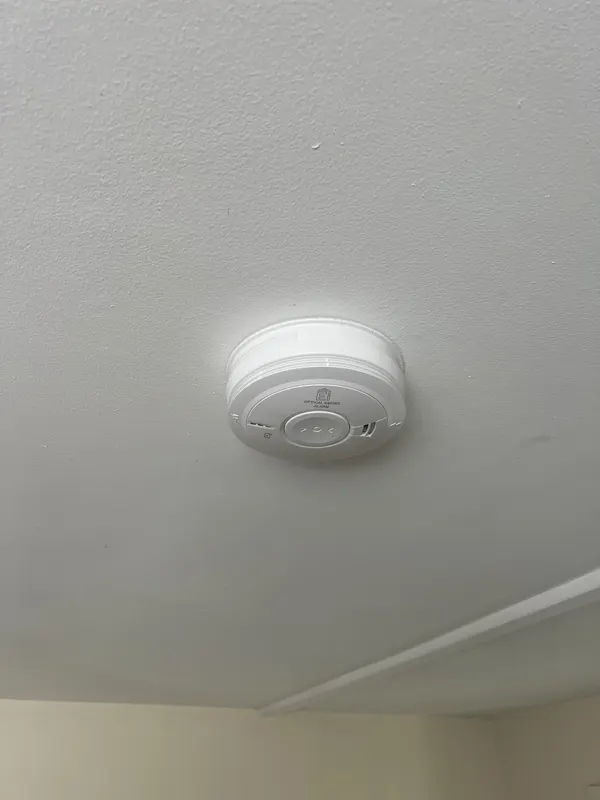
A continuous alarm is a gas emergency. A chirp every minute is the alarm telling you about its battery, a fault or its age. Here is what each pattern means on Aico, FireAngel and Kidde alarms, from the makers’ own instructions.
- Open doors and windows to ventilate, if it is safe to do so.
- Stop using fuel-burning appliances. Switch off the appliance and, if you can, turn off the gas at the meter control valve.
- Get everyone outside into fresh air, and don’t go back in until you have been told it is safe.
- Call the National Gas Emergency Service on 0800 111 999. It is open 24 hours.
- Get medical help. Call NHS 111 if anyone has symptoms such as a headache, dizziness or feeling sick. Call 999 if someone has trouble breathing, chest pain or sudden confusion, or has lost consciousness. Don’t drive to A&E.
Don’t use the appliance again until it has been checked and fixed. For a gas appliance, that means a Gas Safe registered engineer. An electrician can’t make a carbon monoxide leak safe, so call the gas emergency line first.
Why carbon monoxide alarms matter
Carbon monoxide has no colour and no smell, so you can’t tell it is there. Any appliance that burns fuel can make it, including gas, oil, wood and coal. The NHS lists symptoms including a headache, dizziness, feeling sick, tiredness and confusion. A working alarm is often the only warning you get.
What the beep pattern means, by brand
A continuous, loud pattern means carbon monoxide. A single chirp every minute or so is the alarm telling you about itself. Count the chirps and check the light colour. These patterns are taken from each maker’s own instructions:
| Alarm | Carbon monoxide detected | Battery warning | End of life | Fault | Silence (hush) |
|---|---|---|---|---|---|
| Aico Ei3018 / Ei3028 mains, 10-year rechargeable backup cell | Red light flashes; repeating cycle of 3 slower sound pulses, then a pause | 1 chirp and 1 yellow flash every 48 seconds: backup battery run down during a power cut | 3 chirps and 3 yellow flashes every 48 seconds | 2 chirps and 2 yellow flashes every 48 seconds (sensor fault) | CO alarm: 4 minutes, once per incident, only below 150 ppm. Fault chirps: 12 hours (a sensor fault only once) |
| Aico Ei208 battery, built-in lithium cell | Red light flashes; repeating cycle of 3 sound pulses, then a pause | A beep and a yellow flash about every 48 seconds; the whole alarm is replaced | 3 short beeps and 3 yellow flashes about every 48 seconds | 2 short beeps and 2 yellow flashes about every 48 seconds | CO alarm: 4 minutes, once, not above 150 ppm. Battery: 12 hours. End of life: 24 hours, for up to 30 days |
| FireAngel FA3313 / FA3322 battery | Red flash every second; 4 chirps, repeated | 1 beep and 1 amber flash a minute; FA3322 screen shows a low battery icon | 3 rapid beeps and 3 rapid amber flashes a minute; FA3322 screen shows EOL | 2 rapid beeps and 2 rapid amber flashes a minute | CO alarm: 5 minutes. Low battery: 8 hours |
| Kidde K7CO / K7DCO battery | 4 quick beeps every 5 seconds; red light flashes in time | 1 chirp and 1 amber flash every 60 seconds; K7DCO shows Lb | 2 chirps and 2 amber flashes every 60 seconds; K7DCO shows End | 1 chirp and 1 amber flash every 30 seconds; K7DCO shows Err | Test/Reset during an alarm makes it re-check for CO. Low battery and end of life: 24 hours |
Some other Kidde alarms differ: Kidde’s end-of-life FAQ describes a chirp every 30 seconds, seven or ten years after the alarm was first powered, which new batteries won’t stop. If your model isn’t listed, check its leaflet or the label on the back.
The rule of thumb for Aico and FireAngel: one chirp is the battery, two is a fault, three is end of life. Kidde K7 alarms use two chirps for end of life instead. Hushing a warning only buys time. It doesn’t fix anything.
How long a CO alarm lasts, and how to find the replace-by date
- Aico Ei3018, Ei3028 and Ei208: 10-year life. Aico says to replace the alarm when the “replace unit by” date on its label is reached.
- FireAngel FA3313 range: replace the alarm every 10 years.
- Kidde K7CO and K7DCO: replace ten years from the install date written on the side of the alarm. The AA batteries last at least a year; replace them within 30 days of the first low battery warning.
Take the alarm off its base and look at the label. If you can’t find a date, or it has passed, replace the alarm. Kidde warns that an alarm in end-of-life mode no longer detects carbon monoxide.
Why a mains CO alarm still chirps
A mains-powered alarm such as the Aico Ei3018 is wired to a circuit, but it also has built-in 10-year rechargeable lithium backup cells that can’t be replaced. It chirps for one of three reasons:
- One chirp every 48 seconds: the mains supply has been off long enough to drain the backup cells. Aico says the backup lasts up to six months without a module fitted, and the chirps should stop within 2 hours of the power coming back.
- Three chirps every 48 seconds: the alarm is past its tenth year. The whole alarm must be replaced.
- Two chirps: a sensor fault. Replace the alarm.
Check the green light. On Aico mains alarms it should be on all the time. If it flashes every 48 seconds instead, the alarm is running on its backup cell and has lost mains power. Check your fuse board for a tripped breaker. If it trips again, see why an RCD keeps tripping or call us. Aico’s instructions say mains alarms must be installed and interconnected by a qualified electrician, so don’t open the base or touch the wiring.
Where carbon monoxide alarms should go
The makers agree on the basics:
- Every room with a fuel-burning appliance, such as a boiler, gas fire or wood burner.
- 1 to 3 metres from the appliance, measured horizontally.
- On a ceiling: at least 300 mm from any wall. Aico adds joists and fixtures. In a room with a sloping ceiling, Aico says to fit it on the high side.
- On a wall: higher than any door or window, and at least 150 mm below the ceiling. The Aico Ei3028 is ceiling-only.
- Bedrooms and living rooms: Kidde and Aico both recommend extra alarms in rooms where people sleep or spend most of their time.
Avoid fitting one directly above a sink, cooker or heater, next to an extractor fan, door or window, or inside a cupboard. Kidde also rules out bathrooms and garages. The government’s landlord guidance suggests head height on a wall or shelf. Instructions differ between models, so follow the leaflet for your alarm.
The rules for landlords in England
The Smoke and Carbon Monoxide Alarm (Amendment) Regulations 2022 (SI 2022/707) came into force on 1 October 2022. They apply to private landlords and registered providers of social housing. Landlords must:
- fit a carbon monoxide alarm in any room used as living accommodation that contains a fixed combustion appliance, other than a gas cooker;
- fit a smoke alarm on every storey used as living accommodation;
- check that each alarm is working on the day a new tenancy begins;
- repair or replace an alarm once a tenant reports it is faulty, as soon as reasonably practicable.
A fixed combustion appliance is a fixed appliance that burns any fuel to make heat: gas, oil, coal or wood, including log burners. A purely decorative fireplace that doesn’t work doesn’t count. The rules don’t say which type of alarm to use. The government recommends alarms that comply with the British Standard for CO alarms (BS EN 50291), and says sealed-for-life batteries are a better option than replaceable ones. Councils can fine landlords who fail to comply with a remedial notice. See electricians for landlords.
165 detector jobs in retirement homes
Between 14 November and 15 December 2025, Axis Europe gave us 165 smoke, heat and carbon monoxide detector jobs at 164 Anchor retirement homes, in more than 20 towns and villages across Essex, Suffolk and the edge of east London. The busiest were:
| Town | Detector jobs |
|---|---|
| Southend-on-Sea | 23 |
| Colchester | 23 |
| Rendlesham, Suffolk | 20 |
| Tilbury | 16 |
| Burnham-on-Crouch | 13 |
| Chelmsford | 7 |
What the job sheets show:
- Mains alarms need a permanent live. On one job our engineer took the feed for a mains carbon monoxide detector from a nearby lighting circuit.
- Not every home has a supply in the right place. In one home there was no permanent live where the alarms needed to go, and the resident didn’t want surface trunking. The resident chose to sort the supply first and book a return visit for the remaining alarms.
- Residents can say no. On 10 visits a resident turned down an alarm in a room, nine times in the living room. Our engineers noted each refusal on the job sheet, so the landlord has a record.
- Four visits were surveys only, to plan the work before alarms went in.
See sheltered housing repairs for our wider work for Axis Europe.
How SEGplc can help
We fit and replace Aico mains alarms, including carbon monoxide alarms, interlinked with smoke and heat alarms so every alarm sounds when one does. We used Aico alarms on our EICR and LD1 fire alarm programme for Pilon in Southwark. For landlords and housing providers, we can check, replace and record alarms at the same visit as an EICR. See fire alarm installation.
Carbon monoxide alarms: questions we’re asked
Why is my carbon monoxide alarm beeping every minute?
A short chirp every 48 to 60 seconds is the alarm reporting on itself, not carbon monoxide. Count the chirps. On Aico and FireAngel alarms, one chirp means the battery, two mean a fault and three mean the alarm has reached the end of its life. On Kidde K7CO and K7DCO alarms, one chirp a minute is a low battery and two are end of life.
My CO alarm went off and then stopped. What should I do?
Treat it as real. Aico’s instructions say an alarm means it has detected dangerous levels of carbon monoxide, and to always leave the home. Ventilate, stop using fuel-burning appliances, get outside and call the National Gas Emergency Service on 0800 111 999. Don’t use the appliance again until it has been checked.
Why does my mains carbon monoxide alarm chirp?
Mains CO alarms such as the Aico Ei3018 have a built-in backup battery that can’t be replaced. One chirp every 48 seconds means that backup has run down during a power cut. Restore the power and Aico says the chirps should stop within 2 hours. Three chirps mean the alarm is past its 10-year life and must be replaced.
How long do carbon monoxide alarms last?
Current Aico, FireAngel and Kidde K7 alarms are made to last 10 years. Kidde says some of its alarms give their end-of-life warning after seven years. Look for the “replace by” date on the label on the side of the alarm.
Can I take the battery out to stop the chirping?
Not on a sealed alarm: on the Aico Ei208 the battery is built in, so the whole alarm is replaced. And an alarm with no power protects no one. Kidde warns that an alarm in end-of-life mode no longer detects carbon monoxide, so replace it straight away.
Does a landlord have to fit a carbon monoxide alarm?
In England, yes: since 1 October 2022, private and social landlords must fit a CO alarm in any room used as living accommodation that has a fixed combustion appliance, other than a gas cooker. They must also repair or replace an alarm once a tenant reports it is faulty.
Is a carbon monoxide alarm going off an electrician’s job?
No. A sounding CO alarm is a gas emergency: call 0800 111 999. Call us afterwards if you need mains CO alarms fitted, replaced or linked to your smoke alarms.
Sources
- HSE, Gas safety: carbon monoxide awareness FAQs (emergency steps, 0800 111 999, symptoms)
- NHS, Carbon monoxide poisoning (symptoms, what to do, when to call 111 or 999)
- GOV.UK, Smoke and Carbon Monoxide Alarm (Amendment) Regulations 2022: guidance for landlords and tenants
- legislation.gov.uk, The Smoke and Carbon Monoxide Alarm (Amendment) Regulations 2022 (SI 2022/707), regulation 1: commencement
- legislation.gov.uk, The Smoke and Carbon Monoxide Alarm (England) Regulations 2015, regulation 4, as amended
- legislation.gov.uk, SI 2022/707, regulation 5: duties of landlords in relation to prescribed alarms
- Aico, Ei3018 / Ei3028 mains alarms instruction manual
- Aico, Ei208 battery carbon monoxide alarm instructions
- FireAngel, FA3313, FA3322, FA3328 and FA3820 carbon monoxide alarm manual
- Kidde, K7DCO 10 year carbon monoxide alarm
- Kidde, K7CO / K7DCO carbon monoxide alarm user guide
- Kidde, What is the end of life warning on my CO alarm?
Written by SEGplc, NICEIC Approved Contractor, from manufacturers’ instructions and our own job records. Last updated 27 October 2026. This is general guidance: always follow the leaflet that came with your alarm.
Need it done by a date?
Tell us the deadline. We’ll tell you honestly whether we can hit it — and we usually can.