

- Home
- Fire alarm grades
Fire alarm grades and categories: LD1, LD2 and LD3 explained
What the letters and numbers mean, which system most homes need, and what landlords must fit, in plain English.
Fire alarms in homes are specified by a grade (a letter, for how the system is built and powered) and a category (LD1, LD2 or LD3, for how much of the home it covers). Both come from the British Standard for fire detection in homes, BS 5839-6. Here is what they mean in plain English.
Categories: LD1, LD2 and LD3
| Category | Where the alarms go | In practice |
|---|---|---|
| LD3 | Escape routes only: hallways and landings | The minimum. Warns you once smoke reaches the way out. |
| LD2 | Escape routes plus high-risk rooms: the living room, kitchen, and any room where fire could start | The usual recommendation for most homes. |
| LD1 | Escape routes and every room where a fire could start (not bathrooms or toilets) | The highest. Earliest warning wherever a fire starts. |
Kitchens get a heat alarm, not a smoke alarm, so cooking doesn’t set it off. Homes with a gas boiler, fire or wood burner should also have carbon monoxide alarms.
Grades: A, C, D1, D2, F1 and F2
| Grade | What it is | Typical use |
|---|---|---|
| F1 / F2 | Battery-only alarms. F1 has a sealed long-life battery; F2 a replaceable one. | Existing homes where mains alarms can’t be fitted |
| D1 | Mains-powered alarms with a sealed, tamper-proof backup battery, interlinked | Most homes, new and existing |
| D2 | Mains-powered alarms with a replaceable backup battery, interlinked | Homes; now usually D1 instead |
| C | Detectors connected to a simple control panel with standby power | Larger homes and some HMOs |
| A | A full panel system to BS 5839-1, with call points | Large HMOs and blocks with communal areas |
Interlinked means when one alarm goes off, they all do, so you hear it in the bedroom when the fire starts in the kitchen. Interlinking can be wired or by radio.
Which do I need?
- Most homes: Grade D1, Category LD2: mains-powered, interlinked, with a sealed backup battery, in the hall and landings, living room and kitchen (heat).
- New builds and major alterations: Building Regulations (Approved Document B) set a minimum of mains-powered, interlinked alarms; we normally fit D1 LD2.
- HMOs and larger properties: often a higher grade and LD1 or LD2, depending on the size and the fire risk assessment. Your local council’s HMO licence conditions may set it.
- Social housing: Grade D1, Category LD2 is typical for each dwelling.
We install Aico mains-powered, interlinked alarms, with RadioLINK where running cables would mean lifting floors, and upgrade systems after fire risk assessments. Commercial buildings use a different standard, BS 5839-1; see fire alarm installation.
Landlords
In England, private and social landlords must have a smoke alarm on every storey used as living accommodation and a CO alarm in any room with a fixed combustion appliance (other than a gas cooker), check they work on the first day of each tenancy, and repair or replace them once told they’re faulty. That is the legal minimum; many landlords and agents fit D1 LD2 as standard.
Questions we’re asked
What is an LD2 fire alarm system?
LD2 means alarms on all escape routes (hallways and landings) plus the rooms with a higher fire risk, such as the living room and kitchen. It is the category most homes are recommended to have.
What is the difference between LD1 and LD2?
LD2 covers escape routes and high-risk rooms. LD1 covers escape routes and every room where a fire could start, including bedrooms, so it gives earlier warning wherever the fire is.
What does Grade D1 mean?
Mains-powered smoke and heat alarms with a sealed, tamper-proof backup battery that lasts the life of the alarm, interlinked so they all sound together.
Do I need a heat alarm in the kitchen?
Yes, in an LD2 or LD1 system. A smoke alarm in the kitchen would go off every time you cook, so a heat alarm is used instead.
How long do mains smoke alarms last?
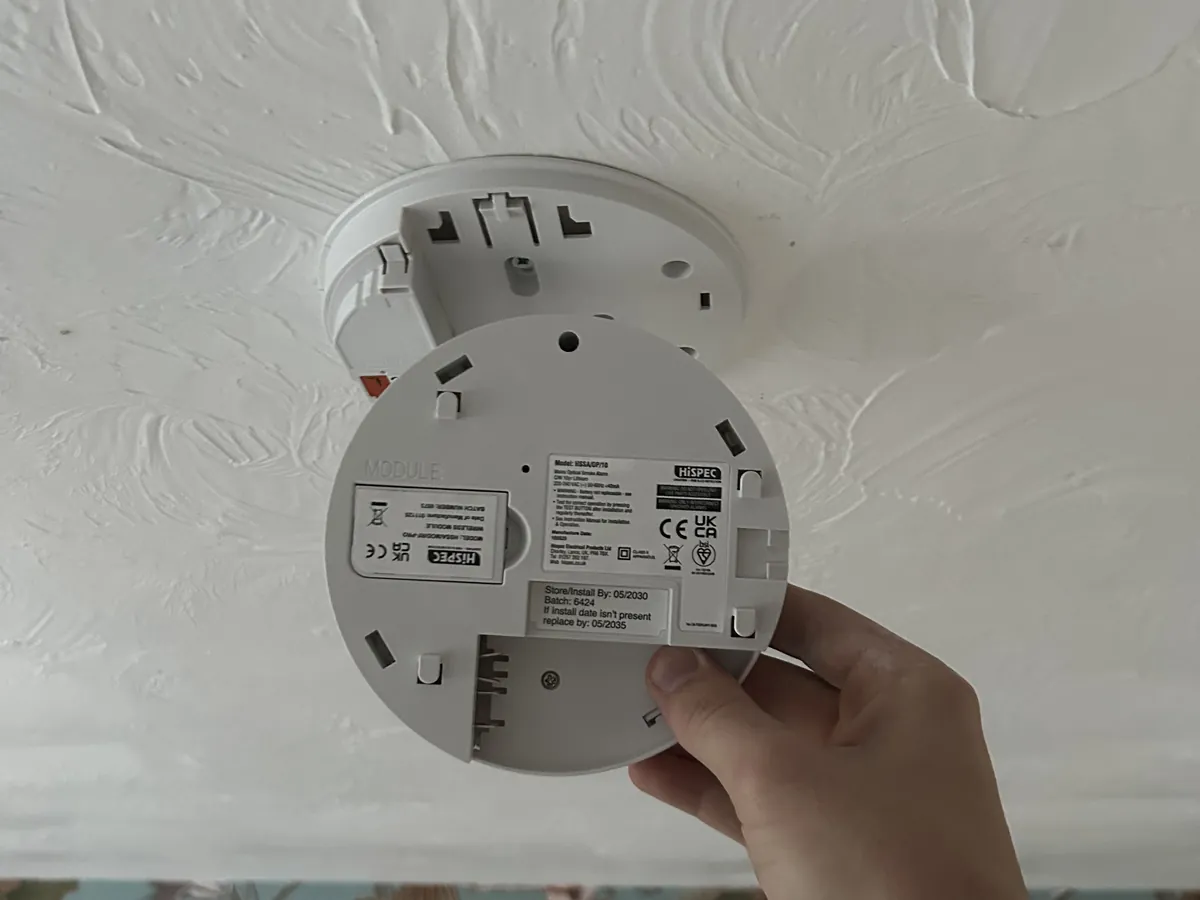
About 10 years. The replace-by date is printed on the alarm. Most can be swapped onto the existing base.
Written by SEGplc. Last updated 19 October 2026.
Need it done by a date?
Tell us the deadline. We’ll tell you honestly whether we can hit it — and we usually can.