

- Home
- Emergency lighting regulations
Emergency lighting regulations: what’s required
The law, the British Standard, where emergency lighting is needed, and how often it must be tested, in plain English.
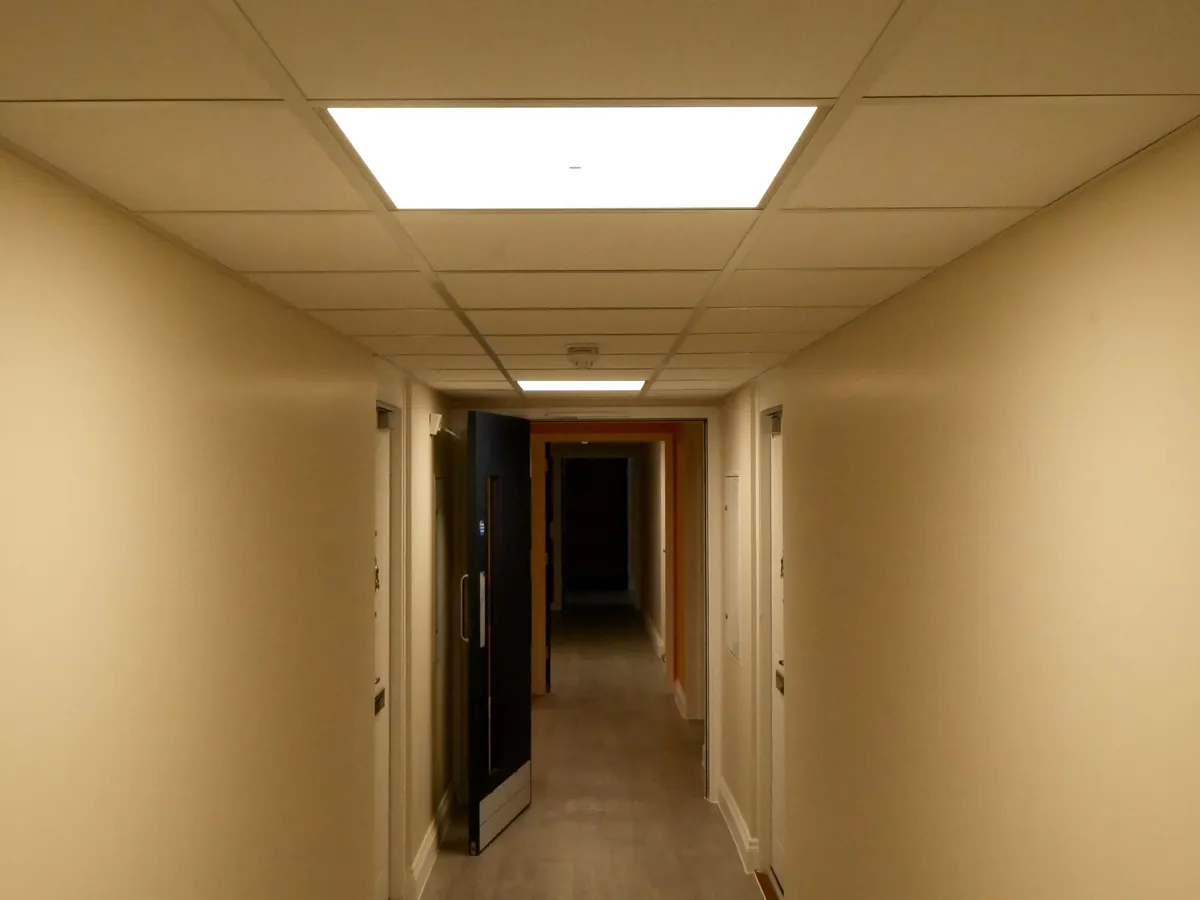
If you are responsible for a workplace, a block of flats, a school, a care home or any building people use, you almost certainly need emergency lighting, and you need to keep it tested. Here is what the regulations require.
The law: the Fire Safety Order
In England and Wales, the Regulatory Reform (Fire Safety) Order 2005 requires the “responsible person” for a non-domestic building, including the common parts of blocks of flats, to make sure escape routes and exits have emergency lighting of adequate intensity where it is needed, and that it is maintained in working order. Your fire risk assessment decides where it is needed.
The standard: BS 5266-1
The law doesn’t say how to do it; the British Standard BS 5266-1 does, and following it is how you show you’ve met the law. The current edition was published in 2025, a full revision of the 2016 edition, and widens the scope to local-area and standby lighting.
Where emergency lighting is needed
- Escape routes, corridors and stairs, with extra coverage at changes of direction and level
- Fire exits and final exit doors, and outside them to a place of safety
- Near fire alarm call points and firefighting equipment
- Open areas over a certain size, toilets for disabled people, lift cars, and high-risk task areas
Lights must run for long enough to get everyone out: 3 hours is standard for premises where people sleep, such as blocks of flats, hotels and care homes, and is what most buildings fit.
Testing: monthly and annually
| Test | How often | What happens |
|---|---|---|
| Function test | Monthly | Each light is switched to battery briefly to check it lights |
| Full-duration test | Annually | Lights run on battery for their full rated duration (usually 3 hours) |
| Visual check | Regularly | Check lights and signs are clean, undamaged and lit |
The annual test drains the batteries, so plan it when the building is quiet or test alternate fittings. Self-test fittings can automate the monthly test but still need checking and recording.
Records and certificates
Keep a log book of every test, fault and repair, and the installation and periodic inspection certificates. Your fire risk assessor, insurer or fire service may ask to see them. We test, repair and certify, and can take it all on with a maintenance contract. Details on emergency lighting testing and installation.
Questions we’re asked
Is emergency lighting a legal requirement?
Yes, for most non-domestic buildings and the common parts of blocks of flats in England and Wales. The Regulatory Reform (Fire Safety) Order 2005 requires escape routes to have emergency lighting where needed, and the responsible person must keep it maintained.
How often should emergency lighting be tested?
A short function test every month and a full-duration test every year, recorded in a log book, as BS 5266-1 sets out.
How long should emergency lighting last?
Long enough to evacuate safely. Three hours is standard for premises where people sleep, and is what most buildings fit.
Who can test emergency lighting?
The monthly check can be done by a trained person on site. The annual test, repairs and certificates should be done by a competent electrician.
Does a small office need emergency lighting?
It depends on the fire risk assessment: the size, layout, natural light and who uses the building. Many small offices do, especially on escape routes without daylight.
Written by SEGplc. Last updated 19 October 2026.
Need it done by a date?
Tell us the deadline. We’ll tell you honestly whether we can hit it — and we usually can.