

- Home
- Type 1 vs Type 2 EV chargers
Type 1 vs Type 2 EV chargers explained
Which connector your car uses, what a home charger needs, and whether to choose tethered or untethered.
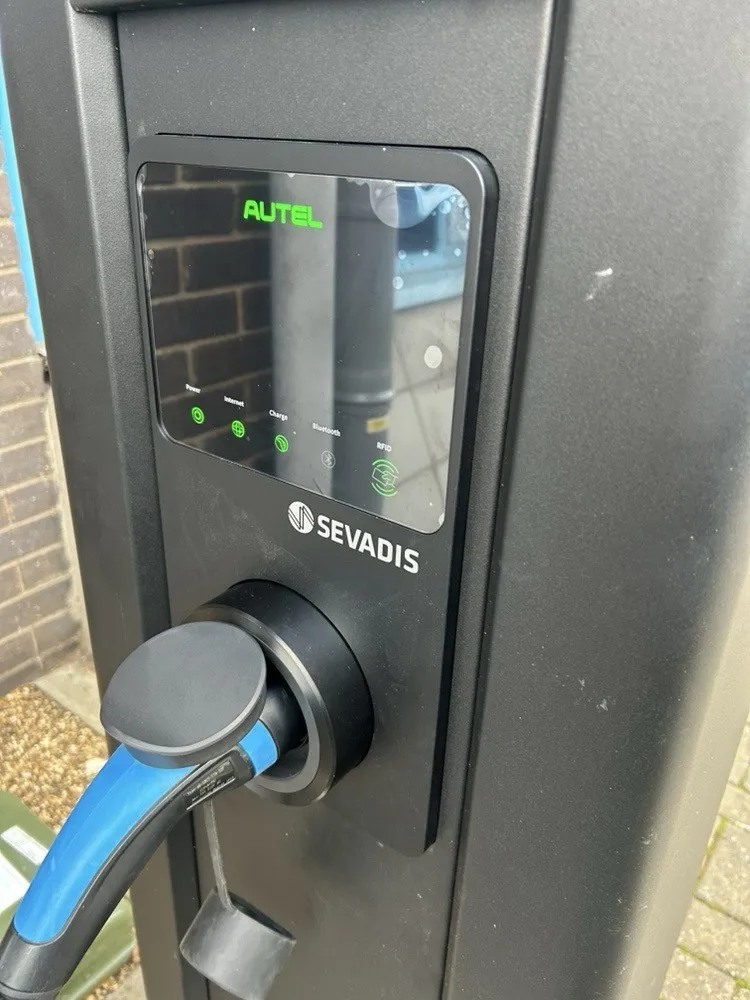
EV charging connectors confuse almost everyone. The short answer for UK drivers: Type 2 is the standard for home and public AC charging, and almost every new car uses it. Here’s the full picture.
The connectors
| Connector | Used for | Cars |
|---|---|---|
| Type 2 (Mennekes) | AC charging at home, work and most public posts | The UK and European standard; almost all new EVs and plug-in hybrids |
| Type 1 (J1772) | AC charging | Older imports and early models, such as the first Nissan Leaf and the Mitsubishi Outlander PHEV |
| CCS (Combined Charging System) | Rapid DC charging | Most new EVs; a Type 2 plug with two extra DC pins below |
| CHAdeMO | Rapid DC charging | Older Nissan Leaf and some other older Japanese EVs |
Type 1 cars can still charge at a Type 2 socket with a Type 2 to Type 1 cable. At home you only deal with AC; the rapid DC connectors are for public rapid chargers.
Home chargers
A typical home charger is 7kW on a normal single-phase supply, adding roughly 20 to 30 miles of range an hour depending on the car. Homes with a three-phase supply can go to 22kW, though many cars can only take 11kW or less on AC. Home chargers sold in the UK must be smart: able to schedule charging and respond to the grid, so you can charge on a cheap overnight tariff.
Before fitting, we check your supply and fuse board can take the extra load, whether you need a new consumer unit, and the earthing arrangement.
Tethered or untethered?
- Tethered: the cable is fixed to the charger. Grab and plug in. Choose the connector your car uses (almost always Type 2).
- Untethered (socket): a Type 2 socket; you use your own cable. Tidier, works with any car, and suits households with a Type 1 car or changing cars.
See our EV charger installation page, or tell us about your driveway and fuse board for a quote.
Questions we’re asked
What is a Type 2 charger?
The standard AC charging connector in the UK and Europe, also called Mennekes. Almost every new electric car and plug-in hybrid uses it, and so do most home chargers and public charge posts.
What is the difference between Type 1 and Type 2?
They are different plug shapes for AC charging. Type 2 is the UK standard; Type 1 is found on older imports and early models. A Type 1 car can use a Type 2 charger with the right cable.
Is CCS the same as Type 2?
No. CCS is for rapid DC charging. It is a Type 2 plug with two extra DC pins underneath, so a CCS car also accepts a normal Type 2 plug for AC charging.
Should I get a tethered or untethered home charger?
Tethered is the most convenient day to day. Untethered (a socket) is tidier and works with any car, which suits a household with two different cars or plans to change.
How fast is a home EV charger?
Usually 7kW on a normal home supply, adding roughly 20 to 30 miles of range an hour. Faster AC charging needs a three-phase supply and a car that can take it.
Written by SEGplc. Last updated 19 October 2026.
Need it done by a date?
Tell us the deadline. We’ll tell you honestly whether we can hit it — and we usually can.