

- Home
- Which EV charger
Which home EV charger? Our top 10 for 2026.
Ten chargers worth fitting, counted down from 10 to 1: what each does well, what to watch, and why the myenergi zappi is the one we recommend for solar homes.
We need a little more information: where the car is parked, roughly how far the charger would be from your fuse board, your car, whether you have solar, and photos of your fuse board and where the charger would go. It takes about five minutes.
The top 10 at a glance
| # | Charger | Output | 22 kW three-phase | Solar charging | Intelligent Octopus Go | Built-in PEN | Warranty |
|---|---|---|---|---|---|---|---|
| 1 | myenergi zappi Our pick | 7 kW or 22 kW; tethered or untethered | Yes | Built in: Eco and Eco+ (surplus only) | Yes | Yes | 3 years |
| 2 | Ohme Home Pro / ePod | 7.4 kW | Not in the UK | Solar Boost and Solar Only (CT clamp) | Yes | Yes | 3 years |
| 3 | Hypervolt Home 3 Pro | 7 kW, tethered | No | Eco and Super Eco (CT clamp) | Yes | Yes | 3 years |
| 4 | Andersen A3 | Up to 7.2 kW, tethered | No (the Andersen Quartz is) | Solar monitoring in the app; ask us | Yes | Yes | Up to 7 years (approved installer) |
| 5 | Pod Solo 3S | Up to 7.4 kW; tethered or untethered | Yes (business version) | Solar only, or top up from grid | Not listed | Yes | 3 years |
| 6 | Indra Smart PRO | 7 kW | No | Solar Only (optional CT clamp) | Yes | Yes | 3 years |
| 7 | Easee One | Up to 7.4 kW, tethered | No | Only with the Easee Equalizer | Not fully | Yes | 3 years |
| 8 | Wallbox Pulsar Max | 7.4 kW, tethered | Yes, separate model | Via Wallbox add-ons | Not listed | Yes (PEN version) | 3 years |
| 9 | Rolec EVO | 7.4 kW or 22 kW | Yes | ECO and ECO+ modes | Not listed | Ask us | 5 years |
| 10 | Tesla Wall Connector (Gen 3) | Up to 22 kW, tethered | Yes | No | Not listed | No | See Tesla |
“Intelligent Octopus Go” shows whether the charger is listed as compatible; some cars connect directly instead. Checked October 2026.
Our top 10 home EV chargers, from 10 to 1
10. Tesla Wall Connector (Gen 3)
A natural choice for Tesla drivers, with up to 22 kW on a three-phase supply and a long 7.3-metre cable. Two things hold it back for most homes. It has no built-in PEN fault protection, so on the PME earthing most UK homes have, it needs a separate protection device or an earth rod, which adds cost. And it has no solar surplus mode. In January 2025, security researchers at the Pwn2Own Automotive contest in Tokyo also showed several ways to hack it.
9. Rolec EVO
From British maker Rolec, launched in March 2025. It has an ECO mode (solar plus grid) and an ECO+ mode (surplus solar only), comes in 7.4 kW and 22 kW versions, works with any OCPP-compatible app and has a five-year warranty. It is a newer model with less of a track record in homes, so we confirm the earthing arrangements before quoting.
8. Wallbox Pulsar Max
Small, neat and keenly priced, with solar charging through Wallbox’s own energy management add-ons. Two things to know. On 2 September 2026 the UK product safety regulator (OPSS) published a safety report on the Pulsar Max UK (model PLP2-0-2-2-F-xxx): a manufacturing defect in an internal terminal block gives a low risk of fire. Wallbox is contacting owners, issuing a software update, and inspecting and repairing affected chargers. Separately, Wallbox restructured around €170m of debt through a Barcelona court in May 2026. If you already have a Pulsar Max, check that Wallbox has been in touch.
7. Easee One
Compact, up to 7.4 kW, with PEN protection built in. Solar charging needs the separate Easee Equalizer, and it is not fully compatible with Intelligent Octopus Go. Some history: in March 2023 Sweden’s electrical safety authority banned sales of the Easee Home and Easee Charge, over the built-in RCD and paperwork. Those rulings named those models, not the UK Easee One, and the Swedish proceedings were formally closed in October 2025. Easee returned to profit in 2025 after heavy losses in 2023.
6. Indra Smart PRO
A UK-designed 7 kW charger with built-in PEN protection, a Solar Only mode using an optional CT clamp, and Intelligent Octopus Go compatibility since January 2025. Three-year warranty. Good value, with fewer solar options than the chargers above it.
5. Pod Solo 3S
From Pod (formerly Pod Point), owned by EDF since August 2025, which gives it big-company backing. Up to 7.4 kW, tethered or untethered, with built-in PEN isolation. Its app has “Solar only” and “Top up from grid” modes. It is a solid all-rounder, but its solar features are less flexible than our top three.
4. Andersen A3
The best-looking charger on the list: British-designed, in wood and colour finishes, with Open-PEN protection (no earth rod) and Intelligent Octopus Go compatibility. Fitted by an approved installer, it carries a warranty of up to seven years. Andersen went into administration in October 2022 and was bought by Evios, which honoured warranties and kept the app running; the company reports that sales have since more than doubled. It is a premium choice, and the price reflects that.
3. Hypervolt Home 3 Pro
Voted Best Home Charger in Autotrader’s Drivers’ Choice awards in June 2026. A 7 kW tethered charger with Eco and Super Eco solar modes using a CT clamp (a second clamp if you have a home battery), Intelligent Octopus Go and OVO Charge Anytime support, and PEN protection built in. Three-year warranty, with an extended five-year option.
2. Ohme Home Pro and ePod
The Home Pro has a built-in screen and a tethered cable; the ePod is the untethered version. Both charge at 7.4 kW, have PEN protection built in and work well with smart tariffs, including Intelligent Octopus Go. Solar Boost and Solar Only modes work with a CT clamp. A strong choice if cheap overnight charging matters more to you than solar.
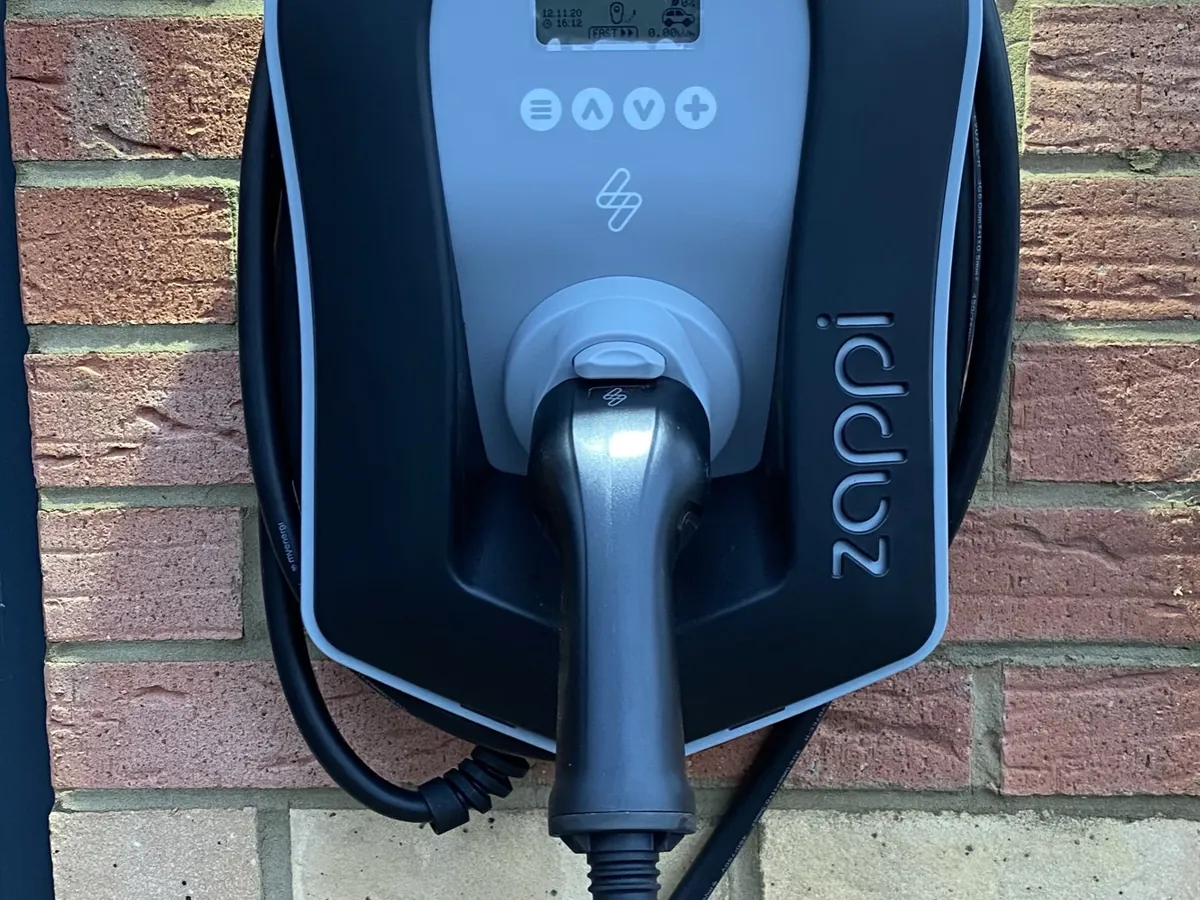
1. myenergi zappi: our pick
The zappi was designed around solar from the start, and that is why it is our favourite. In Eco mode it charges from your surplus solar and tops up from the grid to keep the car charging; in Eco+ it charges from surplus solar only, and you set how much grid power you are willing to use. Fast mode charges at full power when you need it.
- 7 kW single-phase or 22 kW three-phase, tethered or untethered
- Works with Intelligent Octopus Go, open to all zappi owners since December 2023
- PEN fault protection built in, so no earth rod on most homes, with myenergi’s “zapsafe” protection standard from July 2026
- Runs in the same app as myenergi’s other solar and energy products
- Three-year warranty. There is also an app-only version, the zappi GLO, without a screen
Our experience. Across the zappis we have installed, we have had very few returns. Pair it with solar panels and it can charge the car largely from your own roof.
Company health. To be fair to every brand: myenergi reported a loss in the year to May 2024 and cut jobs, then raised £28.6m from Energy Impact Partners and appointed a new chief executive in January 2025. It is still trading and filed its latest accounts in January 2026.
We need a little more information: where the car is parked, roughly how far the charger would be from your fuse board, your car, whether you have solar, and photos of your fuse board and where the charger would go. It takes about five minutes.
Chargers we have left off the list
- EO Mini Pro 3. EO Charging went into administration in April 2026. Its home charger business had already been sold in November 2025, and the app moved to ev.energy.
- GivEnergy. GivEnergy went into administration in April 2026.
If you already have one of these and it develops a fault, call us and we will advise on repair or replacement.
What matters when choosing a home EV charger
Solar. To charge from surplus solar, the charger needs to see what your panels are exporting, usually through a CT clamp on your supply. Most solar modes need around 1.4 kW of surplus before the car will start charging, so smaller systems lean on a grid top-up. If you are adding solar and a battery as well, plan them together.
Smart tariffs. Overnight EV tariffs charge far less per unit than standard rates. Check that the charger, or your car, is compatible with the tariff you want.
Earthing and PEN faults. Most UK homes have PME earthing. BS 7671, the Wiring Regulations, does not allow a PME earth to be used for an outdoor charge point unless extra protection is in place, such as PEN fault monitoring built into the charger or an earth electrode. Chargers with built-in protection usually avoid the need for an earth rod.
Single-phase or three-phase? Most homes have a single-phase supply (one main fuse by the meter), so about 7 kW is the practical maximum. Some larger homes, farms and most business premises have a three-phase supply (three main fuses). On three-phase, a 22 kW charger can charge much faster, but only if your car accepts it: check the maximum AC charging rate in your car’s handbook, because many cars accept 11 kW and fewer accept 22 kW. Of our top 10, the zappi, Pod (business version), Wallbox (separate model), Rolec EVO and Tesla Wall Connector come in three-phase versions, and so does the Andersen Quartz. The Ohme, Hypervolt, Andersen A3, Indra and Easee One sold in the UK are single-phase only. Not sure which you have? Send us a photo of your meter and main fuses.
Your fuse board and supply. A charger needs its own way on the fuse board and enough capacity on your supply. Older boards sometimes need replacing first; we check this on survey.
The company behind it. Smart chargers rely on an app and the maker’s servers. A maker in financial trouble can leave owners without updates or support, so it is worth checking.
The law. Under the Electric Vehicle (Smart Charge Points) Regulations 2021, home chargers sold in Great Britain since 30 June 2022 must be smart. By default they avoid charging between 8am and 11am and between 4pm and 10pm on weekdays (you can change this), and they start each charge after a random delay of up to 10 minutes. Security requirements followed on 30 December 2022.
Grants for home EV chargers
The government grant gives up to £500 towards a chargepoint for flat owners and renters with private off-street parking, and for households with only on-street parking who install a cross-pavement solution such as a charging gully. There is no grant for homeowners in a house with a driveway. The government lists its chargepoint grant schemes as running until 31 March 2027.
EV charger questions we’re asked
What is the best EV charger for solar panels?
Choose a charger that can see what your panels are exporting, usually through a CT clamp on your supply, and has a surplus-only mode. Our pick is the myenergi zappi, because its Eco+ mode charges from surplus solar only and lets you set how much grid top-up you will accept. Ohme and Hypervolt also have good solar modes.
Do I need an earth rod for an EV charger?
Usually not. Most UK homes have PME earthing, and the Wiring Regulations do not allow a PME earth to be used for an outdoor charge point unless extra protection is in place. Most chargers on this list have that protection (PEN fault detection) built in. The Tesla Wall Connector does not, so it needs a separate protection device or an earth rod. We check your earthing on survey.
Should I get a 7 kW or a 22 kW charger?
Most UK homes have a single-phase supply, which means a home charger tops out at about 7 kW. A 22 kW charger needs a three-phase supply, which is common in businesses but rare in homes, and a car that can accept 22 kW. If you have three-phase, the zappi, Pod, Wallbox, Rolec EVO and Tesla Wall Connector all come in 22 kW versions. We check your supply and main fuses before recommending one.
Tethered or untethered?
A tethered charger has the cable fixed on, so you just plug in. An untethered charger has a socket, so you use your own cable; it looks tidier and suits households with more than one car. Most of the chargers here come in both versions.
Can I get a grant for a home EV charger?
Only in some cases. The government grant gives up to £500 to flat owners and renters with private off-street parking, and to households with only on-street parking who install a cross-pavement solution such as a charging gully. There is no grant for homeowners in a house with a driveway. We can check whether you qualify.
Will my charger work with Intelligent Octopus Go?
The zappi, Ohme, Hypervolt, Andersen and Indra chargers are all listed as compatible. Some cars can also connect to Intelligent Octopus Go directly, whatever the charger. Check Octopus’s current list before you buy, because it changes.
How do I get a quote?
Use Tailor my quote. Tell us where the car is parked, roughly how far the charger would be from your fuse board, your car and whether you have solar, and add photos of your fuse board and where the charger would go. We will come back with a clear quote.
Sources
- myenergi, zappi EV charger, zappi charge modes and Intelligent Octopus Go
- Transport + Energy, myenergi launches zapsafe (July 2026)
- City AM, myenergi results (December 2024)
- Ohme, Solar Boost and Solar Only
- Autotrader, Drivers’ Choice best home charger 2026
- Smart Home Charge, Hypervolt Home 3 Pro review and Intelligent Octopus Go chargers (June 2026)
- Pod, Solo 3S datasheet; Electrive, EDF completes Pod Point acquisition
- Easee, Easee One UK product sheet; Electrive, Swedish authority closes Easee proceedings; Easee, 2025 results
- GOV.UK, product safety report: Wallbox Pulsar Max UK (2 September 2026); The EV Report, Wallbox debt restructuring
- Fleet News, Evios buys Andersen; Renewable Energy Installer, Andersen EV sales
- Tesla, Wall Connector; Drive Tesla, Wall Connector hacked at Pwn2Own Automotive 2025
- eChargersUK, Indra Smart PRO review; Electrical Contracting News, Rolec EVO launch
- Three-phase versions: Pod, Solo 3S for Business; Best Chargers, Wallbox Pulsar Max review; Ohme, ePod 22kW (Europe); Renewable Energy Magazine, Andersen Quartz launch
- Electrive, EO Charging enters administration; ESS News, GivEnergy enters administration
- legislation.gov.uk, Electric Vehicles (Smart Charge Points) Regulations 2021
- GOV.UK, Electric vehicle chargepoint grants (updated 1 April 2026)
- IET, Wiring Matters: BS 7671 and EV charging
Written by SEG. Last updated 11 October 2026.
Need it done by a date?
Tell us the deadline. We’ll tell you honestly whether we can hit it — and we usually can.