

- Home
- What we found in 101 home electrical inspections
What we found in 101 home electrical inspections
We went back through 101 of our own EICRs on homes in Hertfordshire and London and counted what we found. No names or addresses, just the totals.
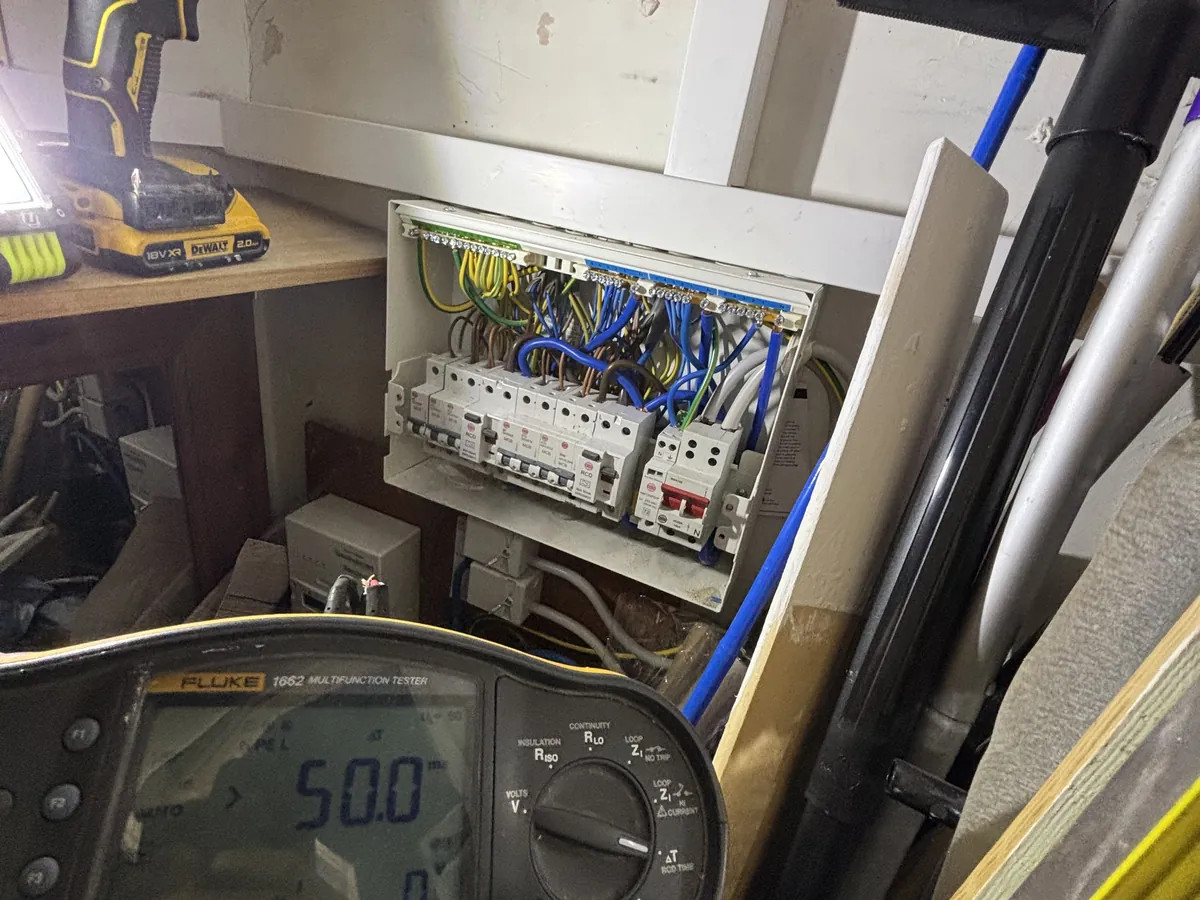
Written by SEG, The Specialist Electrical Group, St Albans. Published 10 October 2026.
Between August 2023 and July 2026 our engineers carried out Electrical Installation Condition Reports (EICRs) on homes across Hertfordshire and London. Here is what 101 of those reports show.
The headline numbers
- 81% had nothing to report: no C1, C2, C3 or FI codes at all (82 of 101).
- 9% were marked unsatisfactory (9 of 101).
- 0 homes had a C1 “danger present” code.
- 30 years was the typical estimated age of the wiring (median).
Hertfordshire homes passed. London flats mostly did not.
3 of 91 Hertfordshire homes were unsatisfactory, mostly rented homes in Welwyn Garden City. 6 of 10 London flats were unsatisfactory, in Hackney, Streatham and Peckham.
The wiring was a similar age in both groups, around 30 years in most homes. What failed the London flats was mostly older RCDs, missing earth bonding and gaps in smoke alarm cover. The London sample is small, so treat it as a pointer, not a rule.
The faults that came up most
| What we found | Homes | Why it matters |
|---|---|---|
| Smoke alarm cover short of the recommended standard (LD2), C3 | 7 | All seven were London flats, 7 of the 10 we tested. Alarms missing from rooms where a fire could start. |
| Mains smoke alarms with no surge protection, C3 | 6 | A voltage spike can knock the alarms out without anyone noticing. |
| Older “Type AC” RCDs, C2 or C3 | 5 | Modern appliances can stop this type of RCD tripping when it should. Coded potentially dangerous in four flats. |
| Lighting circuits with no earth wire, C3 or C2 | 5 | Fine while every fitting is plastic; dangerous the day someone fits a metal light. All five were in Welwyn Garden City. |
| Signs of loose connections on socket circuits, FI or C2 | 3 | High readings on the test meter. Loose connections heat up, a common cause of electrical fires. |
| Damaged or heat-damaged accessories, C2 or C3 | 3 | Including a cooker outlet showing heat damage and a light fitting with exposed parts. |
| Plastic consumer unit not in a fire-resistant enclosure, C3 | 3 | Metal units have been required for new installations since 2016. |
| No main earth bonding to water pipes, C2 | 2 | Pipes could become live in a fault. |
| Too few sockets, extension leads in use, C3 | 2 | Overloaded extension leads are a fire risk. |
What this means if you are a landlord
- Most homes need little or nothing. 82 of the 101 had no codes at all. An EICR is often a clean bill of health.
- Budget for RCDs and alarms in older flats. They were behind most of the failures we found in London.
- Social landlords: for tenancies that began before 1 December 2025, the first EICR must be done before 1 November 2026.
- Private landlords: an EICR at least every five years, and any remedial work done within 28 days.
Need an EICR? We test homes, blocks and commercial premises across Hertfordshire and London. See our EICR testing page or landlords page, call 0345 3 822 833 or send an enquiry.
How we did this
We reviewed 106 EICRs issued by SEG between 17 August 2023 and 17 July 2026 and kept the 101 on homes (we left out a care home and four temporary site set-ups). Codes are as recorded by the inspecting engineer under BS 7671 at the time. This is not a random sample: most reports were for housing providers’ planned programmes. We will update the figures as we add more reports.
Need it done by a date?
Tell us the deadline. We’ll tell you honestly whether we can hit it — and we usually can.